


Wed, 22nd July Cardiff 21°
Nation.Cymru wordmark
Advertisement

Opinion

To win, the Welsh independence campaign needs to reclaim Britishness from Westminster
By NationCymru
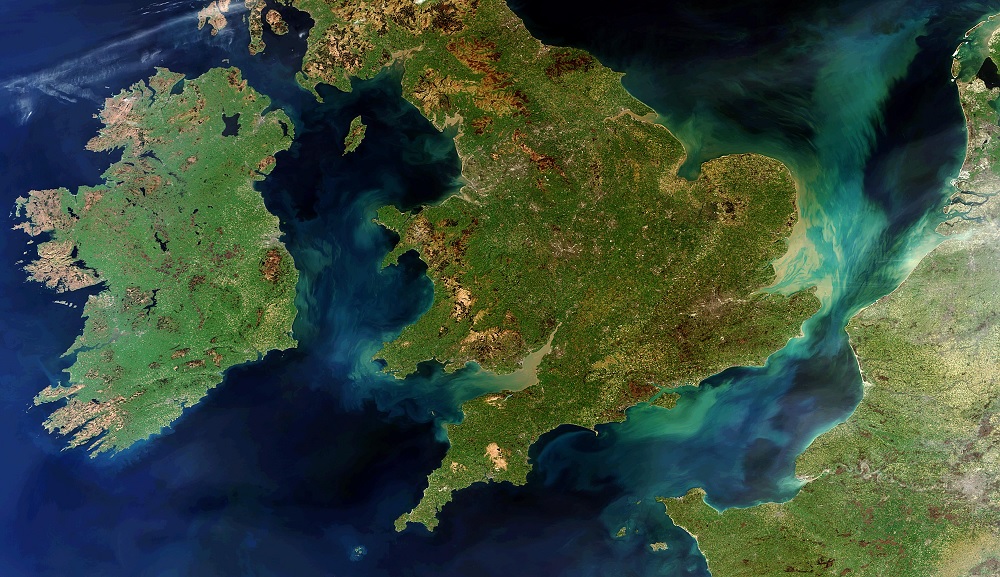
It's an island - Great Britain and Ireland from space. Picture by the European Space Agency (CC BY-SA 3.0 IGO).

Ifan Morgan Jones

There was a telling slip in the Financial Times newspaper earlier this week.

Discussing the possibility of keeping the Trident nuclear submarines in Scotland after independence, the newspaper suggested creating a Gibraltar-style extraterritorial area ‘north of the border’.

According to the newspaper: “This would create a British territory within the borders of a newly separate Scotland, said people briefed on the plans.”

The suggestion here that the remaining UK and ‘Britishness’ are synonymous with each other is easy to miss but, perhaps, all the more insidious (or perfidious?) because of that.

Whether intentional or not, it suggests that Britishness is something that belongs to the nation-state of the UK, rather than something that belongs to all the people of Wales, Scotland and England.

After all, the island of Great Britain, despite becoming a shorthand for the UK (even Northern Ireland), is a geographical entity.

The independence campaigns in Wales and Scotland aren’t a bid to leave Britain – that's impossible, without a catastrophic volcanic schism that would wipe us all out anyway.

Furthermore, the cultural, linguistic and economic bonds that bind Britain together will remain whatever the constitutional futures of the UK’s constituent parts.

Wales and Scotland will remain British whatever happens. As Brexit as shown, you can’t just wish your way out of geographical reality.

[mid-content-banner]

Identity

But there is a political motivation for the Welsh and Scottish independence campaigns to reclaim Britishness as well.

That’s because ultimately a lot of people in Wales and Scotland who are potential independence supporters do feel British.

According to research done by Cardiff University, who asked people to rate themselves on a spectrum of Welsh to Britishness, the number of people in Wales who don’t consider themselves British at all is quite tiny.

This is an even bigger issue for the Welsh independence movement than the one in Scotland. According to Professor Richard Wyn Jones in a recent online seminar: “Wales is much more heterogeneous in national identity terms than Scotland”.

To get over the line, the Welsh independence movement needs people who feel British. Therefore, to allow the nation-state of the UK to claim ‘Britishness’ for itself makes is not a winning strategy.

It will make it appear to those people that independence is a choice between one identity and another. And that’s a choice 51% of the Welsh population aren’t willing to make.

Lopsided

But it doesn’t have to be a choice. The people of Denmark, Norway, and Sweden don’t have to choose between being Danish, Norwegian, Swedish or Scandinavian. They can be, and are, both independent and part of a wider regional identity at the same time.

If Wales and Scotland want to win independence, one of the key messages they need to sell to voters is that Britishness can and will outlive Westminster.

The current, very-centralised model of governance in the UK, in which economic, cultural and political power is centralised in one corner of London, isn’t Britishness.

And to portray the fight to de-centralise power from Westminster as one of Welshness vs Britishness is a strategic error.

It cedes Britishness to Westminster, which doesn’t deserve to own the concept. Westminster and Whitehall aren’t Britain, they’re one square mile of it.

There is nothing inherently British about this uniquely lopsided settlement in which we find ourselves. There's nothing inherently British about the UK.

If the Welsh independence movement forces people to choose between Welshness and Britishness, it will struggle.

But if it concedes that people can feel Welsh and British but still think that the centralisation of power by one particular elite in one small part of Britain is a problem, it can succeed.

The key message is: ‘Britain will still exist after independence, Westminster will not.’

Even

There is a historical precedent to draw on here, of course.

What we now call the Welsh, whose language and identity stretched across most of the present-day British Isles, used to consider themselves the British.

From the Acts of Union to the 19th century, the Welsh pushed the idea of Britishness as a way of integrating themselves within the corridors of power.

Over the 20th century, however, Britishness increasingly became, as Gwynfor Evans argued, “a political synonym for Englishness which extends English culture over the Scots, the Welsh, and the Irish".

But national identities are complex things and they are ever-changing. To survive, they need to be made and re-made by every new generation. The same national labels can mean different things to different groups, at different times.

Britishness has been very clever in the way it has redefined Welshness. It has never forced people to choose between Welshness and Britishness. Rather it has sought to recreate Welshness in its own image – three feathers and Principality-infused.

In the same way, for supporters of Welsh independence, reclaiming Britishness wouldn't mean waving around a Union Jack and singing Rule Brittania. It would mean finding ways of including those who feel British in a way that is also inclusive of Welsh culture, identity, and the ambitions of an independent Welsh state.

The win, it may be time for the Welsh independence movement to stop defining itself in opposition to an identity that most people in Wales feel, and reclaim it for itself.

Not as an identity at the expense of Welshness, but alongside it. And not an identity in which power is centralised in one part of Great Britain - but spread evenly throughout it.

A Britain that will still exist after independence - but one in which Westminster's power over Wales will not.

For the price of a cup of coffee a month you can help us create an independent, not-for-profit, national news service for the people of Wales, by the people of Wales.

Get more trusted Welsh news

Choose Nation.Cymru as a preferred source in Google News to see more of our journalism.

Choose Nation.Cymru as a preferred source in Google News

29 comments

Jack

Great Britain is an island. The only way you can be 'Welsh not British' is if you're from Ynys Môn.

Reply
Huw Davies

Doesn't anyone from The British Isles qualify as British? It isn't just the main island, Great Britain. Manx, Orcadian, Shetland, Hebrides and thousands of other islands. Even the channel islands according to some. So to my mind anyone from Mon is also British. The problem has become that British is now synonymous with English. We may need the English to reclaim their Englishness before the rest of the world recognises us as the last Cymry of Britain. I've actually gone from being suspicious of those waving the English flag to preferring it to the union flag they used to show. Watch footage of the 1966 world cup and recent England matches. The Union Jack is becoming conspicuous by its absence.

Reply
Jack

If we're using ''British" as a purely geographical term, rather than a political or national one, then it's only the island of Great Britain that is British. (Portsea Island means that most of the city of Portsmouth is not British!) If we're using it as a broader national/political term then yes most of those islands are British (though personally I would say that the Channel Islands aren't) but obviously the term "British Isles" runs into problems.

Reply
Crwtyn Cemais

And if you're from the Isle of Wight, does that mean that you can be 'Wightish not British' ? Come on, let's be serious here!

Reply
Cai Wogan Jones

I understand what this piece is driving at. The idea that there are important bonds of culture, common economic and strategic interests, etc, which should be acknowledged and embraced. I get that completely, and see independence as fully compatible with developing those. Indeed, independence allows for those bonds to be strengthened and enriched because they would no longer be underpinned by the coercive structures of Westminster rule. But the terminology of "Britishness" is unhelpful in that quest. It was irredeemably appropriated in the 18th century in support of the project of fashioning a new "nation" out of the historic realms and polities of these isles. A nation that was essentially founded on the empire project (including the generation of wealth from the slave colonies of the Caribbean), the Hanoverian monarchy and militarism. The terminology of Britishness will not help with any new project to celebrate and respect our differences on the basis of equality, whilst also nurturing the bonds that connect the peoples of these isles. The concept of "Britishness" should be relinquished to the history books as a tarnished and sullied venture.

Reply
Shan Morgain

No it must not be relinquished. Britain, Britishness existed for a thousand years before the Acts of Union. It would be feeble to let it go just because some Germans (Hanoverian monarchy) mucked about with it for a mere three centuries. Britain is a natural geography and an ancient well established idea. It's seen many changes and about to see more.

Reply
Cai Wogan Jones

I understand the romantic appeal of what you say. But the rest of the world associates Britishness with Union Jacks and painting large parts of the world pink. Not with Arthur and Mons Badonicus. That is the reality.

Reply
defaid

"But the terminology of “Britishness” is unhelpful in that quest. It was irredeemably appropriated... " I was not aware of that until you told me. I've always considered myself to be British, as distinct from Norman, Saxon or Anglish.

Reply
Shan Morgain

Britain and Britishness existed long before the recent 18thC Acts of Union. Way back in the 10thC literature like Armes Prydain (Prydqain = Britain) routinely spoke of Britain. So did the Mabinogi c. 1100, and all the many Triads. Britain was called Ynys Mon - This Island. The English attempt to take over the idea has neer been very successful. It's always been pretty obvious that an English voice saying Britain/ British means England/ English. Cymru and Prydain/ Britain are perfectly compatible.

Reply
Cai Wogan Jones

See my comment above.

Reply
Hannergylch

Before devolution, English people used to say “England” when they actually meant “Great Britain” or “Great Britain & Northern Ireland”, although weirdly, the place known to the English as “The North” is entirely south of the Scottish border. But since devolution, most of them have been using the word “England” correctly. Continental Europeans still use the word “England” to mean Great Britain, but in fairness to them, they're just following the former English usage — an innocent mistake rather like us equating the Dutch province of Holland with the whole of the Netherlands. If a continental European sees you drinking tea with milk it, they will assume that you're from Britain or Ireland.

Reply
Arwyn

Yn lygaid dy le Ifan. Spot on. I've never conflated Britishness with the UK but that's exactly what the Tories and Labour do. There is no unitary UK nation, just as the EU is not a nation. If the EU disbanded today we would all remain European just as we will remain British on that happy day that will soon arrive when the UK is consigned to the dustbin of history. What matters for the sake of the Welsh nation is that we establish a Welsh Nation State. Those broader geographical and cultural identities can be comfortably accomodated once the emotional attachments and illogical conflations with the Tory UK state are abandoned.

Reply
Arwyn

I've felt for some time that with the constitutional tectonic plates in the UK shifting and with the uneven economic development of the isles driving nationalisms that rather than seperate visions for our nations, the key to dissolving this moribund union is to have an attractive collective vision for the different nations of Britain. We must also consider Ireland in this. I find Plaid Cymru's recent idea on establishing a Confederation of British nation states very appealing. I believe it can accomodate Welsh and Scottish appeals for self-determination. I believe it can accomodate an emerging Englishness. I also believe it has the potential of providing a lasting settlement in Ulster with the reunification of Ireland with Irish participation in a "Council of the Isles." A new far looser political union based upon the sovereignties of the nations that occupy these islands in which we are able to cooperate where we have common cause and diverge where appropriate on matters pertaining to our individual nations. We would each be free to pursue the relationship we desire with the EU. The king is dead. Long live the king.

Reply
W.Ken Davies

The parallel with Scandinavia is misleading. Scandinavia is a geographical area occupied by three politically independent nations who share close linguistic and cultural ties. Britain, by contrast, is both a geographic and political entity. The cultural ties between its nations are not so obvious as those shared by Scandinavians. There has been a good deal of (largely one-way) assimilation of what may be termed ‘Anglo American’ culture, which is quite different.

Reply
Huw Davies

Very true. Mind you I only know because I watched the Horrible Histories episode about The Vikings!

Reply
Alun

I'm sorry but that analysis just doesn't stack up. Only around 20% of the Welsh population speak Welsh and around 1% in Scotland speak Gaelic and Scots respectively. The current truth is that we are majority English speaking nations. I very much regret these low numbers, and hope they've gone up substantially when we get the latest census results, but it makes no sense to suggest that Scandinavians 'share close linguistic and cultural ties' and people in these islands do not. Finnish isn't even an Indo-European language. If the independence movement - which I'm fully committed to - is to build a case based on the lived reality of most people in Wales it has to have the confidence to stop being in denial and acknowledge what the people of these islands have in common as well as our considerable differences. Scandinavia is the most easily understood close example of independent nations being seen to live side by side in some sort of harmony. The beauty of the comparison is that it shows what could be possible for us too without frightening the horses.

Reply
Paul12345

Finnish people don't consider themselves Scandinavian. Nordic - yes Scandinavian- no

Reply
Huw Davies

Again, referring to Horrible histories, Scandinavians are mainly Danes, Norwegians and Swedish. DINS is my pub quiz mnemonic for Denmark, Iceland, Norway, Sweden. (The modern vikings who don't use the euro but their own version of krone krona.) Fins were not vikings. The different vikings understand the other Scandinavian languages, so much the same as English being understood by all the countries of Britain but each country still having its own identity. Imagine a conversation between Kenny Dalglish, Paul Gascoine, Malcolm Allen and Prince Charles with a bemused man from County Kerry listening in. They'd understand a lot of what was being said but they'd certainly know they were different!

Reply
John Davies

I would be glad if English media stopped conflating "British" with "English". Until they do I am happy to assert my identity as "Welsh". I remember taking part in a discussion where someone was defending Starmer for wrapping himself in the Union Jack, saying flags are important symbols. I agreed with him and said I was very fond of our big red heraldic beast but other people's flags (including the union flag, of course) were, well, just other people's flags, quite honestly of very little interest. They were quite indignant!

Reply
Y Cymro

Until those realise both at Westminster and here in Wales, that the Union Flag has never represented Wales, that blood soaked flag will always be met by ones educated in their own history with hostility. It's like me waving the flag of Japan and saying to you: "This is your flag. Now, go wave it". And when you reply looking bemused. " It's not my flag?," I reply back. "Look, it represents Wales. See, it has red in it." And attempt to defend the indefensible. To be educated is a burden. Wish I was ignorant of the facts so I could live my life like ones who embrace their ignorance with gusto. The Union Flag omits Wales because English Monarchy & armies invaded our nation in 1282, and then later in 1535/ 1542, made it an act of English parliament in London to remove the Welsh people, language & culture by annexing & dissolving us from the history books. Hitler did similar to the Jews in Nazi Germany with horrific results.

Reply
Crwtyn Cemais

Da iawn chi am ddweud eich dweud wrthynt! ~ Good on you for speaking your truth to them!

Reply
Y Cymro

The original British are us the Welsh. It's in our DNA. This cannot be erased by Whitehall BritNats who use the term Britishness to usurp our birthright, or by lukewarm Welsh people who drape themselves in a Union Flag to leach tick-like onto England in an attempt to appropriate their achievements like glory seekers would supporting English football teams like Liverpool & Manchester united etc.. While I am proud to call myself a native Briton, whose history on this land stretches tens of thousands of years, do take exception to ones who steal our identity, then use it to empire build while writing themselves into our history in an act of appropriation. They know who they are! We Cymry can stand tall. Our ancient roots to this island are vast , over 34,000 yrs in fact. We were the builders of Stonehenge. Welsh tribes from all four corners of this island thought of themselves as one people, in particular the Silures of SE Wales, who fought and defeated a Roman legion. The Welsh were the first Christians of Britain, whose Martyrs St' Alban, Julius & Aaron were thrown to the lions at Caerleon in 304AD. The Welsh were literate 200yrs before the Saxons arrived, and nearly 600yrs before England & English existed. It was they who took Christianity to the island of Ireland, whose patron saint was a Welshman called Maewyn Succat (St Patrick), who along with Dewi Sant (St' David) St' Gildas, St' Illtyd and others of note were educated at Britain's first documented seat of learning at Côr Tewdws in 396AD at Llantwit Major, Glamorgan. Their works written in the Mabinogi documented ancient iron age Welsh Kings of Britain. Bards Taliesin & Aneirin, and their lives manuscripts written were used as the foundation of the Arthurian Legends by Welshmen Nennius & Geoffrey of Monmouth, who themselves influenced others... If it were not for us Welsh. Writers like J RR Tolkien ( fascinated with Welsh mythology & Language) would have no 'Lord of The Rings' saga or CS Lewis (Welsh father) have 'The Lion, Witch and the Wardrobe' books. Also Terry Pratchett (Welsh parents) 'Discworld' series, plus many others of note who were influenced by them. All used our Welsh mythology in their works. Our Welsh mythology is the basis for much of today's sword & sorcery and sci-fi genres. We should scream with pride from our rooftops at our achievements as a native people, especially under such duress. We are Britain and don't need to take back what's rightly ours.

Reply
Richard

We are historically all ‘ Britons ‘ not ‘ British ‘ or indeed ‘ Great British living in Great Britain ‘ an invention of the 18th Century

Reply
Y Cymro

Politically British, yes. Ethnically British, no. I can be born in China. Speak Chinese, but can never be ethnically Chinese. The same applies to America and Native Americans. When the Romans occupied a third of Britain only Brythonic speaking tribes existed. And when the Saxons, Angles & Jutes took a foothold in the east , who later would merge into what we know as England & the English, never existed in any ethic grouping in Britain during Roman times, as did the Scots & Scotland too. When Hadrian built his defenses (wall) the tribes faced were not Scottish or Gaelic speaking. They were the Brittonic (Welsh) speaking tribes of Rhedeg and Y Gododdin of Hen Ogledd, who were later assimilated or driven out by the Scotti & Picts settling in Wales as done with Cunedda founder of the Kingdom of Gwynedd. He was a Welsh leader in the Kingdom of Manw Gododdin located in now modern day SW Scotland. If you refer to yourself as English, are not British by ethnicity. And the same applies to being Scottish too. The Scotti Tribe came from the North of Ireland And if they , the Scots, refer to themseves as Picts (Latin, painted faces) are also claiming Welsh heritage as the Picts spoke a form of Old Welsh with many placename's in their region of Welsh origin that still remain in some form today and can be translated word for word into Welsh. Eg.. Aberdeen. Perth. Lanark. Pendewen. Cantry. Cardean Trefynie. Trostrie. Pennan, Cantress,. ect... The same applies in Cumbria & Yorkshire, Northern England where Welsh Kingdoms stood before being either assimilated or lost in the mists of time.

Reply
Richard

100 per cent true of course but we are where we are - Britons living with lots of other folk in these over centralised islands

Reply
Jessie Allaway

I wrote along these lines to an American journalist once after an article he wrote in NYT showing complete ignorance of the difference between UK and Britain. Very large chainsaw I said would be required for Scotland to leave Britain. His reply showed he still didn't "get it".

Reply
Erisian

The Welsh are much more Brythonic than the rest of 'Brythan' anyway!

Reply
j humphrys

Anyone surfing the "English" sites on the Web, will notice how many dislike "Britishness" and yearn for a return to England, with some citing the English Bill of Rights, forerunner of the US version. I think the last census showed above 30 million identified themselves as being English, not British (yeah it's an island, blah, but you know what we're about here).

Reply
j humphrys

Have tried to find confirmation of 30 million figure (though I think it's correct). If you have time to seek this, you may find it hard to scramble through the great amount of negative spin against "Englishness", something that we are all too familiar with regarding Cymru?

Reply

Leave a comment

Comments are reviewed before they appear.