


Thursday, 16th July 2026 Cardiff 20° · Mainly clear
NationCymru A news service by the people of Wales, for the people of Wales.

Opinion

The Welsh Way - an alternative to the regions?
By Mark Mansfield
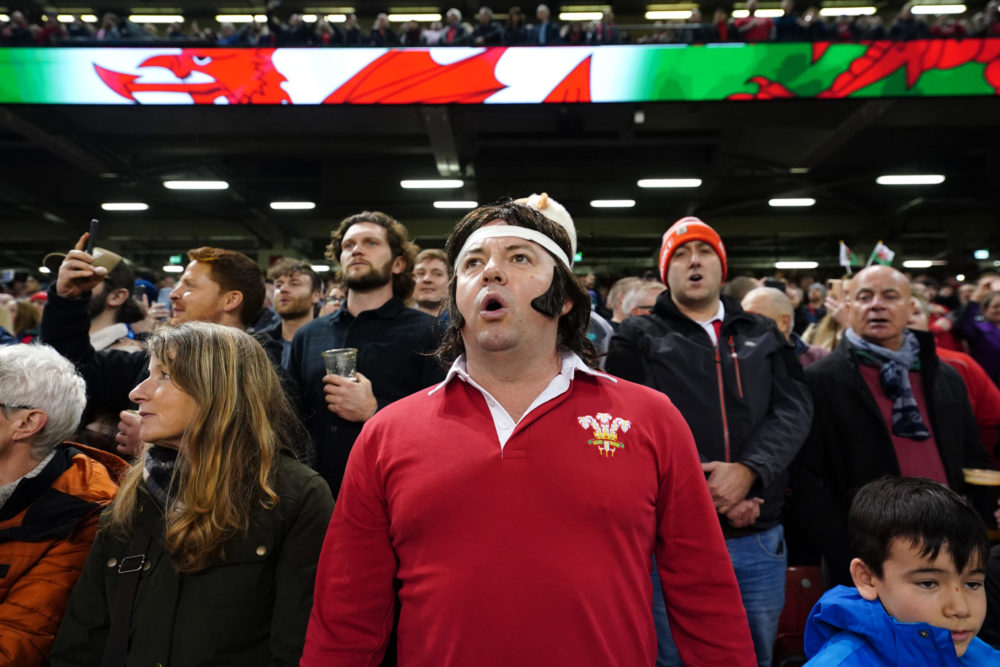
Wales fans sing the national anthem ahead of the Six Nations match at the Principality Stadium against Scotland. Photo David Davies/PA Wire.

Evan Wall 

Rugby is one of the most prominent areas where Wales has its own successful identity, operating independently of England — and at times, more successfully.

As Welsh rugby has its own identity, we do not need to become part of an English rugby structure or continue with the URC to attract fans or foster a successful national team.

Welsh rugby exists in its own right.

Because of this, Wales could have a successful domestic league that would produce international standard players – as it once did.

The WRU do not need to rely on membership in the URC for our club game and can use the game in Wales an alternative to the regions.

The WRU have more chips on the table compared to the Football Association Wales, who could not pull its four professional teams from the English football league and create a Welsh domestic league without alienating interest in the game.

Although the national football team has been highly successful and the Cymru Premier is improving. It remains true that all the football clubs of professional stature play in the English structure.

Uncapped goalkeeper Connor Roberts is the only Cymru Premier player to be selected for the national teams squad.

Many play for Welsh clubs in the 2nd and 3rd tier of the English system, but the whole team play their football outside the Welsh league structure.

[mid-content-banner]

Club coefficients

No other European footballing nation, except Gibraltar and San Marino, score lower in association club coefficients. No other European nation has such a weak domestic game.

Welsh football and its success is completely dependent on club participation in the English system. If membership for the Welsh clubs in the English football league was revoked, it would be a disaster for Welsh football across the board.

But the same is not true for Welsh rugby.

Partly because rugby was professionalised far later than football in England, the game of rugby in Wales is different to football because it has been intertied to Welsh identity on a local and national level for generations.

Welsh rugby was born from a strong tradition of club-based rugby playing within Wales. In the pre-regional era, rugby was built upon local rivalries and loyalties, such as Swansea vs Neath, Cardiff Vs Pontypridd. It tapped into what is described as a “parochial” and “tribal” identities, thus interest in the game was not reliant on Welsh teams playing teams from outside of Wales.

Historically, interest in Welsh rugby has been sustained by local, community-based rivalries. Because of this, a strong domestic game is possible for Welsh rugby.

This contrast is crystallised when you compare the desire, ambition, and interest of children who play each sport in Wales. In football, all ambition is channelled towards the English football league.

If you look at shirts worn by adults and children in Wales there are as many Liverpool, Manchester and Arsenal tops as any Welsh team. If a Welsh person is good at football, they dream of playing across the border in the big cities of England, or at very least in the English football system.

From top to bottom, the football system is structured and psychologically attuned so that everything Welsh must go to England to gain fame, recognition, and a livelihood.  Football in Wales is reliant on England.

[lower-mid-content-banner]

National identity

Rugby in Wales is reliant on local and national identity. Local and pre-professional players first want to play for their local club, especially in derbies against neighbouring valleys. This is what captures their interest and sparks their passion. The nature of Welsh rugby is one possessed by parochialism in the most positive sense.

Although some players are being pushed over the border to play rugby due to the WRU’s mismanagement, no Welsh rugby-playing child dreams of going to play rugby in the English Premiership; their greatest dream is to represent their communities and nation.

Local and national identities for young rugby players remain strong in Wales. One of Wales’s most promising, original and tenacious talents is a great example of this. Ospreys’ Harri Deaves “honed” his skill at Pontyclun. Despite being a pro, he spends a ridiculous amount of time at his village club. His dream is to play for Wales, now he has represented his local community on the highest stage available in the club game.

In rugby, even down to age-group village games, rivalries are fierce. In Deaves’ case, His hunger and passion for rugby was first expressed when he would represent his village against the neighbouring Llanharan. Welsh rugby players were not interested in being the best in England, they want to be the best in their local community and then the best in Wales. This psychological setting has been the springboard of historical Welsh rugby’s success.

The psychology also filtered up. These localised sensations become amplified when great Welsh teams of 23 tribesmen unite to battle teams from England or even Europe. It is then on steroids when we reach the climax of Wales vs England.

Emotional investment

Interest and emotional investment in the game push upwards like water pumped through a pipe, rugby rivalries stem from the local level and from a very young age. Our interest is like a sponge, which absorbs all the water which has flowed from the local to national level over the years.

The national game is then the highlight of the year because it is based on the club game structure. It is a distillation of local and national identities. That is why it is not only a spectacle to watch, but a spectacle that you feel.

When it comes to rugby, the Welsh are a village people, and the Welsh are a tribal people. We don’t have to build new teams; we have rich, competitive teams that the people once loved and can love again.

New fans

These teams have been put in the goldfish bowl of the Cymru Premier “Super” League. Meanwhile, regional rugby hasn’t created new fans for Welsh rugby. Contrarily, it has funnelled fans away from their local clubs, who were already great without the bank of the WRU.

A new competitive Welsh domestic league, supplemented by a Welsh cup (akin to the FA cup), European competitions and matches against touring international teams is a far more desirable than a “West” (Cardiff) and “East” (Swansea) franchise. It’s the only alternative that can sustain Welsh rugby at the roots.

This article is a proposition, a trialling of ideas, rather than a set in stone answer for the current crisis.

But any solution for the current issues faced must prioritise rugby at the community level. If the roots are not looked after, the tree will not grow.

A proud Welshman, Evan Wall is a doctoral Researcher working in the International Politics department of Aberystwyth University. His research focuses on the connections between Welsh and Irish nationalism. He grew up playing rugby in the South Wales Valleys

For the price of a cup of coffee a month you can help us create an independent, not-for-profit, national news service for the people of Wales, by the people of Wales.

15 comments

Lewis Williams

Another interesting article on the future of Welsh rugby, time for rugby in Wales to believe in its capability again!

Reply
Ben Davies

Seems another rose-tinted article gets coverage on NC. This is 2025. The game has moved on. Every other country has moved on. This article suggests we go back to a parochial setup, that may well satisfy the bloodlust of the die-hard club fan, but will do very little for the national side. Pro sides need to pay pro salaries. We'd end up with cut-price semi-pros, with our best tempted further afield - possibly to find an English or Irish grandparent they never knew about.

Reply
CymroDownUnder

I could not agree more with this article. Sadly, as a Pontypridd fan, I only started watching rugby just as the club system was being torn apart and the "regions" were being formed. The last professional club game I went to see was Ponty beating Llanelli in the Swalec Cup final. I then watched semi pro rugby for years before moving away. As much as I still loved it, it just isn't the same. 20+ years on, I long for the professional club system to return. No matter how the WRU mold the existing or new "regions", as the article states, it is not going to capture the interest of the Welsh public. I don't see any system working long-term, other than a return to clubs. A well managed domestic league could bring in huge benefits to our communities, many of which are on their knees. I remember as a child in school on a Monday morning we'd of course be talking about the premier league football results, but we'd also be talking about the Welsh rugby club results. Amongst us Pontypridd fans, there were also Cardiff, Neath and Llanelli fans. I can't comment on what sports school kids in Wales would be talking about now, but I just cannot imagine that anywhere near as many would be talking about regional rugby results. I would love to see a 10 (or possibly 12) team league (including relegation) with the likes of Cardiff, Pontypridd, Neath, Swansea, Llanelli, Bridgend, Pontypool, Ebbw Vale, Aberafan as well as the likes of RGC1404, Merthyr, Carmarthen etc who have performed very well in the semi pro era. I would rather watch any of these matches (either in person or on telly), than anything the URC has to offer. Look at how strong the French league is. Strong local clubs which generate strong local support and investment. That's the model we should be trying to emulate. Yes ther e is more money and a larger population in France than in Wales, but that shouldn't mean we can't do it on a smaller scale. I can never understand why rugby nations tend to insist on cutting the number of teams rather than expanding. It just alienates more fans. And as a Welsh public, I don't know the reason, but we seem to almost look down on ourselves rather than identify the amazing potential that we have. It's time this changed, but sadly I can see us having to continue with franchise rugby for the foreseeable future, by which time we will have even fewer participants playing and fewer people watching.

Reply
CymroDownUnder

You seem to be forgetting that Cardiff made it to the inaugural European final (albeit without English clubs participating), Llanelli (the club) made it to two European semi finals and Ponty made it to the second tier European final (the Parker Pen Shield). Also, all of the players in the early years of regional rugby would have come through the club system. So we had the players, but the management would have been more the issue. Whether Cardiff, Llanelli and Newport insisted on being standalone or not, I imagine regional rugby would have struggled regardless. The URC is not an attractive league. There are very few away fans at games and regular matches against foreign teams doesn't generate the same level of interest as local derbies.

Reply
J Jones

We can also go on about Treorchy playing in Europe with their cow shed stand, or Caerphilly making a final, but it was all short term and ludicrous for a small country to allow tiny fractions to represent us overseas. Once pro rugby got serious in Europe the 4 franchises failed but were content on just being bigger than the rival clubs down the road, rather than the reason for 'regional' rugby to develop players for the national team. The stars from the recent Golden Era came through academies and the superb regional age grade rugby, with the Welsh Premier clubs being a brief rung on their development ladder. Transition isn't easy but the franchises should have had caveats to be inclusive rather than divisive with most of the country is excluded from pro franchises, such as: Llanelli entity not being allowed to claim they would cover the North regional franchise they effectively took, then promptly walking away as so many predicted. Swansea entity should have been conditional on the local authority not selling off the only pro stadium in the city to Yanks who would take rugby money with them. Cardiff entity, that has forever relied on players from elsewhere, rebranding as a 'capitol city region' to exclude the valleys where their players come from. Newport entity are the only one who own their ground and have a long term contract with the WRU, but the one change I'd make there is remove the Dragons name as it came from Moffo, the fly boy responsible for total lack of forward planning knowing he'd soon make one of his regular disappearing acts.

Reply
Peter J

The realtive finance of clubs/regions these days is far lower than the outset of the regional structure. Even with two regions with a budget 6.5-7.5m per year opex (as planned by the WRU), the thought of completing against Leinster (30m annual budget) or Toulouse (60m budget) is scary!

Reply
Darren

Exactly this. Simple mathematics makes arguments for a return to club rugby laughable. In fact, that sort of willful ignorance is quite dangerous, as it makes certain people believe their wishful thinking is possible.

Reply
J Jones

Correct, but the rose tinted delusional on here do not appreciate anyone stating the harsh realities of facts and figures.

Reply

In reply to J Jones

Johnny

Didn't Benjamin Disraeli once say Lies,Damn Lies and Statistics.

Reply
Richard Thomas

An interesting article, but the problem Rugby faces is the world has completely moved on. Also things were never what they used to be in our memories. Before professionalism, Welsh rugby didn't exist in isolation. The proximity of Bath, Bristol and Gloucester meant a lot of cross-border matches before formal leagues were formed; an Anglo-Welsh competition was backed by a number of Welsh clubs, not just the ones near the border, including Llanelli. Also the Barbarians Easter Tour was a great money spinner for the four clubs who enjoyed that regular visit, especially Penarth. As a pure pragmatist, I believe that the evolution of Welsh football, which enabled our biggest teams to compete in the League of our great rivals, actually worked out to the benefit of Welsh football. Without it Welsh football could have ended up like Northern Ireland, or possibly worse, like Scotland with effectively now just one big team dominating. The irony of it is the Welsh rugby's unspoken truth is that it has come to need England like an addiction; the regular income and interest from the 6 Nations (of which playing, and ideally beating, England is the highlight) is vital to the survival of Welsh Rugby as we know it. If the Welsh football team never played England again it would survive just fine.

Reply
J Jones

Though the Welsh teams of the 70s saw rugby at its very best, the fourth and most recent Golden Era could be seen as the most impressive considering it's been achieved well after money became paramount. We've beaten the English over 60 times, that's humiliating to them considering they're nearly 20 times our population and many times more when you consider wealth. Ten years ago we knocked England out of their own RWC, an organiser of that tournament was behind the 2023 sabotage report that has seen a takeover by English at the top of the WRU. This arrogance and the subsequent disaster is no surprise. Football is no comparison as we haven't beaten England in over 40 years, so instead of undermining us they actually support us. We would not have professional football in Wales unless they continue to allow four of our teams to play in their lower leagues. But our national identity is based on beating the English and not joining them, hence the reason for working more with the other Celtic countries, who have also learned recently that beating the English and their ruling classes at rugby is more important than anything else.

Reply
Richard Thomas

Maybe I'm biased to the 1970s because it allows me to reel out my "My dad met Gareth Edwards while fishing". Aside from that, when we talk of beating 'the English' at Rugby, we mean beating the relative handful of the English population that plays Rugby Union. Rugby Union isn't even the best spectator supported code of Rugby in England, never mind the supposed National Sport. Truth is if England pulled out of the Six Nations it would do vast harm to Welsh Rugby. Welsh Rugby has found itself dependent on guaranteed participation in an international tournament against its big rivals and their other neighbours who all come to drink the bars dry. As for football; I think reaching the semi-finals of the Euros after England got knocked out in Round 2 constitutes beating 'the English' in a far more meaningful sense. Wales might have qualified fewer times that Scotland for major competitions, but it does more when it gets there. Plus really they should have a Euro quarter-final to their name in 1976, it's just weirdly classified as qualifying back then. Maybe we just have to accept that a population of 3.5 million is too small by itself to support full time professional sports Leagues of any description and pragmatic compromise may be necessary (hence the URC, cross border football and, probably least acceptable to many here, the England and Wales Cricket Board). By comparison Ireland's GAA is amateur and the players have to find sponsorship deals and suchlike, and as it's domestic-only there's no international competitions.

Reply
Zarah Daniel

I lived for 20 years in the South East of England and for 12 years of that I took my husband to play rugby on Saturdays - rain, shine, hail or snow. I froze at the sidelines alongside whatever other friends, family and rugby fans came along to spend their Saturday at a rugby club somewhere in East Sussex - and we drove miles to play against the different teams who were in the same league, all battling for the right to go up one level.......but mostly battling for pride. They would have had to go up two levels from where they were at for the team to get any money. When I left they were getting close and I hope they get there but, without a penny going in their pockets, they were completely dedicated, passionate, committed to the game. The club was in the grounds of a local comprehensive school and ran youth teams including tag rugby going all the way down to 5/6 year olds (who loved it even though they mostly seemed to be just running around!!) They developed commitment to the club, a bond with teammates, a respect for order and discipline, and a sense of belonging and total support. Lots of kids aged out and found other interests or discovered that perhaps they just weren't good enough for the grown-up game but they usually stayed on as loyal fans. The good ones aged up into the grown-up teams.........and if you moved areas and played against your old team? Well they'd definitely get a dig into you on the pitch for joining "The enemy" but they'd also buy you a drink in the clubhouse after the game to show there's no hard feelings. The whole county had a living, thriving rugby culture that received support (not much, but some nevertheless) from England rugby. The school I taught at used to have a visiting rugby coach come into the school once a year for several years, paid for by English rugby. His whole job was to go to different schools and encourage children to learn good rugby skills. If the WRU carries out its planned amputations then it will be the death of Welsh rugby. Everyone knows it. This isn't a today problem. This is the problem that's been festering for years. Every time they get a set of good players all at the same time they tell themselves "We've got a team" as if all of those people are the same age, will age at the same rate, will get injured at the same rate, will have the same set of family circumstances and health issues. When every day they should have been planning one, two, four, six years into the future for every single person's replacement - even if only to have someone on the bench for if they are out with injuries . Instead they hung on to good players for too long and now they are shoving lots of youngsters in all at once. Those young'uns should have been brought in much more gradually for short periods, always surrounded by experience and broken in slowly. No, we wait until half the team is on its way out and throw all the youngsters in at the deep end leaving the experienced players on the pitch just trying to stem the bleeding! This article might sound like rose-tinted glasses but it actually covers the fundamental truth. We really should be supporting young people into rugby because THAT is how you grow great players. Do you seriously think that a kid living in Aberystwyth is going to take his school rugby seriously if he knows that the nearest "training camp school" he could go to is in Newport or Cardiff? Or that the closest team he could play for once he's old enough is there? He could be the next JPR and he just wouldn't bother. And if he is willing to go to that training school that does currently exist, where is it? England. So he'll go off and play for an English team once he's trained up. The WRU are trying to pretend that this is about cutting overheads and supporting the women's team - they've made a huge deal about supporting the women's team because they want men to blame the women for using up the money. It's "divide and conquer" and I bet the female players have been told to keep their mouths shut about the changes to the men's game if they want to get that money too. They are just being used so that the WRU doesn't have to stand up and say "We are incompetent now and we've been incompetent for decades. Sorry.

Reply
Richard Thomas

I have some experience of English club Rugby Union, played in a juniors team briefly in Staffordshire after my dad's job was transferred to Stoke. I still keep tabs on my old team and I find a lot of the old amateur club ethos is still strong. It's unfortunate really that apart from in pockets (the Southeast, East Midlands and West) it's not more popular. It's very different from how football is run.

Reply
J Jones

Good comments, especially the "divide and conquer" elephant in the room, though we need to expose the fact that half a dozen of the top positions at the "WELSH RUGBY UNION" have in the last couple of years been taken by ENGLISH. The 2023 takeover report came from bitter individuals from England rugby, then an unelected chair came from England who had been associating with England rugby. He has then brought his own 'team' from England who have another common factor in an inadequate background of rugby - hence the allegations about another agenda? Yes England have money and their rugby is based on it, but then 5 years ago Wasps were boasting about being the richest club in the world. They are now gone and the stadium they took is rightly back with the soccer club holding 30,000 crowds in the English second division. We can go on all day about discussing what is right and wrong, but at the end of the day those decisions need to be taken by qualified people of this country to overcome the politics and develop rugby. Such people apparently put their names forward two years ago but were strangely overlooked, so until the current hierarchy at the WRU are replaced there is no point discussing anything else.

Reply

Leave a comment

Comments are reviewed before they appear.
