


Opinion
The ugly face of fascism was seen again with this summer's riots
Mabon ap Gwynfor - MS for Dwyfor Meirionnydd
The summer of 2024 saw the outbreak of unprecedented riots in English towns and cities as far-right extremists prayed on the vulnerabilities of left-behind communities to stoke tensions and provoke racist attacks on some of the most helpless people in our society.
This, however, is not an ‘English’ problem, and Wales is not immunized against such racist activities, as several people from Wales have been arrested for racist actions associated with the riots.
The riots broke out after false stories were shared online that the callous murder of three girls in Southport were carried out by an Islamic immigrant.
The stories were entirely fabricated , yet they nevertheless fuelled tensions that had been simmering for some time. Only a few days earlier the alt-right neo-fascist agitator Tommy Robinson organised the largest far-right gathering seen in London for decades.
Not all, not even most of those participating in the riots were racist or embraced far-right views. Many were from deprived communities and saw the riots as an opportunity to lash out and give the system a kicking without necessarily realising the racial context of the riots.
[mid-content-banner]
Loathing
Nevertheless, the ugly head of fascism showed its face again driven by a charismatic men, with an ethno-nationalist agenda, a xenophobic loathing of multi-culturalism, a belief that other races and/or belief systems are inferior, a claiming that ‘this country is full’, and a yearning for the glories of empire and the divine right of Britain to rule.
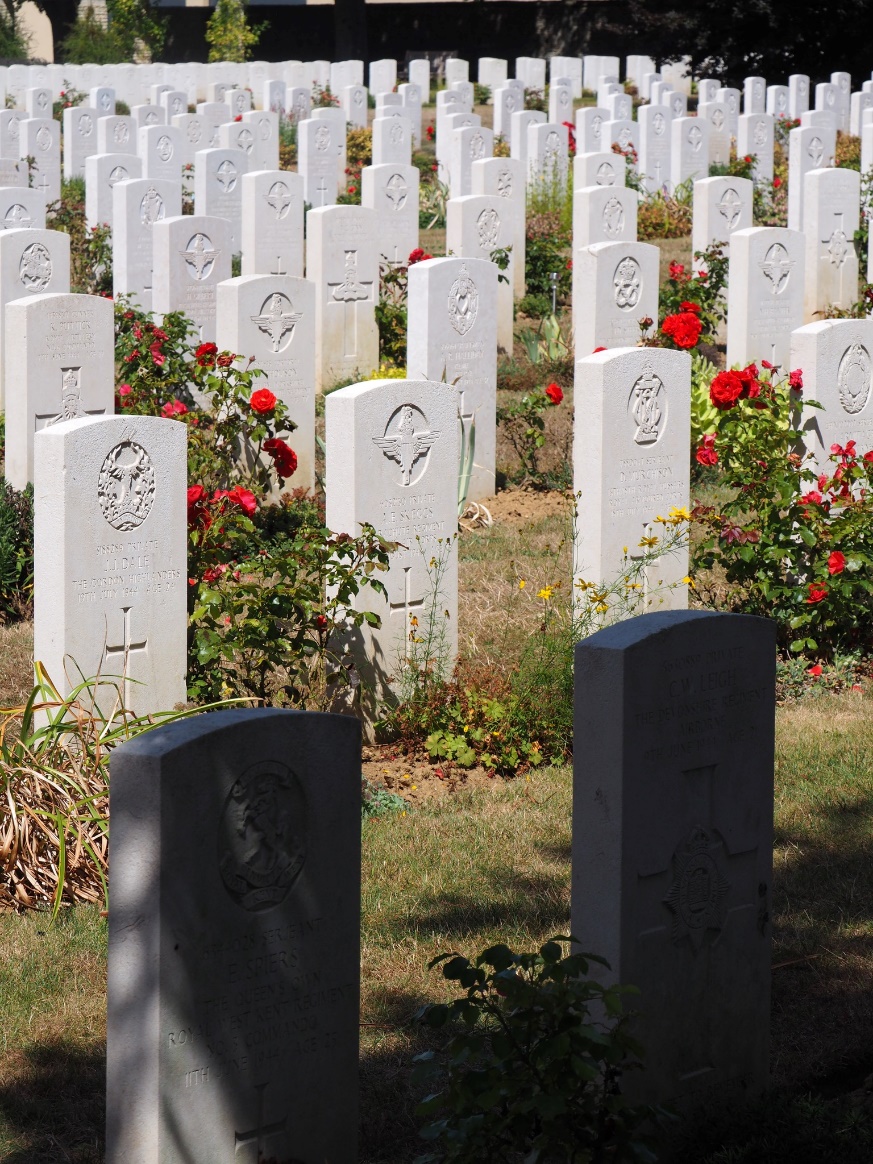
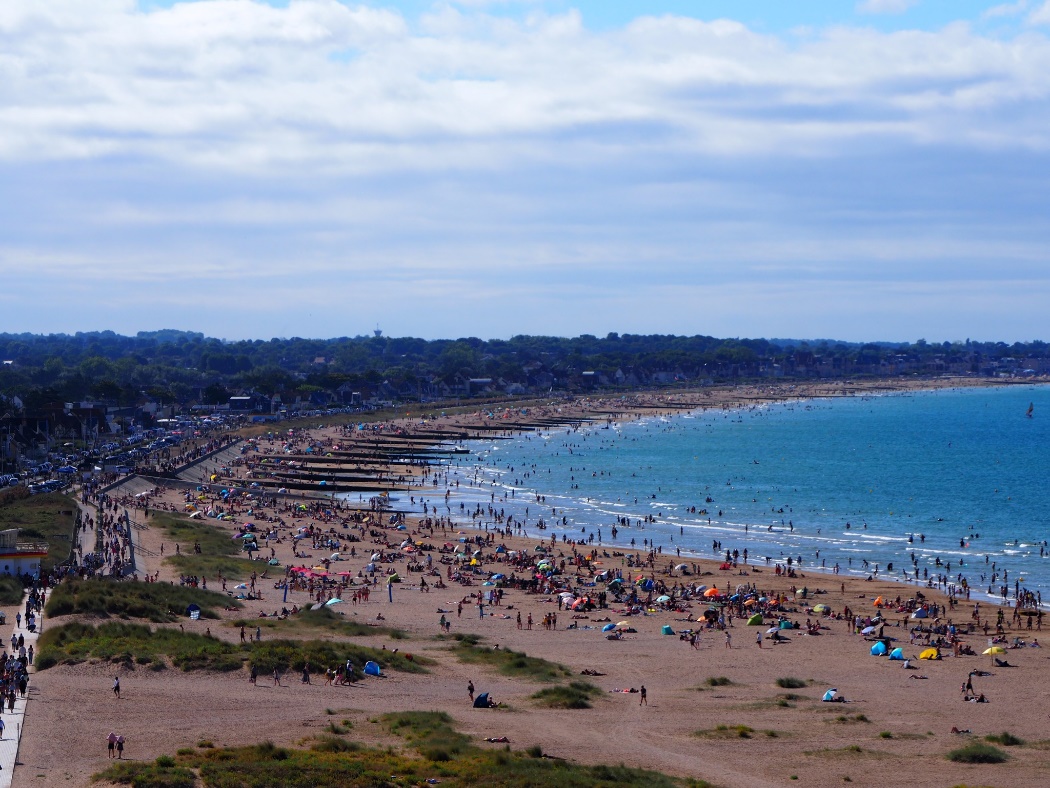
Ironically this happened at a time when many countries were commemorating the 80th anniversary of the D-Day landings, when, on 6 June 1944 over 130,000 military personnel from the Allied Forces landed on the beaches of northern Normandy to push back the Nazi invasion of France.
It was one of the defining actions of the Second World War, and my grandfather, Ellis, was one of those that landed on what the Allies dubbed ‘Sword beach’, at Ouistreham, a few kilometres north of Caen.
By midnight on the 6th of June the Allies suffered 10,500 casualties and the German forces suffered 10,000 casualties – killed, wounded or missing.
[mid-content-banner]
Riots
The UK’s Prime Minister, Neville Chamberlain made it clear at the outbreak of war that in his view the UK were fighting Hitlerism/Nazism.
Speaking to Parliament at the outbreak of war on 3rd September 1939 he said, “I trust I may live to see the day when Hitlerism has been destroyed and a liberated Europe has been re-established”. All of who participated in the War effort were compelled to join and fight Nazism.
Yet, 80 years later and there are elements in our society who wish to enact the wicked ideas spewed by protagonists of these evil ideologies.
One of the main driving forces behind this upsurge in far-right rhetoric has been the demand to ‘stop the boats’, referencing the many dinghies full of refugees and migrants who cross the English Channel from northern France.
‘Stop the boats’ – another of those populist three word slogans – is not a rallying cry that has been restricted to the far-right. The mainstream Conservative Party and their Government Ministers took up the cry to gain political capital.
The ‘boats’, refugees and migrants, were often referenced in outbursts by rioters earlier this summer.
“Get f****g home you dirty immigrant b******s!”, said one rioter.
While the riots were dying down, my family and I went on holiday to Normandy. We stayed at an Eurocamp park in Ouistreham, and while there I got to see at least some of the areas that my grandfather would have seen 80 years ago.
From Sword beach and the crumbled defensive concrete structures defending the shore to Caen where he fought for several weeks until its liberation on 19 July 1944.
Camp
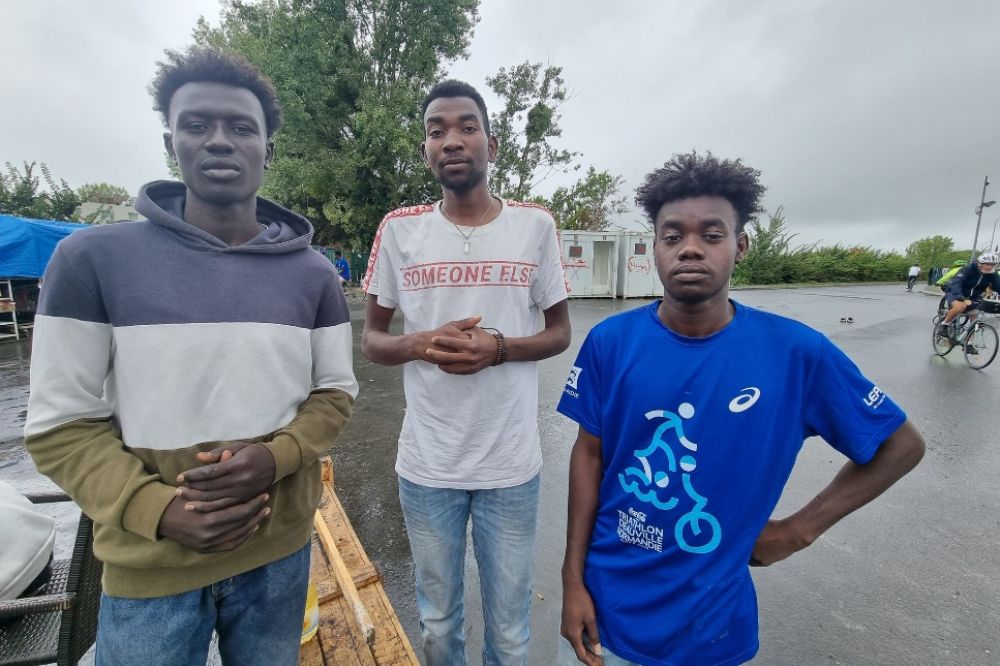
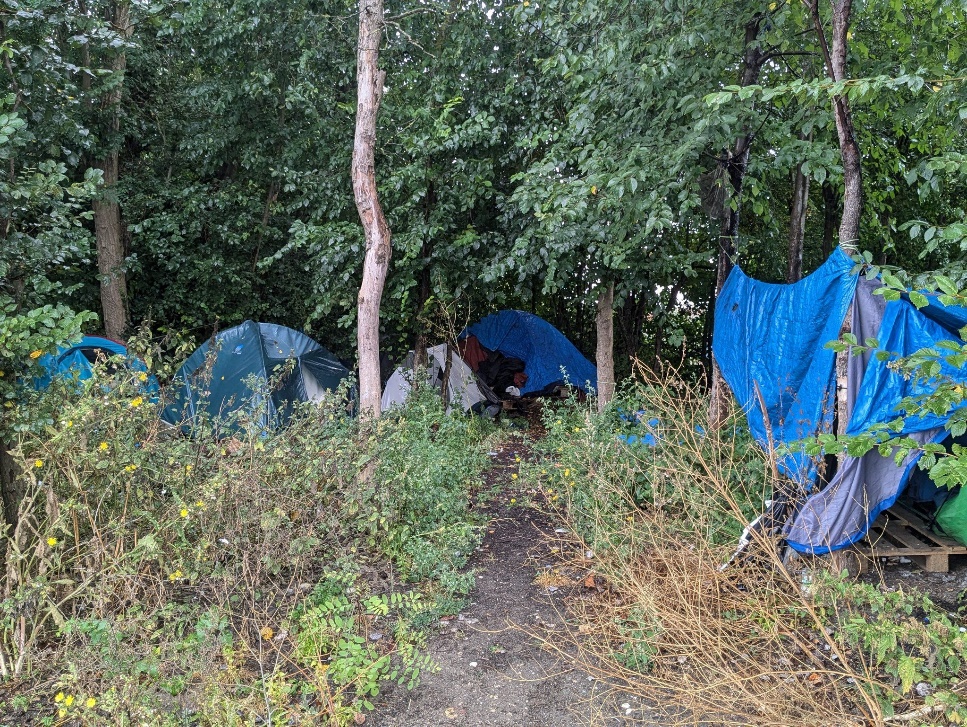
In a wooded area next to the canal in Ouistreham, a mere 30 yards from our caravan and less than two kilometres from Sword beach, was a makeshift village of tarpaulin and wooden pallets.
It was populated entirely by a group of some three dozen young Sudanese men, all looking to make their way to the UK.
I visited the camp several times and started to get to know two of the young men, Mufasa and Mohanad, and spoke to them at length.
They were all members of the Zaghawa tribe, a people who live in the Darfur region of South Sudan and Chad.
Brutal
A genocide is being perpetrated on the Zaghawa in Sudan.
The Janjaweed, a militia group that operates in the region, have become increasingly brutal in their treatment of the Zaghawa and other people’s they deem to be non-Arab.
Armed conflict broke out in the region in 2003 when rebel groups from south Sudan started fighting the Sudanese Government, accusing them of oppressing non-Arab people in the south of Sudan.
In 2009 the then Sudanese President, Omar al-Bashir, was indicted by the ICC for five counts of crimes against humanity, two counts of war crimes and three counts of genocide.
But though al-Bashir has gone, the atrocities have continued, and as recently as this May the UN Special Adviser of the Secretary-General on the Prevention of Genocide, Alice Wairimu Nderitu, warned about Darfur, “We do have circumstances in which a genocide could be occurring or has occurred".
As a consequence the Zaghawa people are fleeing their homes seeking refuge elsewhere, primarily in eastern Chad, where children are recruited as child soldiers. Millions of people in south Sudan have been displaced.
This is the situation facing the Zaghawa in Darfur. This was why these young men had left and found their way to Ouistreham.
They spoke of a long journey, maybe 5,000 kilometres, often barefoot for many, across scorched arid land or desert, from Darfur, through Libya and on to Tunisia.
Passage
Many were jailed in Tunisia and treated brutally, others managed to find a passage across the Mediterranean to Italy.
Some of those I spoke to explained how their dinghy had capsized between Tunisia and Italy and how they spent seven days in the sea, before then travelling a further 2,000 kilometres from southern Italy to Ouistreham in the hope of jumping on a lorry and finding their way to the UK.
According to alt-right parlance these were all ‘fighting age men’. But there is a reason for this. They had a choice – either be recruited to fight and be killed, face persecution and probable death, or find a way to make some money to send home in order for their loved ones to find safe passage and refuge.
As they embarked on their journeys they knew that it would be dangerous, but there was greater chance of survival by taking this long road compared to staying home.
However, it was not a journey that the children, elderly or the women could risk, and so these young men took the risk in order to find a way of building better lives for their families.
They had all lost loved ones in the cruel civil war, and many had lost friends along the journey.
Why the UK? Simply, they learnt some English while at school, and were picking it up on TikTok and YouTube. They had no Italian nor French. They had also learnt of Great Britain as part of their education. Empire casts a long shadow.
Even though ‘Britain’ has a post-colonial responsibility towards Sudan and her people, the Foreign Office has decide not to provide safe passage visas for refugees from there, even though they are facing imminent genocide.
Compassion
These young Zaghawa men, stuck in a improvised camp in Ouistreham, are only trying to improve their lives and the lives of their loved ones. The have a right to live as much as any of us.
Their families are stuck in what should be temporary refugee camps but are in fact effectively shanty towns with poor sanitation and little food facing the daily threat of rape and murder.
What would any of us do faced with this?
Rampaging our way behind Tommy Robinson’s goosesteps while looting shops and hurling crude missiles at the police, hiding behind masks and doing Nazi salutes is not a dignified nor a proper response to anything.
My grandfather and others crossed the English Channel to Normandy eighty years ago under the belief that they were fighting against the spread of Nazism and fascism, and many of his friends died in the exact area where these young men are camped today.
Let’s not let their sacrifices be forgotten. We are better than this, and these young people deserve our compassion and help.
Support our Nation today
For the price of a cup of coffee a month you can help us create an independent, not-for-profit, national news service for the people of Wales, by the people of Wales.
Get more trusted Welsh news
Choose Nation.Cymru as a preferred source in Google News to see more of our journalism.
