


Opinion
The role of active travel in transforming our transport networks
Chris Evans
Previously I have written about how public transport networks need radical changes to be fit for use in the 21st Century and to see the sort of modal changes necessary for us to deal with the climate crisis, which include a shift from widespread car ownership to other forms of mass transportation.
Now is the time to look at active travel and how it also plays a part in the bigger picture.
I do not argue that all car ownership is bad and that everyone should switch to public and active transport, as that is simply not possible. Many differently abled people require a vehicle to be able to play a full role in society rather than be stranded at home. Similarly, tradespeople and musicians require access to their own vehicles to move heavy equipment and tools around.
[mid-content-banner]
Rural communities
People in rural communities also need private vehicles to ensure they are able to go about their daily lives too as everything is more spaced out. So, there will now always be a certain level of private vehicle ownership necessary. However, what we can do is reduce the amount of journeys the rest of us make via private vehicle, as well as reducing the need for there to be so many of them clogging up our streets and public spaces.
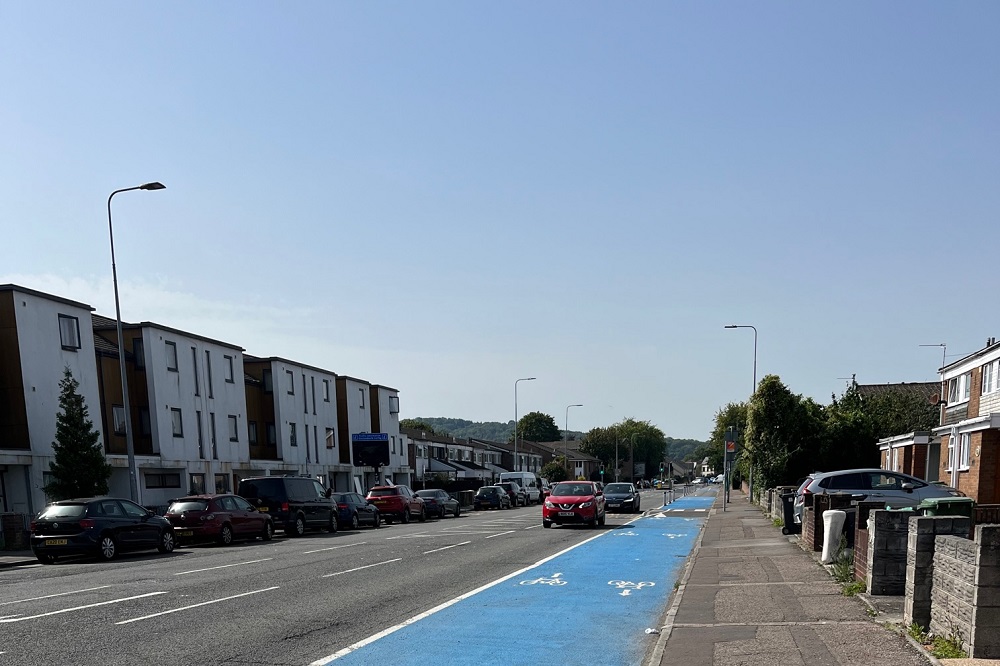
Unfortunately, there are barriers to active travel. One of the biggest of these barriers is the feeling that our roads are not safe enough for cyclists or pedestrians. The Welsh Government has made an excellent start in reducing this problem by providing Capital funding for Active Travel Networks. Many great schemes have been implemented aiming to provide specialist cycling routes, however, design flaws have also meant some not so great ones have also been built, including in my own ward.
What the Welsh Government lacks is a vision, a big picture. The type of modal change required is similar to that implemented successfully by the Dutch, and we can learn lessons from them. Rather than small scale piecemeal schemes, creating a patchwork of paths with fluctuating levels of inherent design flaws, we need a grand overarching plan.
[lower-mid-content-banner]
Rethink
A vision of what we want our cycling network to look like. From there we can then put in to place the important pieces of the jigsaw to get to where we want to be from where we are now. At the moment, too little money is available at any one time, and councils are encouraged to bid for small projects each year which creates this patchwork effect. We need to fundamentally rethink how we both fund and manage active travel to ensure we get a network for the 21st century.
It’s all well and good having capital funding for active travel schemes, but this is likely to be wasted over the long term if we do not also provide the necessary revenue funding streams to ensure that these new active travel paths are maintained properly. Across the country, cash strapped Highways teams usually focus on the road network which takes up all the dwindling funds provided by the increasingly miserly Westminster regime.
There is no separate pot made available for the upkeep of active travel routes. This is most apparent during Winter, when commuters are forced into their cars and off the active travel routes by the lack of gritting equipment provided. Councils claim to focus on the “main” routes, by which they mean the main car routes.
National Cycle Routes
Even National Cycle Routes, the motorways of the bike world, are ignored and do not get a grain of grit to keep them clear for cyclists when the temperatures drop. This leads to more accidents for the most vulnerable of Welsh commuters during the Winter months.
Finally, we need to look at what happens when we reach destinations. Cyclists need a system of safe, secure and dry bike parks that allow cyclists the same protection car drivers already get across the country. Providing bike sections at our multi-storey car parks and at supermarket car parks, where cyclists can park up e-bikes and e-cargo bikes, could be a cheap, easy way to begin this process.
The great thing about all this is that if we achieve the kind of modal shift required, then active travel networks almost pay for themselves in terms of reduced costs to the NHS caused by air pollution and a large reduction in respiratory illnesses.
In summary, what we need to provide healthy active alternatives to car use that are fit for the 21st century are
- a clear national vision of the network we want to build
- Capital funding specifically tailored to achieve this vision
- Revenue funding to ensure the network is maintained
- Safe, secure and dry storage facilities similar to the network of car parks but for bikes.Chris Evans is a Green Party councillor for Mayals ward in Swansea.
Support our Nation today
For the price of a cup of coffee a month you can help us create an independent, not-for-profit, national news service for the people of Wales, by the people of Wales.
Get more trusted Welsh news
Choose Nation.Cymru as a preferred source in Google News to see more of our journalism.
