
Opinion
The Chancellor might need to get the cheque book out if she wants to save labour in Wales
Jonathan Edwards
We are all awaiting eagerly the next opinion poll on the 2026 Senedd election to see if the seas of change visible in recent polls are continuing their swell to high tide, or if the gravitational pull of the political moon is resulting in the retreat of the waves, and to normal service of Labour domination over our country.
For the purposes of this article, let’s work on the basis that Labour support is continuing to fall in Wales and that its status as the pre-eminent political force in our country is endangered next year.
The loss of Wales would undoubtedly be a psychological hammer blow for the party across the UK and set the alarm bells ringing, especially if the insurgent populist right is in the ascendancy.
So, while some Labour Senedd Members might fancy a spell in opposition relieved from the burdens of power, for the rest of the Labour Party across the UK keeping Eluned Morgan as First Minister is mission critical. Contagion is deadly in politics, especially as the UK polls also report the worrying rise of Reform to a level where they could challenge for victory, come the next general election.
[mid-content-banner]
Targeted investments
In a report this week, the Independent Commission on Neighbourhoods (ICON), chaired by former Labour Chief Whip Hilary Armstrong, argues that unless the UK Government targets investment at deprived areas they will hand those communities on a plate to the populist right. While ICON is an England-only body, the same obviously applies to Wales where Reform is polling well in the post-industrial parts of our country.
One of the undoubted problems facing the Labour Party in Wales is the general feeling of stasis in the country. It feels to me as if Labour, after a quarter of a century in charge, is understandably intellectually exhausted. Renewing while in government is an incredibly difficult task. This hasn’t been helped by the financial situation it has faced because of successive UK Government funding allocations.
It is correct to say that the last UK Budget in October 2024 significantly boosted Welsh Government funds. However, it only undid the damage of previous annual real terms reductions – with a huge chunk immediately allocated to pay increases across the Welsh public sector, according to analysis by the excellent team at the Wales Governance Centre. Look at the council tax increases being pre-announced by local authorities across Wales to give an indication of the continuing squeeze on the Welsh public sector.
The old “blame the Tories” line is gone when the purse strings are in your own party’s hands. And the “clearing up the mess of the last lot” strategy is already redundant in the eyes of the electorate.
[lower-mid-content-banner]
New powers
In previous articles I have argued that an announcement on new powers for Wales could help address the perception of a country at a standstill, and help Labour triangulate Plaid Cymru. If Labour wants to protect its flanks from the populist right, it needs to also urgently pump investment into the poorest communities in Wales as identified by the ICON report.
During the 2017-19 Parliament, Theresa May offered Northern Ireland a £1bn Barnett-plus bung to win the support of the DUP for confidence, Budget and Brexit votes. The extra investment was made up of £200m of extra capital investment per year for two years; £75m per year for two years for investment in ultrafast broadband infrastructure; £100m over five years on other economic measures; an extra £50m for two years for education and health; £100m for two years for health transformation; and £50m over five years for mental health.
The point being if a Chancellor wants to provide additional funding to a constituent part of the British State outside normal Barnett allocations, it is merely a matter of political will.
Cash injection
A substantial cash injection, or even the promise of one in the shape of extra capital funding, would enable Labour ministers to don their safety helmets and high visual vests and tour the Welsh valleys. It would at least give the impression that the governing party has some answers to the deep social and economic problems our coalfield communities face, and tackle the inertia which feeds populism.
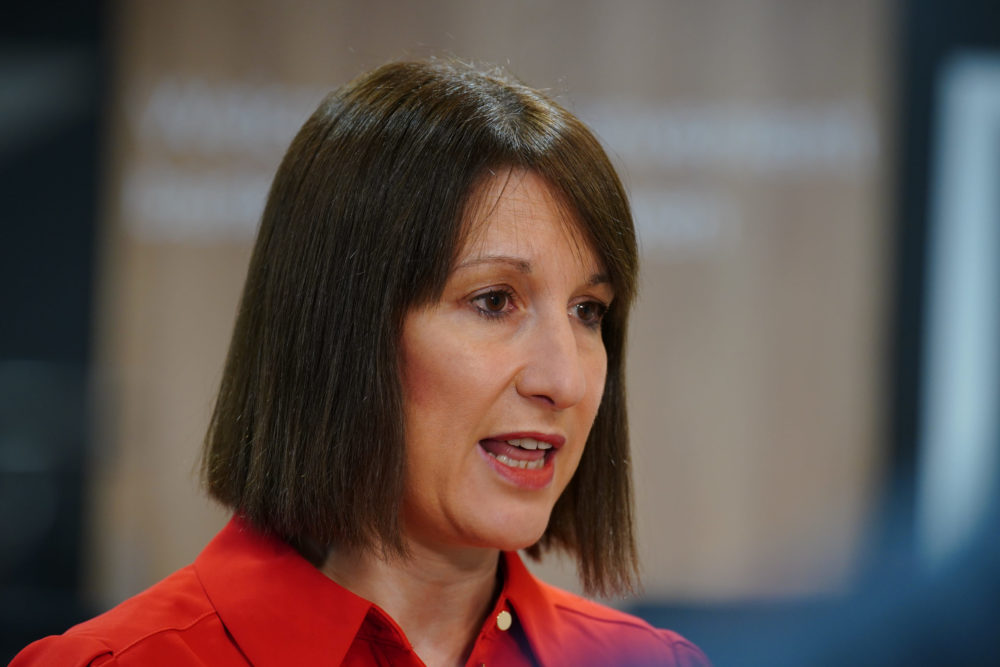
Wales in normal times is taken for granted by the Labour Party at UK level; it is a safe bank of parliamentary seats. But come next May, if current polls are correct, that equation could change and set panic deep within the wider UK Labour party. With a Spending Review due in the Spring and at least one Budget before polling day, it is in the gift of the Chancellor to give the Labour Party in Wales a fighting chance.
The question is, will she act before it's too late to save her colleagues?
Jonathan Edwards was the MP for Carmarthen East and Dinefwr 2010-2024
Support our Nation today
For the price of a cup of coffee a month you can help us create an independent, not-for-profit, national news service for the people of Wales, by the people of Wales.
Get more trusted Welsh news
Choose Nation.Cymru as a preferred source in Google News to see more of our journalism.