


Opinion
The Centre Cannot Hold
Ben Wildsmith
In a curious aside just after the General Election, Labour’s campaign chief, Morgan McSweeney, suggested that in 5 years’ time Labour might run as ‘insurgents’.
Running against your own record is difficult to pull off, Rishi Sunak attempted it this year and we know the outcome of that. It may well be, however, that Labour MkII is unveiled before the next election.
Having spent a term ‘fixing the foundations’, Starmer and Reeves could plausibly claim finally to be able to spend some money on public services. This, of course, is dependent on nothing going drastically wrong with the economy.
For Labour in Wales, such a strategy is very bad news indeed. Whilst 2029 is the stuff of science fiction, 2026 is hoving into view.
[mid-content-banner]
Difficult decisions
The Senedd election will take place in the midst of Keir Starmer’s ‘difficult decisions’. So, whilst he can burnish his reputation as a fiscal tough guy, safe in the knowledge that he’ll be splashing the cash come election time, Eluned Morgan will have to face her electorate with nothing to offer but the traditional cry of, ‘At least we’re not the Tories!’
That appeal has been worn thinly enough even whilst the Conservatives controlled Westminster, so to rely on it with Labour at the helm would be risky indeed. But what else is there for Labour in Wales?
Today’s poll showing Plaid Cymru ahead for the first time since 2010 has the election as a three-way tie.
It is difficult to see how Labour will be able to staunch the flow of voters to Reform UK on one hand, and Plaid on the other.
All over the world, people are voting to replace what is perceived as a complacent, possibly corrupt political class.
The elections of Trump in America and Milei in Argentina suggest that voters are not motivated by any traditional ideology, nor are they placing faith in candidates who embody a promise of competence.
[taboola-banner]
Window dressing
The appeal of these candidates is their demonstrative rejection of the status quo. That rejection is, you may argue, window dressing. These politicians are funded and amplified by businessmen whose interests are at variance with those of most of the electorate.
Stylistically, though, in their taboo-busting rhetoric and rejection of politesse, they seem to be a break with the recent past.
So, Labour in Wales finds itself representing a political position that the national party has indicated it will run against itself in 2029. In power for 25 years, and currently fronted by politicians whose instincts are non-combative, the party is the ideal target for populist opposition.
Today’s poll is, I suggest, only the beginning of an unfolding disaster for Labour. The Conservatives are showing support at 19%, having somehow gained a point since the poll last ran.
As the election approaches, however, it will become clear to casual voters that Reform UK are serious challengers. Given the opportunity to vote for a right-wing party that has a chance of success, how many of those Tory voters are going to remain loyal?
[lower-mid-content-banner]
Apologists
Similarly, after a couple of years of Labour ‘at both ends of the M4’ how is the party to claim any particular advocacy for Wales? The role of Labour in the Senedd has switched from that of mandated opposition to Tory rule to apologists for Labour austerity.
With no prospect of a return for the Tories in Westminster, Labour in Wales exists to prevent Welsh democracy from rocking the boat. How many traditional Labour voters here signed up for that?
My sense is that the centre ground of politics has become poisoned. Formerly radical entities like Labour and the American Democrats have tacked right in pursuit of conservative voters, only to find themselves viewed as unprincipled cogs in the machine.
Parties that were born in class struggle have become a comfortable career choice for the managerial class.
What was a mechanism for change has become a means of preventing it.
Which brings me to Plaid Cymru. Clearly, Plaid can prosper in a situation where the Labour vote begins to crumble. For the win, though, it needs to be brave.
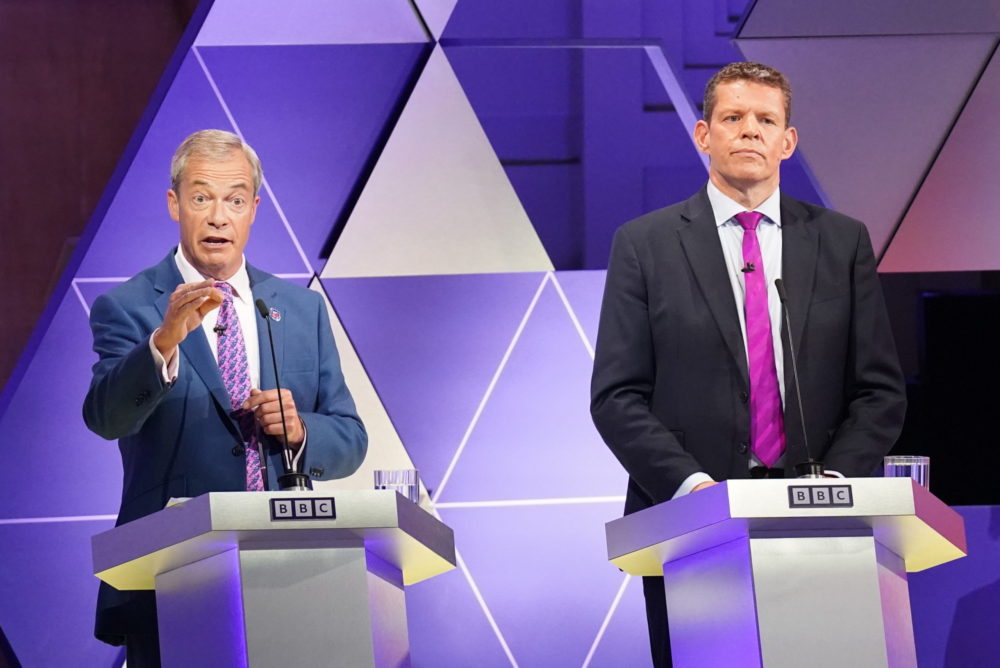
It is clear that the party’s recent cooperation agreement with Labour was not popular with its traditional supporters nor those it seeks to attract. There are tricks the party can learn from Reform UK. Nigel Farage’s recent refusal to enter into any pacts with the Conservatives has lent his party an air of independence.
For Plaid to benefit from this moment in political history, it needs to do the same. If a formal agreement with Labour were ruled out, Plaid could stand against 25 years of mediocrity and jobs-for-the-boys complacency that has infected the party by osmosis.
If Plaid are the largest party, as today’s poll suggests, it should govern from a minority and dare Labour to vote against its programme.
The UK, nationally, voted in the hope that Labour would end the chaos of Tory government. There are different flavours of chaotic governance, however, and we in Wales have a different perspective.
If ‘Welsh Labour’ are to be nothing more than elected diplomats for Westminster, then the state of the nation dictates that something radical will emerge to humble them.
There is every prospect that neither Labour nor the Conservatives are electable entities in the next few years. We know what’s emerging on the right, can Plaid redefine the left in Wales?
Support our Nation today
For the price of a cup of coffee a month you can help us create an independent, not-for-profit, national news service for the people of Wales, by the people of Wales.
Get more trusted Welsh news
Choose Nation.Cymru as a preferred source in Google News to see more of our journalism.
