


Opinion
Plaid Cymru's new crisis over representation at Westminster
Martin Shipton
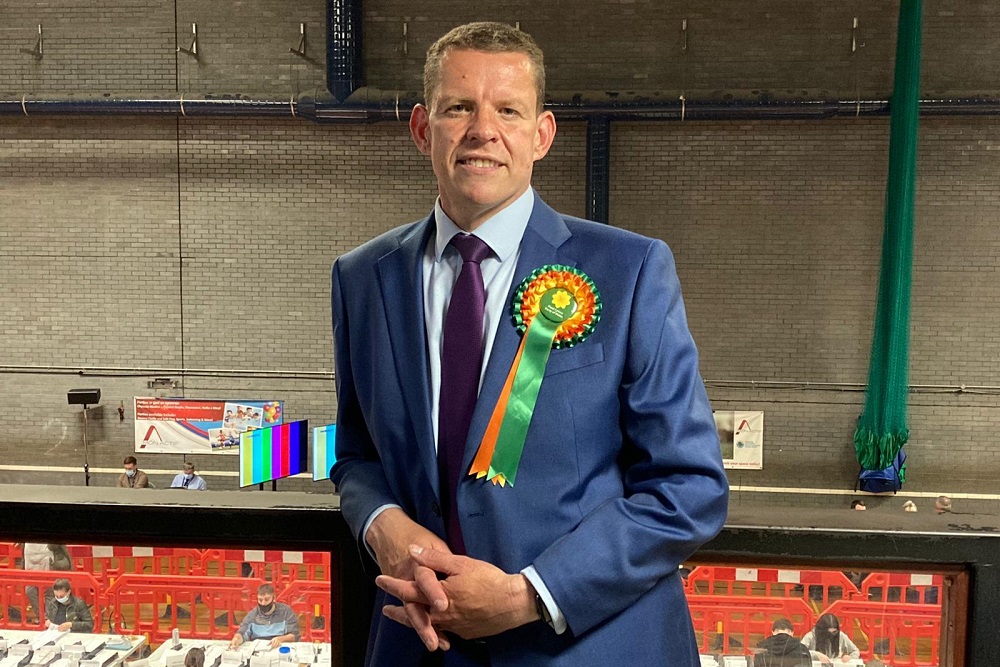
The decision of Rhun ap Iorwerth to stand for the Plaid Cymru leadership contains both positives and negatives for the party.
Other potential candidates still have nearly two weeks to make up their minds before nominations close, but so far no-one else has shown any appetite for standing. This isn’t normal. The natural state of things is for political parties to be full of ambitious politicians who have convinced themselves that they are destined to lead.
In the circumstances, however, there are but two credible scenarios. Either Mr ap Iorwerth will be elected unopposed or an unfancied MS will be persuaded to put their name forward simply to ensure there’s a contest. Realistically, therefore, it’s pretty much a racing certainty that the Ynys Mon MS will become Plaid’s new leader.
For most in the party this will be welcomed as an opportunity to consign to history a torrid interlude during which public attention was focussed on unacceptable behaviour within Plaid’s inner circle rather than the ultimate prize of an independent Wales.
Mr ap Iorwerth has been a solid performer in the decade since he joined the Senedd, and before that was well known as a prominent political correspondent. Not all journalists are able to make a successful transition to the world of elected politics, but he has been a successful communicator in both fields.
It’s fair to see him as a “classic” Plaid politician, and for those who would like to see the party concentrate on its core mission to persuade a majority of voters to back independence, rather than deviating into contentious ideological areas that aren’t specifically Wales-oriented, there will be support for an ap Iorwerth leadership.
[mid-content-banner]
Downside
There is, however, a potential downside too. Becoming the leader would force him to relinquish his role as Plaid’s Westminster candidate in Ynys Mon, making it far less likely that the party could win the seat at the general election expected next year. As the sitting MS for the same constituency, Mr ap Iorwerth is well placed to overcome the reluctance of local voters to oust an incumbent MP seeking re-election. But without his name on the ballot paper, winning back the seat where it last prevailed in 1997 will be much more difficult for Plaid.
This would most definitely be a negative consequence of Rhun ap Iorwerth’s accession to the party leadership. In fact, it opens up a potential can of worms for Plaid that has been looming since it became clear that boundary changes reducing Wales’ number of seats in the House of Commons from 40 to 32 would be going ahead.
Today it’s often forgotten that Plaid came to be seen as a serious political party rather than as a fringe campaign group by having a small group of MPs who punched well above their weight. They established a reputation for excelling at constituency casework while using the Commons as a platform to campaign on such issues as compensation for workers afflicted with industrial disease as well as causes like the need for a Welsh language TV channel.
Such work provided the credibility Plaid needed as a major contender when the National Assembly came into being in 1999. Even though the party hasn’t managed at a Westminster level to make an electoral breakthrough beyond its Welsh language heartlands, its presence in the Commons has been important in keeping Wales as an entity alive in what remains the fulcrum of UK politics.
Westminster
We often complain that Welsh concerns don’t receive the attention they deserve from the UK Government. But if Plaid had no MPs, the situation would surely be significantly worse. UK Ministers can safely ignore what is said at the Senedd, but Plaid MPs are currently able to put them on the spot on their home territory. It’s also the case that Plaid’s presence at Westminster encourages at least some Welsh Labour MPs to make more of their commitment to Wales in their own contributions than would otherwise be the case.
From Plaid’s point of view - and arguably in the interests of Wales as a whole - it makes sense for the party to have enough MPs to keep making a difference.
With boundary changes and other factors in play, however, Plaid is on the back foot in terms of future Commons representation. There is just one seat that it can be sure of winning: the enlarged version of Dwyfor Meirionnydd, held by Liz Saville-Roberts, its Westminster leader. The adjacent seat of Arfon, also held by Plaid, is disappearing, and the sitting MP Hywel Williams has announced his retirement at the next general election.
Plaid’s third current seat, Ceredigion, was won narrowly by Ben Lake from the Liberal Democrats in 2017, but he’s proven to be popular and in 2019 his majority rose to more than 6,300, this time over the Conservatives, with the Lib Dems slipping back to third place. Thanks to boundary changes, the seat is expanding into Pembrokeshire to become Ceredigion Preseli. On a good day for the Conservatives, the new seat should be in play for them, but a combination of the likelihood that it will be a bad day for the Tories with Mr Lake’s popularity makes it more than likely that he’ll be re-elected.
Jonathan Edwards
In 2019 Plaid’s other seat was Carmarthen East & Dinefwr, won for the fourth time since 2010 by Jonathan Edwards. He now sits as an Independent, however, having left Plaid after accepting a caution for assaulting his wife.
Whichever way you look at it, Plaid totally mishandled the issue. After re-admitting him to the party when he had complied with the requirements of a disciplinary panel, Plaid’s national executive committee decided he shouldn’t be able to regain the party whip after all.
He left Plaid and has suggested he may stand as an Independent in the new, expanded constituency of Carmarthen. Despite the police caution, Mr Edwards retains a lot of support locally from people who believe he was treated harshly by Plaid.
So far, no-one has come forward to offer their services as Plaid’s candidate for the enlarged seat. There were rumours that Adam Price, having stood down as party leader, might opt to stand for Westminster again, but he has flatly denied that, telling me: “I’ve been there and done that,” having been the MP for Carmarthen East & Dinefwr from 2001 until 2010.
Some local Plaid members take the view that Mr Price has metaphorically stabbed Mr Edwards in the back. Such dissension will make it harder for Plaid to win the new Carmarthen seat, and with slim prospects of any gains elsewhere, the likelihood is that it will be reduced to just two MPs.
If that happens, the party will face a significant drop in the state funding it receives to employ researchers known as Short money after Ted Short, a former deputy leader of the Labour Party and Leader of the House of Commons, who championed the right of opposition parties to receive such cash as a means to improve Parliamentary scrutiny.
In addition, Plaid will also see its speaking rights reduced in the Commons chamber, making it a greater challenge for the party to get its voice heard on a UK-wide basis.
Parties rarely admit before a general election that they expect to lose seats, putting on a show of self-confidence. Behind the masks they put on for public consumption, however, Plaid politicians will be worried.
Support our Nation today
For the price of a cup of coffee a month you can help us create an independent, not-for-profit, national news service for the people of Wales, by the people of Wales.
Get more trusted Welsh news
Choose Nation.Cymru as a preferred source in Google News to see more of our journalism.
