


Opinion
Owning our futures by knowing our now
Cinzia Yates
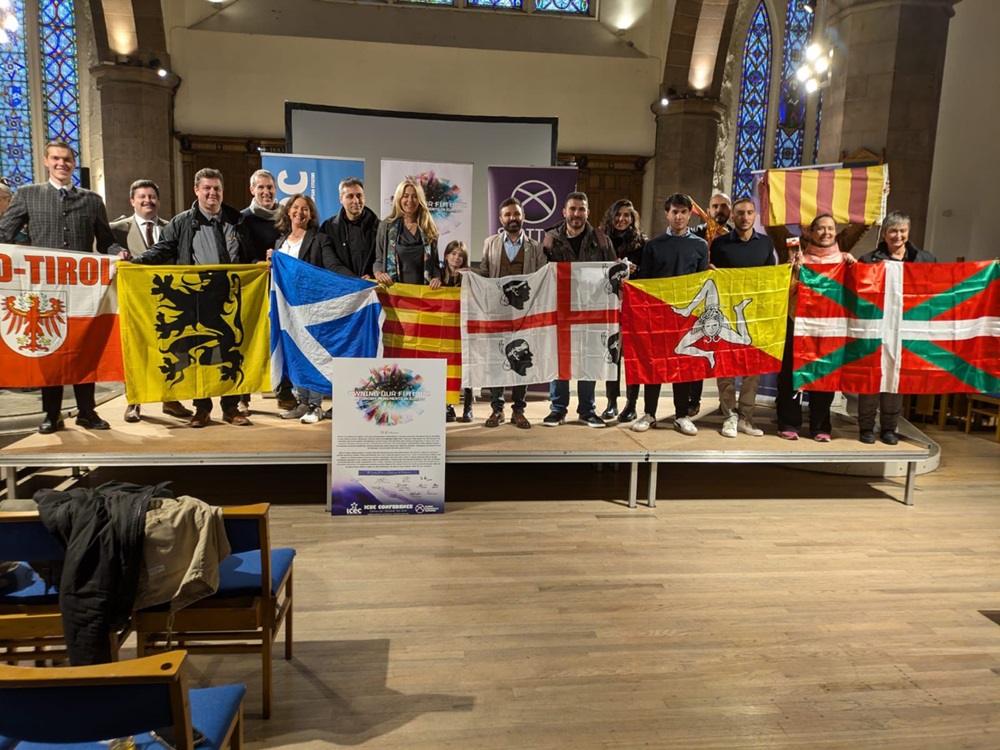
I recently attended a short conference organised by the Scottish Independence Commission titled ‘Owning Our Futures’.
As an attendee the conference timetable was frustratingly packed and chaotic, but as an anthropologist, 14 nations trying to give an account of their movements for independence and greater autonomy in 6-minute speeches provided a fascinating insight.
It was incredibly varied, not only the ways in which various movements hope to achieve self-government, but the values and identifiers of nationhood on which their argument for autonomy relies. Trying to sum up why a place should be a nation or autonomous region in six minutes meant relying on very specific and key aspects of the people and history of that nation that may not otherwise be spoken so succinctly.
Conceptually, the conference itself showed the inherent difficulties in claiming and communicating nationhood. While titled ‘owning our futures’, the conference requested the stories of movements up to now; showing how owning our futures means recognising and understanding our pasts before we can begin to look ahead.
[mid-content-banner]
Problematic concept
Organised in collaboration with the International Commission for European Citizens (ICEC), an NGO based in Belgium and concerned with independence movements in Europe, the event entirely focussed on European organisations, but even this was an evidently problematic concept. If Europe meant the EU, then why would Scotland, Wales and Northumbria have been included? But if it meant the continent of Europe, why include Greenland and the Faroes, who may be legislated by a nation in continental Europe but are not geographically European (which is kind of their point!).
Maybe in this case it was European citizens who are citizens of a continental European country against their will. Perhaps escaping a dominant European state is what brings us all together.
[lower-mid-content-banner]
What makes a nation a nation?
The various movements all had very differing claims to nationhood and wildly different reasons for not being the nation they felt they should be. However, what was a common thread was the concept of nation in opposition. A people who are NOT what their state leaders are and therefore not what they were expected to be.
Greenland and the Faroes did not want to be Danish. They are clearly not Danish. The argument for them being Danish goes back centuries and is impossible to disentangle from huge swathes of history and administrative development. Greenland spoke to an ethnic identity, a history of ethnic cleansing carried out through means as abhorrent as forced sterilisation.
The people of Greenland wanted their identity as Inuit reclaimed. However, others had a far more recent and less violent story. South Tyrol was a region made part of Italy during the reorganisation of Europe after the second world war. Having German speakers in Italy does seem a bit peculiar, and it should be simple enough to recognise that that was an odd idea and therefore put it right. Flanders had an even less contentious argument that seemed mainly economic. Belgium is essentially split into two, predominantly by language, and the Flemish want to use their own money for Flanders. They are Flemish.
Spain sits somewhere between these two extremes. Having been made up of various kingdoms, the unification of Spain forced disparate cultures, with disparate languages and identities into a single unit with a purposeful attempt to create a single ‘Spain’ and a single ‘Spanishness’.
Franco purposefully plucked popular aspects of culture from across the nation to create an ersatz Spanishness that represents no one. And that Spanishness was forced on peoples whose nations did not adhere to administrative borders. While Galicia has an argument for nationhood based on the use of Gallego, a Celtic identity and a very distinct culture, The Basques are forced into Spanishness and Frenchness, causing a constant internal struggle despite being neither. And then of course there are the islands. Islands are wholes.
They may be cut off by the elements. So it seems obvious to have them have control of themselves. Sicily, the Faroes and Sardinia do not have to make much of an argument to claim nationhood. (As a Manxy having no land borders has made our arguments and claims to identity much easier. It’s either Manx or it’s in the sea.)
All of these arguments, these tensions, these oppositions; these historic and recent battles against larger dominant ‘others’ ran through the galloping presentations like a raging river. It dragged in aspects of identity and language and economics as it flowed into one great call for self-preservation and escape.
Except one.
The Welsh spokesperson, Gwern Gwynfil, a man not unknown to wax lyrical about the virtues of Wales, chose not to speak of otherness, but to speak of Welshness. He, somewhat unsurprisingly if you’ve heard him speak before, turned to Richard Price to speak for Wales. To speak of liberty through democracy and how that liberty, based on the beliefs of an 18th century Welshman from a small village, spread across the globe and became the central tenet of new nations. (Admittedly that new nation was America and that may not be going so well right now, but the point stood).
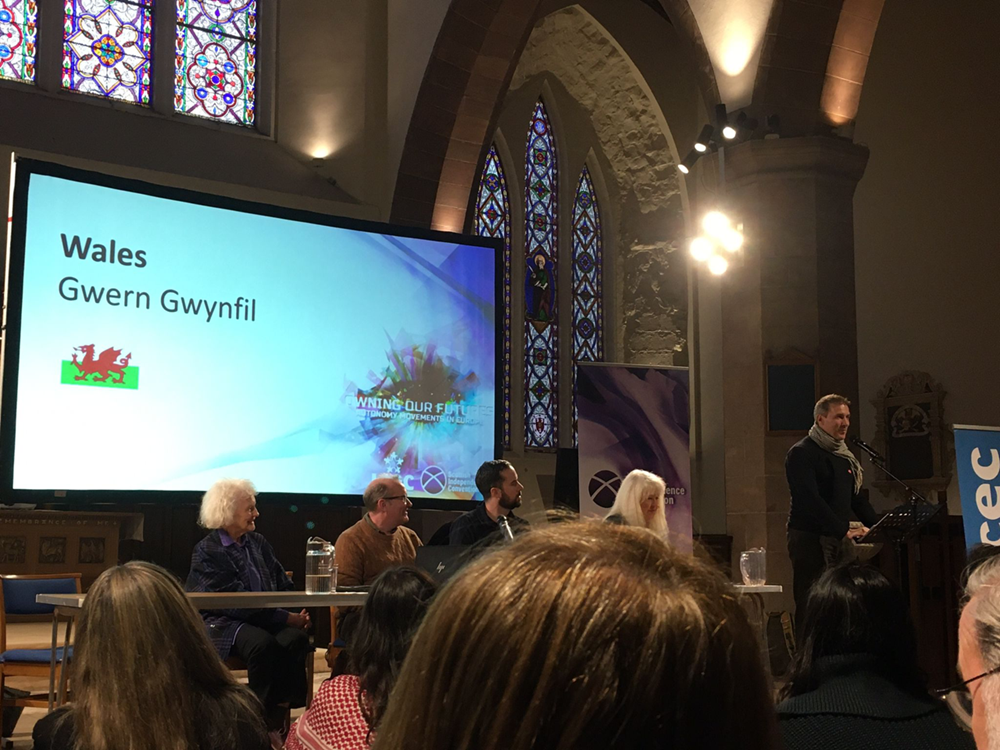
While still focussing on a historical aspect of Welshness, this was an outward looking concept of why Wales is a nation. Not an argument in opposition. And, as an anthropologist at heart, at an event in which I’d normally be analysing music and costume, it led me to start thinking about ‘owning our future’ and how we express our right to nationhood by recognising and enacting our Welshness.
Can there be a Wales without Welshness in 2024?
And so I started to look around the room for the ‘-ness’ of the other delegations. The things we do to enact our identity every day. Only two of the delegates were wearing anything that would give away their national identity, and even then only if you knew a bit about national costume. Names were not an automatic indicator as many were named in the dominant language of their nation. Language was a biggy, although somewhat ironically the conference was held entirely in English with no little difficulty in dealing with non-English speakers and their names by the organisers.
Only one delegate chose to speak only in their native tongue, Gallego, with others choosing a few token sentences to bookend their speech. The chair, a Scottish indy activist and journalist, seemed to lament the lack of a Scottish language to unify the claim to Scottish independence, which, along with her difficulty in pronouncing names and organisations, caused a few to bristle. Networking discussions took place in common languages (Spanish, French, English) and it was clear that many delegates were unaware of other minority languages and their struggles.
As the hosts, the SIC made a small effort to enact their ‘-ness’. There was no Gaelic spoken, but there was a scratch ceili band playing celtic favourites while the delegates were offered haggis, neeps and tatties and a wee totty of whiskey. I’m still trying to work out how I feel about a piper playing the Proclaimers on Gaita and wearing an EU flag hat as we entered the event. But otherwise, there was no nod to culture or Scottishness. Even networking was arranged to take place in a sports bar.
I grew up with the Manx saying ‘gyn chengey, gyn cheer’ (no language, no country) and while I now recognise ‘language’ is far too strict a concept, I do believe that to claim and achieve nationhood you need a cultural distinctness to hang that claim on. In the late 19th century, that was costume and folk dancing and songs and language. But today it has to be more than a few words in your language, a bagpipe and some haggis.
What is our ‘ness?
I spoke to some of the delegates about this, and what their ‘-ness’ was and they began to become animated. Yes, it’s our history (ancient or recent, bloody or otherwise) but it’s all the small things we do that make us who we are. It’s the overlapping constellations of experience and expression that eventually become a whole. Its daps not plimsols; its knowing that whoever you speak to when learning Welsh you’ll get ‘milk’ wrong; its bristling when the far right try and use Muslims in Cardiff bay to sow division; its knowing that trains are pointless; its having to dress up in a cheap and slightly uncomfortable Welsh costume for St David’s Day at school; its supporting anyone but England in the rugby; its half ‘n half; it’s resigning yourself to your whole life always being ever so slightly damp; it’s inclusivity; it’s Italian cafes; it’s knowing about the miners strikes; it’s rissoles; it’s hating Ryan Reynolds while being secretly proud of Wrexham; it’s only listening to half of any announcement; it’s nodding politely while Americans talk about Tom Jones; it’s speaking Welsh; it’s not speaking Welsh; it’s not switching to Welsh in the pub when the English come in; it’s Penscynor and Dan yr Ogof; it’s knowing that Aberystwyth might as well be another planet if you can’t drive; its doing a tiny ‘yay’ when you see the ‘Welcome to Wales/Croeso i Gymru’ sign; it's loving/hating Gavin & Stacey; it’s Goldie Lookin’ Chain; it’s Dafydd Iwan and it’s myriad other tiny things that make you feel you’re at home when someone else expresses them. It is all those things, all the values of freedom of expression, of language, of inclusivity, of workers rights that those things encompass that makes Wales a nation.
Wales is on the right track with showing that ‘liberty’ is part of Welshness. We cannot as a nation exist solely in opposition to a dominant other. We need to be the dominant us. But how do we capture it? How do we use it as a unifying concept to achieve nationhood and therefore better outcomes that are better suited to our Welshness?
How do we create a narrative of Welshness that we can display in six minutes? Until we have that, until we have some unified idea of what it is to be Welsh, some common concepts that are all about what we are and not what we are not, we cannot start to fully realise the argument for nationhood. But once we have that argument, once we know what we are, new ideas on how we manage that economically and politically will come easy.
We may be big enough, we may be rich enough, but are we Welsh enough?
Support our Nation today
For the price of a cup of coffee a month you can help us create an independent, not-for-profit, national news service for the people of Wales, by the people of Wales.
Get more trusted Welsh news
Choose Nation.Cymru as a preferred source in Google News to see more of our journalism.
