


Opinion
On Covid-19, a century and a half of expertise in infection control has been squandered
Dr. Carl Iwan Clowes, former medical director of NHS Wales, board member of Public Health Wales 2009 -2018
Pounding the streets of London may not, at first glance, seem an obvious way to tackle an infection but that was exactly what Dr John Snow did in 1854 when, faced with a cholera epidemic, he walked the Broad Street area of the city and identified a common feature of all the infected patients.
Dr. Snow worked around the clock to hunt down when the outbreak began and from where the victims drew their water supply. The tracking took him to hundreds of cases of cholera in schools, restaurants, businesses and pubs and he noted that the families all got their water supply from a pump on Broad Street.
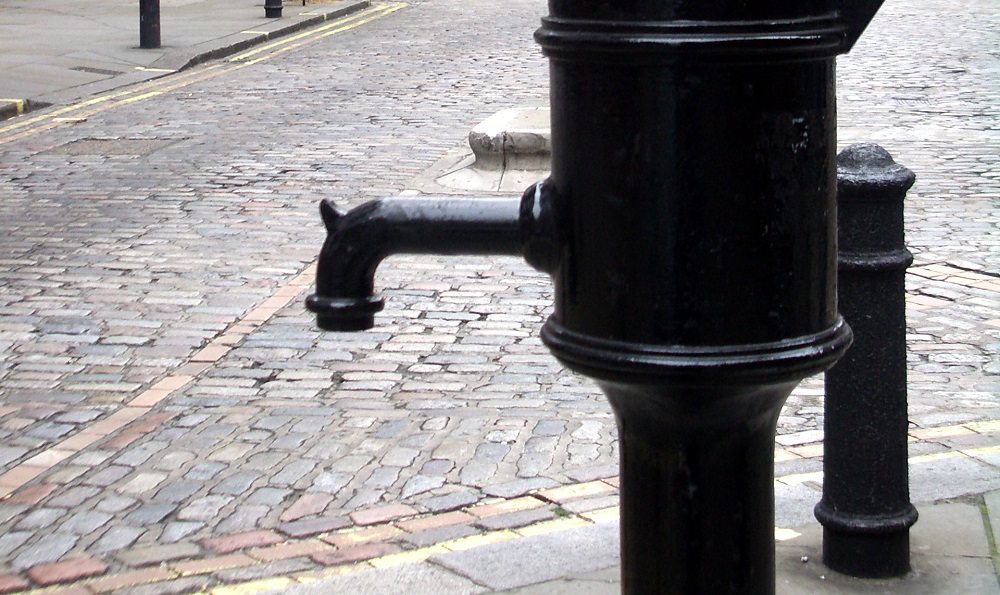
On 7 September 1854, Snow took his research to the dubious town officials and convinced them over time to take the handle off the pump, making it impossible to draw water. The cholera outbreak abated almost immediately.
The significance of this intervention was far-reaching. An outbreak of cholera in the county of Glamorgan in 1848/49 had resulted in the deaths of over 3,000 people. The intervention was urgent and by 1872 almost £100,000 had been invested in drainage and water supplies in Cardiff alone.
Modern-day epidemiology was born. Schools of Public Health flourished, notably in London, Liverpool, Edinburgh and Cardiff. Their influence was widespread, influencing the health and well-being of populations throughout the world.
[mid-content-banner]
Tracing
Wales entered the field of public health education very early and established one of the first Chairs in Preventive Medicine. In Cardiff a Medical School was opened in 1893 and 1931 saw the creation of the Welsh National School of Medicine and it was here that Archie Cochrane, a world-renowned doyen in epidemiology and a pioneer of Randomised Controlled Trials, chose to establish his research in 1948.
Almost from its inception, there was close collaboration between the Medical School and the municipal authorities. The School was allowed to use the public health laboratory of Cardiff Corporation for teaching purposes and in 1900 it established a Department of Hygiene and Public Health.
The importance of a potable water supply for health and well-being was, by now, well established. In the early part of last century Cardiff became one of the world’s leading centres of Public Health or social medicine. The challenge of a potable water supply remains today for much of sub-Saharan Africa, South-east Asia and parts of South America where morbidity and mortality from gastroenteritis, cholera and typhoid are all too common.
The importance of a potable supply in contemporary Wales was highlighted in 2005 when 231 cases of Cryptosporidiosis developed in north-west Wales following an infection in the mains water supply. Tracing the common point source for all infections of this nature is vital to understand where best to intervene and curb the problem.
The principle of tracing an outbreak of disease back to its source was tested to the extreme in Clwyd in 1989 when the county saw over 600 cases of Salmonella poisoning, the largest outbreak in Europe last century. The point source was eventually traced to a wholesale supplier of meat in the region and the outbreak was brought under control but not before many miles had been pounded by researchers on the ground.
Within the same period, an outbreak of the potentially fatal botulism occurred in Clwyd and adjacent parts of England when a yogurt became contaminated by an affected supply of hazelnut puree. Widespread distribution of the yogurt, through direct sales and cash-and-carry outlets proved a significant challenge to the county’s Public Health team. There were no short-cuts. There were long hours and shoe leather wore thin.
Outbreaks of this nature involve a huge commitment to piece together the spread of a disease in an attempt to bring it under control. Many hours of work coordinated by the Health Authority’s lead on Public Health was the key to success. Expertise in analysis was forthcoming from the Welsh Office and the University in Cardiff and the county’s Department of Environmental Health played a hugely significant role, deploying resources to trace all the likely contacts, before treating and isolating them.
Resources
A pattern of infection control has been well established in this country for well over a century. Experience has shown the value of local coordination across agencies, with specialist input from the Centre, as being the formula for controlling widespread outbreaks of disease.
So, what has gone wrong in the case of controlling the spread of Covid-19 in this country?
When the first patient in Gwynedd succumbed to Covid-19 in March, the obvious first question was how best to follow recent contacts. The stark reply was that resources didn’t allow that. But, hold on a minute. How could that be? The numbers were still few and other agencies’ resources were still to be tapped.
When the WHO first announced a pending pandemic of coronavirus in February there were just 82 cases worldwide outside China with no deaths. Why didn’t we mobilise then? Why didn’t agencies coordinate resources at that point?
Instead, here we are, three months down the line, looking to contact trace on a far wider scale, with almost 2,000 thousand preventable deaths in Wales in the interim.
Our legacy of a well-tried and tested system of contact tracing going back over a century, and pioneered for much of the rest of the world to follow, has been squandered.
What a travesty.

Support our Nation today
For the price of a cup of coffee a month you can help us create an independent, not-for-profit, national news service for the people of Wales, by the people of Wales.
Get more trusted Welsh news
Choose Nation.Cymru as a preferred source in Google News to see more of our journalism.
