

Thu, 23rd July Cardiff 19°
Nation.Cymru wordmark
Advertisement

Opinion

Mind your language
By Mark Mansfield
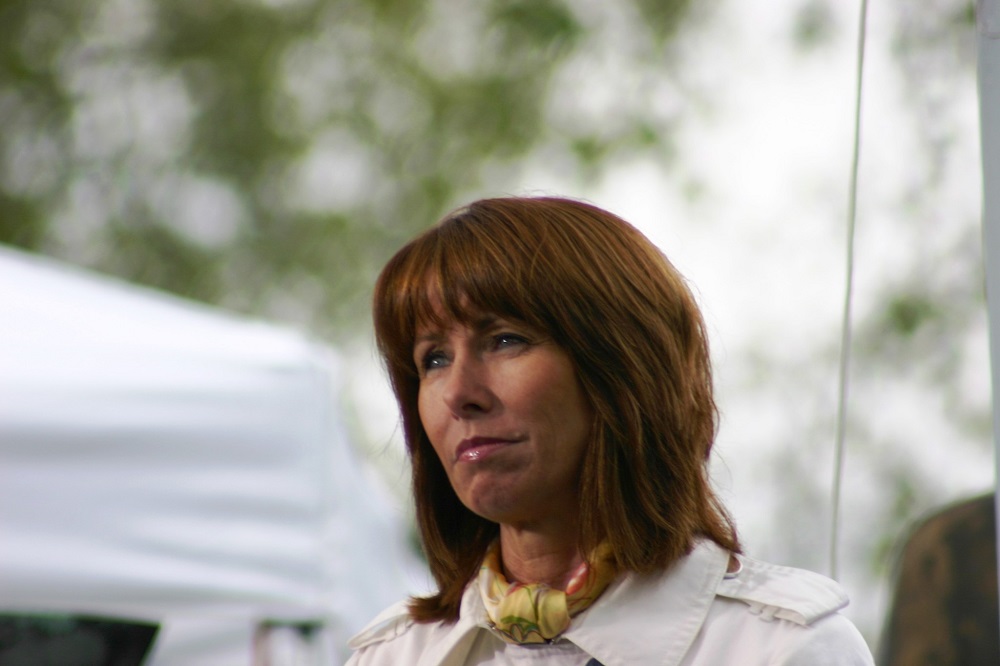
Kay Burley. Photo by TiggerT is licensed under CC BY-NC-ND 2.0.

Mark Hutchings

The current turmoil in Plaid Cymru presents many challenges. Notably among broadcasters who for whatever reason have failed to familiarise themselves with the pronunciation guide.

As news broke that Llŷr Gruffydd, was the interim leader of the troubled party, Sky flashed the announcement to its viewers with an audible whoosh of journalistic drama.

The immensely talented presenter Kay Burley then set off with the news like an Olympic athlete, quickly out of the blocks but clipping the first hurdle, Llyr, then clattering into the subsequent obstacles of Senedd and Cymru.

Over many years as a Wales correspondent serving UK-wide audiences, I have seen, and sadly heard, it all before. Kay by no means stands alone as a top flight presenter floored live on air by this strange old language called Welsh.

A familiar part of my job at the BBC was fire-fighting mispronunciations, though ideally I would try to head them off early. My success rate was a bit "Sam Allardycey". I could just about get us out of trouble but not with a huge amount of finesse.

I'd provide a quick Route One steer, then listen with trepidation, with the sound slightly turned down, as if to deaden any faulty aim.

If it was an introduction to an interview with me, I would sometimes take the coward’s way out when asked for advice.

“How do you pronounce it?”

“Er don’t. I’ll do it instead.”

[mid-content-banner]

Mangled

In particular, I have never quite understood how often Cymru gets mangled. I can only think it's some sort of confusion with the word cwm, though I may be slightly over-generous in my interpretation. And, let’s be honest, as a word, it’s been around a fair while.

There are notable exceptions. 5 Live's Nihal Arthanayake was a model of engagement with the language at an outside broadcast in Caernarfon last year, ably assisted by comedian Tudur Owen. And I've never met a broadcaster who gets it wrong out of any sense of ill-will. Would be bizarre if they did.

Sometimes it helps, a bit, to see the funny side with an "if you didn't laugh, you'd cry" type approach.

Tonypandy is frequently pronounced in a way that you wonder whatever happened to Andy (dated reference), while Pontardulais was once delivered as Pont-ar-du-lay, which seemed to give it a rather exotic glamour.

I am not arguing that Pontardulais doesn't already possess any exotic glamour.

But then, but then. Born and raised as I was in Pontypool when Welsh was little more than a curiosity, I know how you're MEANT to say Croesyceiliog, aka Crossykilog, but can't quite give it the full welly when back home. There there's nearby Mamhilad, aka Mameyelud.

Most of all as a broadcaster, I dreaded the call to an incident in Beddau (Bather). Not just because of any particular concern over what had happened there but fearing the moment I would have to say it on air.

For all the official rules, I have always felt uneasy at pronouncing a place in a way that most people who live there wouldn't.

Fleur-de-lis

In pre-satnav days, I was once heading to a story near Blackwood. I stopped to ask someone for directions. Extraordinary to think that used to happen.

"Can you tell me how to get to Fleur-de-lis?" I naively enquired.   The elderly man looked at me blankly.

"Oh, you mean, Flower?!" he said, both bemused and amused by my ignorance.

So, on what bumpy linguistic journey will the Plaid leadership take us next? One leading contender, assuming he decides to stand, is former BBC reporter Rhun ap Iorwerth. He is well versed in how poorly versed some others can be.

There is a story that in his BBC days, someone rang the Westminster office asking for a certain "Ronnie Epworth”. Or it could have been "Appleworth" - versions have varied in the telling over the years.

Either way, confusion ensued before it became clear that the caller had taking the mispronunciation of Rhun to another level. Evidence suggests it may not have held him back.

Mind you, I've been called some things in my time. And that can't be put down to language. In one of my early bylines on the Western Mail, I was Vicky Baxter-Wright for reasons I never established.

And on my first overnight news-reading shift on 5 Live, the great Rhod Sharp arrived in the studio moments before we went on air.

He turned to me with no clue as to my identity and as we hit the jingle at 1am, he announced to the nations:  "And now the news with... Hugh McVie."

It was a name, he later told me, that he had plucked out the air.

With hindsight and a sharper wit, I could have said: “It's Huw not Hugh” but the moment had passed.

So, the struggle goes on.

For sure, some names are particularly tricky for those unfamiliar with Welsh. And for many, Bannau Brycheiniog, for instance, will be something of a test, regardless of the political debate.

There is a much-repeated argument that broadcasters will make more effort with the pronunciation of a far-flung place than one just over the border. I am not convinced that’s entirely true but for sure we must try harder.

And if we can get it right on a regular basis, that would really be news worth breaking.

For the price of a cup of coffee a month you can help us create an independent, not-for-profit, national news service for the people of Wales, by the people of Wales.

Get more trusted Welsh news

Choose Nation.Cymru as a preferred source in Google News to see more of our journalism.

Choose Nation.Cymru as a preferred source in Google News

12 comments

Welsh_Siôn

What's so b----y difficult about Cymraeg for a lot of our eastern neighbours? It's very much a phonemic language - much more so than theirs - with regular spelling patterns and the stress nearly always on the last syllable but one. Vowels are short or long - and yes, guys, this includes 'w' and 'y' so it has more than English. Helpfully, many of the long vowels wear a little hat - like in my first name - to help you identify them as being long. The 'll' sound of 'Llŷr' (anglicised to Lear, by the way) may prove tricky initially. But because of its ubiquity in Cymru (think 'COMEree', if you must) and its otherwise comparative global rarity means that its regularly attempted, and constant practice leads to success. (Dyfal donc, and all that.) Perhaps newscasters don't go around with malice aforethought to denigrate our language. But the truth is they probably have no forethought. 'It's Welsh - it doesn't really matter, it's not really a language' and all that. It's that attitude - when there are Welsh speakers in the office, think Huw Edwards, Jason Mohammed, Alex Jones off the top of my head - and official guidelines that sticks in the Cymraeg craw. I recall (and still shudder at) the BBC Wales Today reporter doing a piece to camera from 'Thai Frei' (aka 'Tŷ Fry') some years ago.

Reply
Connoisseur of Understatement

Win them over by telling than to [mostly] pronounce “y” like the “a” in sofa! It seems to raise a smile, and it shows them nicely that they've already mastered an insanely complicated orthography. Then boost their confidence still more by writing down “of” and “off”. Ask how they're pronounced, and lo & behold! our English friends knew all along.

Reply
Gareth Wardell

My favourite is: "Clydach pronounced as Clydutch".

Reply
CJPh

Some have even been heard calling the capital city of the Swansea Valley 'Sly-datch'. Luckily our local rugby club is called the much easier to pronounce 'Fah-drey', according to many a touring clubman from across the clawdd.

Reply
Mawkernewek

You should go to Devon where there are two places called Woolfardisworthy pronounced in two different ways, neither pronounced as they would be in a straightforward interpretation of English spelling.

Reply
Glen

I remember when Cwmbran Town played a European game against Cork City in the early 90's. the Scottish commentator on Eurosport who were covering the game kept calling them Quimbran!

Reply
Nigel

I remember asking a local the way to Rogiet. As a Swansea Jack I screwed it up and she quite correctly laughed and took the mick out of me.

Reply
Iago Prydderch

Why is the attention always on the English who can't pronounce Welsh names when a lot of Welsh people can't even pronounce them properly? How many times have we heard Welsh people say Langorse, Landudno, Nanteeglo, Penterk, Brynmawer, Pent-wyn, Abersock, Rhonda, Ponteepool, Abertawee, Eelan Valley, and Langiwrig? If Welsh people can't pronounce them how do we expect outsiders to!

Reply
CapM

Frustrating as it is when Welsh people mispronounce Welsh place and personal names the article is about professional broadcasters getting it wrong. They have no excuse as it's their job to get it right. We as a nation seem to have a propensity to adopt how English people pronounce our place names. English people seem to have a propensity to not adopt Welsh pronunciations. It's a vicious circle and insisting that well paid professionals do their job properly is surely reasonable and the least we can do.

Reply
Y Cymro

Yes, we all make mistakes in life regarding pronunciation, sure, but it's the ones who continue to mispronounce Welsh place names out of ignorance and lack of respect. Just look at bigoted BritNat Rishy Sunak and the Welsh Conservatives who recently stated they would refuse to recognise the name change of Brecon Beacons to its original Bannau Brycheiniog. Also, I find those presenters on television who butcher and struggle to pronounce Welsh place names often opt to use the ambiguous term 'North Wales' during their news & weather reports rather than use the Welsh town village or county name because they simply are incapable of wrapping their monolingual tongue around our language. Note: A bugbear of mine also goes to Welsh speakers themselves who for some odd reason have been conditioned to mispronounce Lloyd (Llywd). They for some odd reason drop the Ll that angers me no end. Anyway, enough of my bugbears. A simple solution to this problem is this. Do some bloody research! If you cannot pronounce Welsh place names asked someone who can. There are plenty of Welsh speakers willing to help those less fortunate, or websites a click away on the internet where you can access information. There are numerous language , apps on your phone where you can learn how to pronounce Welsh place names and hear the phonetics of the Welsh alphabet. We are so damn lucky today to have access to such information. No more lame excuses. You can't use ignorance as a defence anymore. But what equally frustrates me is that I don't see similar when BBC or Sky news presenters do reports about France or Spain. They make an effort by putting on a pseudo French or Spanish accents, although sounding a tad like the English policeman from Allo Allo, but at least some effort is made to annunciate properly their place names & language unlike their approach to Welsh & Wales. It's not only lazy journalism, but the disrespect towards Welsh has been normalised in society because as England's first trophy nation prejudice towards Britain's native people & language is the last accepted prejudice.

Reply
The Original Mark

I did point this out a few months ago regarding the presenters having no issue with Ukraine and Russian words.

Reply
Andy Williams

Wait for it, Andrew RT Davies, will insist LLyr Gruffydd, change his name, so that the London media can pronounce it. Or even worse, LLyr's name will have an effect on Welsh tourism.

Reply

Leave a comment

Comments are reviewed before they appear.