


Opinion
Devolution means that the ghost of Meibion Glyndŵr can stay buried
Ifan Morgan Jones
As the housing crisis in Wales continues to worsen, it seemed like only a matter of time before someone would raise the spectre of a return to the Meibion Glyndwr firebombing campaign of the late 70s to early 90s.
This week Gwynedd councillor Craig ab Iago said that he feared a return to the violence of the past as he had heard “even middle class and comfortably off people talking about this being an answer”.
“We need homes, not our homes being burnt down and people ending up in jail," he said. "That is where we are at but torching houses is not the answer.
“The real issue across all areas is a lack of affordability in the market – every area in the UK is affected in different ways.”
Predictably, the UK press such as the Daily Mail and Telegraph jumped straight on the story with inflammatory headlines such as ‘Firebombing threat to Welsh holiday homes amid fury over spiralling house prices’.
There's no doubt however that Craig ab Iago was flagging up real concerns. The current housing crisis in the rural south and north west of Wales is even more of an emergency than it was from 1979 to the mid-1990s.
House prices across Wales have rose 14.5% in the year to April, to an all-time high of £252,736. Ceredigion where I live has seen the biggest price jump in the UK, at 21%, with the increasing number of holiday homes identified by estate agents Rightmove as one of the causes.
The housing crisis has no doubt also been exacerbated by the pandemic, with the rise of the staycation, a ‘race for space’ and the ability to work remotely all playing a part.
No doubt some of these factors will abate and house prices in Wales are expected to remain stagnant over the next year or so. But with a cost of living crisis and a looming recession, wages in these areas don’t show any sign of catching up with house prices any time soon.
[mid-content-banner]
Unheard
However, despite this ominous backdrop, I don’t expect us to see a return to the political violence of the Meibion Glyndwr days anytime soon.
The big difference between the early 90s and today is that Wales now has its own devolved parliament and government.
A big factor in the 80s and early 90s was that Wales was run by a UK Government it did not vote for and which was unsympathetic to its concerns, seeking to solve the symptoms rather than the cause of the protests with a police and MI5 crackdown.
Today however Wales has an accessible democratic outlet whose feet it can hold to the now thankfully metaphorical fire.
As part of their cooperation agreement with Plaid Cymru, the Welsh Government has already announced a number of measures to attempt to crack down on the number of second homes in Welsh communities.
From April of next year, local authorities will be allowed to increase tax premiums on second homes and long-term empty properties to 300%.
Additionally, in order to qualify as an accommodation rather than second homes, they will have to be let out for at least 182 days in any 12-month period.
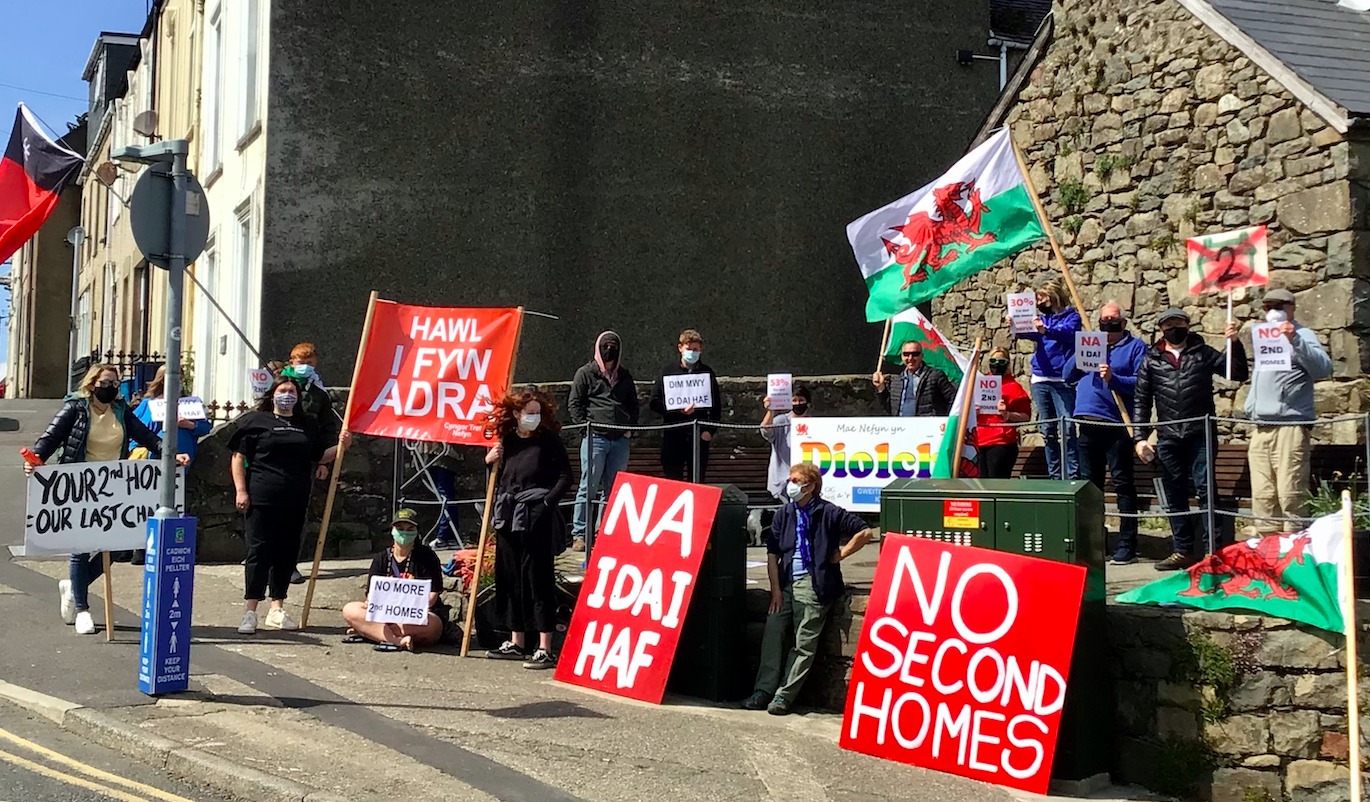
Some like Cymdeithas yr Iaith and the campaign group Hawl i Fyw Adra will of course argue that this is not enough. Others will say it’s the wrong solution, as the Conservatives, who favour more house building, have done.
But the point is that this is a debate that can happen at a national level – in the Senedd, with the Welsh Government having real powers to act.
This may be one reason why the campaign against second homes has, so far at least, not boiled over as it has at times in Cornwall which lacks any similar devolved powers.
Martin Luther King said that ‘a “A riot is the language of the unheard.”
Meibion Glyndwr wasn’t a riot, but it was a form of violent protest - a firebombing campaign. And whether you agreed or disagreed with the means, it’s fair to say that no one would choose it as a first resort if there was a ready political solution at hand.
In the age of devolution, rural communities don't need Meibion Glyndŵr - or indeed his grandsons Wyrion Glyndŵr - to ensure their frustrations with the housing market are heard.
Support our Nation today
For the price of a cup of coffee a month you can help us create an independent, not-for-profit, national news service for the people of Wales, by the people of Wales.
Get more trusted Welsh news
Choose Nation.Cymru as a preferred source in Google News to see more of our journalism.
