


Sat, 18th July Cardiff 22°
Nation.Cymru wordmark
Advertisement

Opinion

Mapping out Welsh independence - what would it look like
By David Owens
Picture by Llywelyn 2000 (CC BY-SA 4.0).

Llew Gruffudd

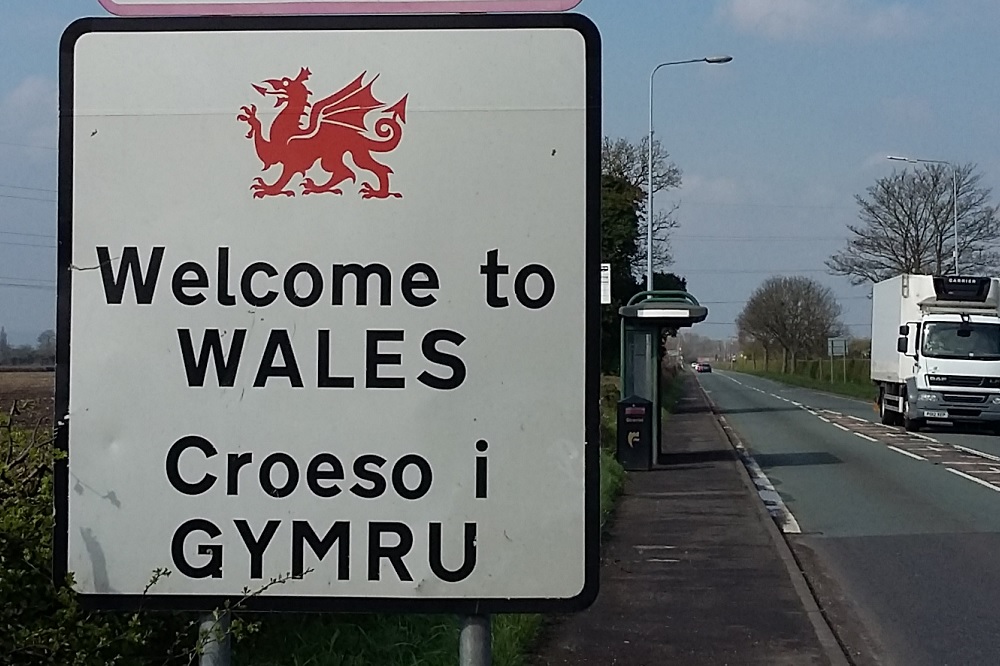
Wales independence. Will the border be hard or soft? Or just a line on a map?

Prior to the Cold War and the fall of the Berlin Wall, the border between East and West Germany had a ploughed strip along its length. This was regularly inspected by the East German military to see if people had illegally crossed.

From the hysteria surrounding independence, some seem convinced that it will be similar along Offas Dyke. (Perhaps to catch English pensioners, heading for life on the Welsh coast!)

Presently, the border between Wales and England/UK, is a line on the map.

There are no fences, walls or trenches. Any future obstacles will be new and entirely man made.

For many however, more generally, the questions are:
Will there be a hard border?
How will I get to work in England?
Will I be able to shop in England?
How am I going to move my goods?

[mid-content-banner]

Restrictions

All voiced as concerns that life would be more difficult after independence. And all stated as if Wales was the only country to ever face these issues

The border is defined as hard or soft, not because of walls or fences, but as to the degree of restriction to trade and freedom of movement.

However it is futile to pretend that nothing will change. The question is. How much of a change and will the benefits outweigh these changes?

First some context.

[lower-mid-content-banner]

People crossing the border for work, business and pleasure

Approximately 90,000 people cross the border from Wales to work in the UK - predominantly England.
This equates to 6% of the Wales workers.
You would expect this figure to reduce significantly as an independent Wales economy grows.
Approximately 48000 people cross into Wales to work.

There is also a free flow of people crossing for business and pleasure.

So how would this change, post independence.

Some talk, including the recent Commission on the Constitution, of a hard border being imposed by ‘a belligerent' England. Meaning difficulties visiting relatives or for pleasure. What nonsense.

The question for those prophesying doom is - Why?

Why would England/UK impose unnecessary costs and movement restrictions, not only on Wales, but on its own citizens?

Why? Because England would be a bit miffed at Wales breaking free, or that they didn’t get all their own way in negotiations?

Would they impose costs on the almost ÂŁ30 billions of trade they do with Wales?

Risk difficulties with vital water supplies?

Jeopardise the supply of renewable energy that Wales would have in abundance?

All because they are a bit miffed?

Logically and reasonably there would be little change.

Borders

Citizens can cross the US/Canadian border for business or pleasure, by simply showing a driving licence or similar.

The people of Sweden and Norway, one a member of the EU the other not, have unrestricted movement by agreement. Indeed much of the 1600 km border is unmanned.

This ID free agreement extends to other Nordic countries. Denmark, Finland and Iceland.

The UK presently has its own free movement agreement. The Common Travel Area (CTA)
This allows freedom of movement between the nations of the UK, England, N Ireland, Scotland and Wales, as well as the Channel Islands and Isle of Man (who are not governed by Westminster) and the Republic of Ireland (an independent nation and member of the EU)
There is no logical reason why the same freedoms should not extend to Wales on independence.

Unlike many negative examples raised to illustrate difficulties, Wales is not at war with the UK. It does not have a standing army ready to protect its borders.

It merely wishes to work under a constitutional arrangement of its own choosing.

There are many precedents to assure the Welsh public that a border should be no significant impediment on independence.

Not least, the protest from the English Midlands if their government introduced any obstacle to their annual pilgrimage to Trecco Bay.

Trade post independence

Some perspective.

A little over 50% of Wales business output is sold internally, that is within Wales. Therefore no tariffs or border checks.

A further 20% is exported, predominantly to the EU. These Wales exporters are already subject to the regulations of those countries.

Which leaves 30% of Wales trade going to the rest of the UK and it is this trade that could be affected by independence. But to what extent?

After independence Wales' trading relationships with the remaining UK will most assuredly change.

The recent history of Wales' industrial base has been heavily biassed on supplying parts for businesses in England.

There has been a woeful lack of investing in and attracting the industries of the future, space sciences, semiconductors, transport technology, etc and generally in innovation, research and development.

When this decline is reversed, Wales' industrial base will change, and will become more concentrated in the future, green technology industry and more international.

Wales will become less dependent on trade with the next door neighbour and the costs of international trade, will be compensated by the higher value nature of such trade.

Resources

With independence Wales will take control of its considerable resources, particularly renewable energy from offshore wind and tidal and marine energy,

In addition to providing a secure supply of relatively cheap energy to its people and businesses, Wales will become a major energy exporter.

This energy will not be subject to tariffs and barriers as other commodities.

As well as Wales exports to the UK, Wales also buys approximately the same value of imports from them. It is therefore in no one's interests to raise unnecessary barriers to this trade.

Wales exports to the UK are valued at ÂŁ26.5 billion (UK Department for Internal Market)

The UK average tariff rate is 3.9%, which itself is higher than the average for all nations of 2.6%.

If the ‘ belligerent ‘ UK was to impose their average, in full, on Wales imports, it would raise a little over £1 billion. An unwelcome cost to Wales, but certainly not an economy breaker, or deterrent to independence.

From England's side. Is such little gain worthwhile, set against the possible retaliatory hassle?

European Union

Wales, on independence, will become a member of the World Trade Organisation (WTO). The UK is already a member.

The purpose of that organisation is to promote the maximum freedom of trade. It prevents its members imposing unnecessary, arbitrary and unfair charges, restrictions and tariffs on others. This will apply to trade between an Independent Wales and UK.

Whether an independent Wales applies to rejoin the EU will be a decision for a Wales government, weighing up the costs and benefits and unlike now, Wales will be free to make agreements and associations, with whom it wishes, at mutual benefits. The change of costs of trading with England will be one of those considerations.

Some want certainty and some use the uncertainties as a weapon, as further obstacles to independence. Such negativity.

Staying in the Union is filled with uncertainties, but based on experience, Wales' wellbeing is unlikely to improve by doing so.

The reality is that border issues are part of any negotiations that will inevitably come with independence.

There is no reason why Wales should fear the outcomes and should spend its time until independence, untangling its ties. Data and policy presently presented on an England/Wales basis would be a start.

Border issues are one more area where Wales should be concerned with developing its own policies, preparing for independence and less concerned by what England may or may not do.

One certainty is that if the Welsh people want independence, for all the huff and puff and project fear, it will happen and you can still have tea with Aunty Em in Bristol.

For the price of a cup of coffee a month you can help us create an independent, not-for-profit, national news service for the people of Wales, by the people of Wales.

Get more trusted Welsh news

Choose Nation.Cymru as a preferred source in Google News to see more of our journalism.

Choose Nation.Cymru as a preferred source in Google News

45 comments

Dai Rob

Excellent article!!!

Reply
Y Cymro

What people forget that Cymru is a political prisoner of the English crown still. We were invaded in 1283 & annexed in 1535. In fact. We are still an independent country. The only difference is. Gone is Edward 'The Hammer's' iron ring fortification. Our prison isn't made of stone. It has no physical bars. Our prison cell is our own inability to break free the invisible chains that bind us to a false one-sided British union created by England for the benefit of England. And until we wake up from our slumber and realise that once we were the Saudi Arabia of the Northern Hemisphere with our coal , slate & water resource but were violently gang raped by Whitehall leaving our once beautiful landscape scarred & tortured. It's often said by Unionists that we are allegedly part of the 5/6th largest economy in the world. If so why is our interconnectivity third world and we are so impoverished continue still to qualify for EU/Whitehall Structural Funding where London & South East England receives hundreds of billions in infrastructure build at our expense? The question is. Will we ever realise that this false United Kingdom is a burden not a benefit. So it's high time we broke our mental chains and joined the family of independent nations. See, I'd rather be poor in the short-term independent than a prisoner permanently poor in an unequal British Union we've never been part of.

Reply
Llew Gruffudd.

I fear it is the usual rant of the Unionist lobby. It is they who have raised obstacles such as the border, to demonic status, with unsubstantiated unsustainable costs. I don't understand your point about ' hypothetical industries '. There is nothing hypothetical about them, they exist, only needing to be developed. Your comment that the Welsh public are not willing to tolerate economic disruption is almost laughable, when that's such a common factor in their lives. Every time a Minister gets to their feet in Westminster it causes economic disruption to Wales, austerity, tax and benefit changes, extra spending on military or overseas aid. All cause economic disruption in Wales. That's acceptable to Unionists because it's the ' norm' its Westminster making policy'. With regard to your own alternatives, you're going to have to give a bit more evidence of your economic transformation than a throw away statement on housing and planning if it is to stir the unambitious Welsh..

Reply
Annibendod

The problem is that both narratives are extremes. One is catastrophe, the other is salvation. The fact is that without concrete proposals and events unfolding, what we have is a mixture of comparisons and conjecture. So much depends on policy decisions that are yet to be made. This is not a reason for or against Welsh Statehood. I've tried for some time to make the case on more assured footing. The matter of Welsh Statehood is a matter of democracy and political agency. Our present limited political capacities mean that Wales is yet to enjoy democracy in its fullest measure and we cannot exercise our agency because it has been bound in the collective forum of 650 MP's at Westminster. The record of that Parliament wrt the governance of Wales is negligent. I don't believe it's deliberate in the sense that it's overtly targeted at undermining Wales. I believe that what is deliberate is the cultivation of a core economy and a centralised beaurocracy to control it. We are simply a small, incedental cog in that machine. The purpose of the State according to the UN in the political, economic, cultural and educational development of the society and its citizens. If Wales is to make better progress on those fronts, I belive it will be when we learn to govern ourselves. And that is why we need statehood. There are huge constitutional and political questions to be resolved. What the movement need to do is persuade the electorate of the direction of travel and facilitate the political solutions that take us there. We're closer than we were but not quite there yet.

Reply
John

A logical, unemotional analysis - well done. This shoud be read by as many people as posssible.

Reply
Idris

A very thoughtful and logical article, a good read and informative

Reply
Richard Jenkins

At last! A clear. Concise & easily understandable breakdown of the obvious & compelling truth.

Reply
Annibendod

Very disappointed to see that some perfectly reasonable comments have been deleted. Are we not allowing debate Nation?

Reply
Stephen Price

If they're voted down enough they delete automatically

Reply
Jack

Not sure they should be. Voting down can be done for emotive reasons, not logical reasons. In other words this makes the site stacked for those sharing one attitude and questioning it is not allowed.

Reply

In reply to Jack

Stephen Price

Fors and againsts I guess. Certainly don't want an echo chamber here, but often people really do cross the line so the group moderation is at least something. None of yours have been binned by us anyway, I just had a look.

Reply

In reply to Stephen Price

Lyn E

I agree with Annibendod on this. I didn't see the deleted post, but there is a difference between being offensive and being unpopular.

Reply
Annibendod

That's still disappointing. There was nothing offensive in the original opinion expressed and Llew responded well to it. Doesn't make sense for them to be deleted simply because they're unpopular.

Reply
Llew Gruffudd.

I too am disappointed to see comments deleted. If you can't engage you can't persuade. From a selfish point, some of the critical comments lack such credibility it helps make my case. Where I do object, no objection is too strong. Where I have concerns, is where people fly their own ideologies, agendas, without properly relating to the content and context of the article. This particular opinion piece, for example, is not aimed at providing a blueprint for Independence as you would believe from some comments, It is addressing a particular issue, it is the fifth of my opinion pieces, each addressing a different issue relating to Wales Independence. It is merely my way of informing. It is small stepping stones on that path. People should recognise that before they rant. Otherwise they don't just disagree , they disrespect its opinion

Reply
westisbest

Great article. Very clear what can be done.

Reply
John Ellis

'There are many precedents to assure the Welsh public that a border should be no significant impediment on independence.' Mr Gruffudd might also have cited Belgium and the Netherlands, where the national border has long been practically no more significant than a county boundary is in the UK. And the UK has already accepted something essentially similar in Ireland as the price to be paid to bring 'the Troubles' to an end. 'The reality is that border issues are part of any negotiations that will inevitably come with independence.' True enough as far as it goes, of course; but I think there's a constituency of English public opinion - with at least two current political parties potentially inclined to represent it - which would push for a harder border to punish Wales's 'impertinent decision'!

Reply
Llew Gruffudd.

I do think you overstate that the vindictiveness of the main Westminster parties would overrule the realities. Wales, in negotiations will not be the weak and helpless body being portrayed. As I try to illustrate, there are many repercussions for England to consider in a hard border, not least the water supply to large parts of England, to which they would jeopardise and to which England would have no short/medium term solution. Without water from Wales, Birmingham in particular would run dry within a day. Just one example of the self harm a vindictive England could impose on itself by unreasonable actions.

Reply
CapM

It's the- don't cross us because we're bastards - argument that oddly [ or perhaps it's not odd at all] quite a few English Unionists make.

Reply

In reply to CapM

Padi Phillips

Usually the more intellectually challenged ones, thankfully.

Reply
Lyn E

I have never understood why those who emphasise how badly England has treated Wales over centuries seem to believe we would be treated benignly in independence negotiations. If it came to it, England has a simple answer to the Welsh water issue: paratroopers. This is a country that has invaded and slaughtered for resources across the world. Do you think it is going to let its cities go thirsty?

Reply

In reply to Lyn E

CapM

'If it came to it, England has a simple answer to the Welsh water issue: paratroopers. This is a country that has invaded and slaughtered for resources across the world. Do you think it is going to let its cities go thirsty?' Is there a computer game in which you could play such fantasies out? I'm sure it would help.

Reply

In reply to CapM

Lyn E

I suggest you educate yourself on the history of British imperialism (Caroline Elkins' 'Legacy of Violence' would be a good start). Lift your head to look at the world around you. I was present on the two million-plus demonstrations against the Iraq war, which was in part motivated by the wish to ensure oil supplies. Llew Gruffudd’s comment, ‘Without water from Wales, Birmingham in particular would run dry within a day’ was a direct threat to cut supplies as a negotiating tool. Under international law, stopping water constitutes an act of war and England would have every right to respond militarily.

Reply

In reply to Lyn E

CapM

https://www.classicempire.com/ 'Empire is a simulation of a global conflict between two to three implacable foes. No compromise is possible, each must strive to annihilate the other. The war is conducted over a large map, with land, sea and cities on it. Each player manipulates his armies, fighters and ships to try and smash the others, to reach the goal of total domination of the world. Empire is not a video arcade-type game. It is a thinking man's game, as it requires strategy and tactics instead of hand-eye coordination.' Looks promising.

Reply

In reply to CapM

Lyn E

I am not surprised that you have more interest in games than in the real world.

Reply
John Ellis

'I do think you overstate that the vindictiveness of the main Westminster parties ...' A quarter of a century ago I might have agreed with you on that. But I don't now. 'New' Labour during the mid-90s seemed to me to go through a rather romantic period during which they were open to fresh and even revolutionary reforming ideas, and that coincided with the dominance on the local political scenes of visionaries such as Rhodri Morgan in Wales and Donald Dewar in Scotland, who, while still supporters of the union, nevertheless successfully argued the case for serious devolution.. And at the time Labour went along with that idea. But I suggest that the Labour party's commitment, even then, to it was shallow rather than deep, and I seem to recall that in later years Tony Blair expressed a measure of regret that he'd been so ready to be swept up by the idealistic aspirations of Dewar and Morgan. In the present - post-Brexit - era it seems to me that the political climate has significantly shifted, and now in the 2020s the Westminster cross-party consensus varies between an inclination to ensure that devolution can remain but should be expanded no further, and a total hostility to the whole idea. I'm not sure whether I'd term that current trend of opinion as 'vindictive' or as simply politically ideological; but it does seem to me to exist - not only on the political right, among Tories and Reform - but, if perhaps to a lesser degree, in Starmerite Labour as well.

Reply
Richard Jenkins

As well as water, atm Lloegr is fairly dependent on the 50% of electricity we produce. Given the porosity of the border extends to both sides, it doesn’t make sense for them to play too tough.

Reply
Jack

Waste of time at this stage. Only IF the politis shifts at Westminster then such an exercise would have a point. Now, it's dreamland / nightmare land.

Reply
Llew Gruffudd.

Waste of time at this stage What negativity. Independence will occur when the Welsh public are convinced of its benefits. When that happens, the politics at Westminster will be irrelevant. This article, along with others, is trying to inform the Welsh people of those benefits and to demystify the many myths being perpetuated around Wales Independence.It's not dreamland/nightmare, it's just one small contribution to countering the many years of misinformation and yes negativity too.

Reply
CapM

I think it's likely that it's your 'nightmare' hence the panic.

Reply
Padi Phillips

Au contraire, it's exactly the variety of discussion we should be having. Yes, of course it's 'blue sky' thinking, but when people inevitably ask questions it's a good idea to have at least an idea of an answer, always emphaisising that that at this stage it can only ever be a debate, and not something set in stone. Let's not kid ourselves, nations live in our collective imaginations, and we have to be able to imagine what an independent Cymru would be like in order for it to exist. We should be doing far more of this brainstorming stuff about all the aspects of what it could be like in an independent Cymru. None of what would be discussed could of course be set in stone for the simple reason that the situation we would find ourselves in and the relationships involved could be, and are likely to be, somewhat changed, but through experiencing the prior brainstorming processes we would be able to at least hit the ground running and be familiar with the processes of debating the necessary changes and adaptations.

Reply
Lyn E

Good to see you tackling the question of the border with England. Unfortunately, you present what you would like to follow independence for Wales as if it were guaranteed to happen. As what you describe is just one scenario out of many, there is no basis for assuming it would happen. Separation from England is not yet on the agenda and it is not possible to predict the circumstances in which it might be. The world is volatile. You are selective in your examples of open borders. There are far more cases in the world in which movement and trade across borders are restricted. And there are no cases of nations separating from modern, stable, prosperous countries with elected governments. The closest example is the ‘Velvet Divorce’ of the Czech Republic and Slovakia. Most cases of separation are traumatic. Your arguments about the disadvantages to England of a less than fully open border are reminiscent of those put forward by Brexit supporters: the EU, we were told, were bound to give the UK a good post-Brexit deal because German manufacturers wanted to sell cars in UK markets. That didn’t work out. You emphasise ‘logic and rationality’ but one of my qualms about all nationalist politics is that identity emotions often squeeze those out. You assume independence would reverse Wales’ economic decline, but make no effort to prove this. You point to energy exports but the gain to Wales could be limited. Renewable sources create few permanent jobs after installation. Cases such as Llanwern Solar Farm, owned by Mayfair-based NextEnergy Capital and selling its output to Anglian Water Services, look like the age-old exploitation of Welsh land. Your faith in the WTO is misplaced and outdated. The world was never ‘flat’ even in the 1990s heyday of neoliberalism and the ‘Washington consensus’, and the trend over the past decade has been away from globalisation. The WTO is a declining force. Countries that want open borders have to negotiate agreements with their neighbours. We do not know how beneficial or onerous the terms of such an agreement between Wales and England would be. In any case, Welsh businesses wishing to sell to England would need to conform to English consumer law, Welsh businesses needing to use sterling would have to follow Bank of England rules. Wales would find that its economic policy was still largely constrained by Westminster, independent or not. There would be advantages in Wales having more control over economic policy but complete freedom over this is not possible in the modern world.

Reply
Llew Gruffudd.

Same old arguments, no certainties. The facts I alluded to in my article. If we put aside the parachute joke, it was a joke wasn't it?. the rest is just a repeat of your mantra of uncertainty. There are no certainties in this life, except for the obvious one, but that doesn't prevent us from planning for the future, even in our everyday lives. To do so we use probability and logic, it's the only way. To take a couple of your points that don't come into that category, you seem to be implying that the UK/ England would frame consumer law just to make life difficult for Wales businesses. Now that really is illogical. As for Welsh businesses having to follow BoE rules, that simply isn't the case. Currency exchange is carried out in the currency market and not at the whim of individual nations. I am not seeking a ' benevolent ' England, any more than I would expect a ' belligerent ' one. I would expect both sides to be seeking the best deal, the most trouble free deal and that would involve England recognising the limits to which it is sensible to impose itself.

Reply
Lyn E

It is not a question of England being 'vindicative' but simply of pursuing its own interests in negotiating with a foreign country, as the EU did in its stance following the Leave vote. I did not suggest that ‘England would frame consumer law just to make life difficult for Wales businesses’. I simply pointed out that exporters have to obey the law in their markets. The previous UK government had to learn this post-Brexit: doing business with the EU means conforming with EU law. An independent Wales would be constrained in its policy choices. You are wrong to think that currency markets are independent of the ‘whim’ of nations. Are you unaware of the extent to which the US now controls the international use of dollars, with severe penalties on banks or businesses that disobey its rules? You appear to believe that the world works according to neoliberal textbooks. It does not. Try to keep up with global current affairs. My comment on water was no joke, just calling your absurd bluff to deprive Birmingham of water.

Reply

In reply to Lyn E

Llew Gruffudd.

Your pro English stance is blinding you to reality. On Independence the water in Wales belongs to Wales and it can do with it as it wishes. It is not an absurb bluff that water supply becomes part of any negotiation and depending on England's stance, so does the supply of that resource. It would not, as you say, be an act of war and England would have no claim. Look up the Vienna Convention.

Reply

In reply to Llew Gruffudd.

Lyn E

You have again exposed your hatred of those who live in England. Everyone has the right to adequate supplies of clean water, whoever they are. Your belief that an independent state has an absolute right over natural resources within its borders denies the reality of our interdependent world, and flies in the face of international law. The Vienna Convention on the Law of Treaties does not give any state the right to cut water supplies. More relevant is Article 54 of the 1977 Additional Protocol to the Geneva Conventions, which 'prohibits the destruction, removal, or rendering useless of objects that are essential for the survival of civilians', including drinking water installations and irrigation works. Denial of water to English cities would not just be an act of war but a war crime. I do not share your vision of Wales as a rogue state.

Reply

In reply to Lyn E

CapM

It looks to me like the gods have got it in for you.

Reply

In reply to Lyn E

Llew Gruffudd.

There you go again. not only misrepresenting my article, but a whole raft of conventions. My article clearly states that England/UK must take into account the supply of water in negotiations. You are wrong on the Vienna Convention, which clearly states that the natural resources are the property of the seceding nation. Wales would be entitled to reduce, charge for, or divert that supply at will. It would not be an act of war. The Geneva Convention protocol that you quote is only relevant to war. I do not believe in Wales as a rogue state, far from it. I have clearly stated that it should be free market and internationalist. That does not mean I believe, as you seem to, that it should continue to be dominated by your friends, the English state. As for you not sharing my ' vision ', did you not tell us all that you didn't believe in vision that was for mystics and soothsayers.

Reply

In reply to Llew Gruffudd.

Lyn E

You claim I am misrepresenting your article, then repeat exactly what I am criticising, saying ‘Wales would be entitled to reduce, charge for, or divert that supply at will’. No, it would not. An independent Wales would be bound by international law and conventions, a large and growing body of which deals specifically with cross-border water resources. The Geneva Convention is relevant because illegally cutting water supply constitutes an act of war. Leaving aside issues over the resources of river basins (Wye, Severn, Dee) that cross the Wales-England border), Wales would be legally entitled to inform England that it intended to reduce or stop its supply of water, provided it gave sufficient notice for England to construct alternative sources along its own rivers or coastline. But Wales would not have a legal right to cut supply ‘at will’. Within that constraint, Wales would certainly be entitled to negotiate a contract for water supplied. That would seem more sensible than stranding water infrastructure to no benefit. But its price would have an upper limit of the cost to England of constructing its own alternative. And England could of course demand a high price from Wales for the resources and services it supplies. Water accounts for under 2% of the UK economy. It will be less important to the future of Wales than is sometimes implied.   You are quite right. I do not share your ‘visions’.

Reply

In reply to Lyn E

CapM

'But Wales would not have a legal right to cut supply ‘at will’.' If you insist on playing this game - Cymru would not need to cut the water supply it would just need to let the reservoirs run dry. Still a water supply but not enough in summer. You indulge in a fantasy of water being so important to England that they'd send paratroopers into Cymru to secure the supply. Now your argument is that water is of little importance because it's only 2% of the UK economy. Make your mind up.

Reply

In reply to CapM

Lyn E

It doesn't matter if supply was immediately cut or deliberately allowed to dry up. It would still constitute an act of aggression that would breach international conventions and provoke a response that could prove fatal to a nascent Welsh state. Statehood brings responsibilities as well as rights. A mature case for Welsh independence would understand that. Water is of course vitally important, which is why it is protected by international law that only a rogue state would ignore. That does not mean that water would offer contribute as much to a future Welsh economy as is sometimes implied, the context of my comment. A prosperous Cymru (inside or outside the UK) needs a stronger economic base than our natural resources, which have been plundered for centuries.

Reply

In reply to Lyn E

CapM

You really should keep reminding yourself that it's your water wars fantasy that's being indulged. You've exited reality regarding this issue a long time ago.

Reply

In reply to CapM

Lyn E

It was Llew Gruffudd that started this by indulging his fantasy of a water war. 'As I try to illustrate, there are many repercussions for England to consider in a hard border, not least the water supply to large parts of England, to which they would jeopardise and to which England would have no short/medium term solution. Without water from Wales, Birmingham in particular would run dry within a day.' In response, I have pointed out why this would not work.

Reply

In reply to Lyn E

Llew Gruffudd.

Give it up. You are now getting into the realms of absurdity. Your concentration on water being the catalyst for some sort of international condemnation just doesn't hold up. In the USA, your example of the all powerful, water is a commodity. It is sold as a commodity on the New York Stock Exchange, so your international force isn't going to get much support there.As for the part water plays in the Wales economy. Even the miserly projection by Cardiff University quoted it at between ÂŁ250 million and ÂŁ500 million per year. That's 3000 extra nurses, 5000 extra care workers, 3000 extra teachers, a new fully equipped hospital every one and half years and 300 top of the range hospital scanners. Not insignificant, I think.

Reply

In reply to Llew Gruffudd.

Lyn E

My comments were a response to your implied threat that Wales could cut water to Birmingham. If you want to drop that bluff, then we can have a sensible debate about the contribution that water resources could bring to the Welsh economy. Welsh water production makes an important contribution to the Welsh economy. But much of our water (if not most) is already being consumed in Wales, and the evidence from sewage discharge is that Dwr Cymru is not adequately investing in water quality. This is not all additional money that Wales would acquire by becoming independent. Expanding water production as a source of export income would be constrained despite English demand. How many more valleys do we want to drown? I have not denied the importance of natural resources to the Welsh economy. But some of our problems result from excessive reliance on exploiting Welsh land rather than developing a broader economic base. We need a circular foundational economy plus the skills that would allow Wales to develop and make products and services to sell outside our borders.

Reply
Walter Hunt

Borders do throw up problems on a spectrum from the bureaucratic (EU-UK) to the apocalyptic (Gaza-Israel). So there is plenty of scope for dark imaginings. When the issue comes up, isn’t the best answer a politician can give: “I/we don’t deal with hypotheticals” and if pressed: “An independent Wales would conduct its external relations on a win-win basis and mutual respect” and about "pride in having a Welsh passport". Referring to your opponents or their supporters concerns as “hysteria” (or name calling) is unlikely to win people over.

Reply

Leave a comment

Comments are reviewed before they appear.