


Sun, 19th July Cardiff 23°
Nation.Cymru wordmark
Advertisement

Opinion

Lies, damned lies and the Welsh economy
By Mark Mansfield
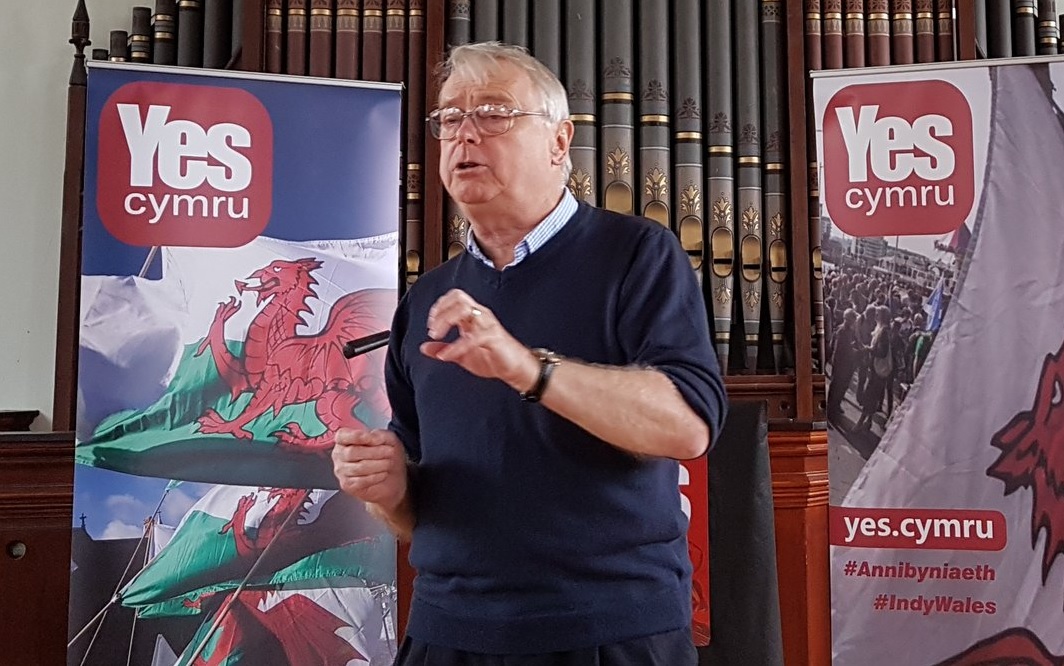
Dr. John Ball. Picture by Mark Mansfield

Dr John Ball

Much has been written about the Welsh economy. Wales is poor runs one view, Wales is not poor, runs the other.

Despite growing evidence that the former is simply not the case, there remain those who insist that Wales is poor, and independence will make things worse.

I have been a nationalist all my life and it seems the recurring “poor nation” theme has always been a part of it.

Two recent articles in Nation Cymru provided a positive picture of the present-day Welsh economy, but it occurred to me that this may well be the case now, but what about the past? Were we really a poor nation all the years of my life?

Then I remembered a pamphlet written by the late Professor Phil Williams as part of the Cyfres y Cynulliad series published by Y Lolfa to mark the establishment of the Assembly in 1999. It makes interesting reading.

[mid-content-banner]

Income and expenditure

It synthesised research on the Welsh economy that had taken place since the end of World War two up until 1995. The first of these was by the late Professor Ted Nevin (no nationalist he) who examined income and expenditure for the Welsh economy between 1948 and 1956 and found a surplus of ÂŁ40million, easily more than ÂŁ2billion or more today.

He later revised and extended the research for the period 1948 to 1962 and again found a surplus, of ÂŁ50million.

Williams writes “…this confirms that in the 15 years after the war, …Wales accounts were in the black.” What is even more remarkable is at this time almost all countries, including the UK were running significant deficits. Wales was not.

This further work was significant in that it also looked at the wider economy and predicted that without an appropriate policy response, there would be extremely high unemployment between 1964 and 1970.

Sadly, this proved to be the case, the Labour government of the time dismissed the findings as “a product of the ivory tower.” Surprise, surprise.

In 1970 together with Dafydd Wigley, Williams went on to produce accounts for the Welsh economy for the period 1967-68 and once more found a surplus in this case, ÂŁ36 million.

This work is of interest because it was based on accounts as applied to an independent, sovereign state.

Bangor University

Interestingly, at the same time, the government through the (then) Welsh Council commissioned Bangor University to undertake an independent examination of Wales accounts for 1968. A surplus of ÂŁ33 million was reported.

This of course did not fit the narrative. Enter George Thomas and the infamous television broadcast “…don’t let the English know how much they are paying for our health service …and roads.”

This from a Labour Secretary of State, a party to which the people of Wales had given unquestioning support.

There was little further research until the late 1990s when, with devolution on the horizon and questions again being asked about the economy, the government swung into action.

In 1997 = the year being no coincidence – the then Welsh Office under the leadership of William Hague published research showing Wales in the period 1994 -95 had a deficit of £5.7 billion.

However, as Williams notes the document was “…so full of omissions, errors and absurdities that it could not be taken seriously” and that in allowing the publication of a document that was so faulty the civil servants involved “…had seriously damaged their professional reputation.”

The response was further research by Williams, this time for the period 1994-95.

Although the research clearly showed that the Welsh Office figures for this period were wide of the mark, Wales had moved into deficit of ÂŁ2.4billion.

Recession

However, there are caveats. The first is that during this time the UK had incurred its greatest ever deficit, the inflation of the 1970s, Thatcher’s disastrous economic polices and the recession of the early nineties had resulted in the UK economy becoming the sick man of Europe – and Wales was dragged along.

The second illustrates the on-going dilemma of allocation and interpretation.

In this research Williams included notional expenditure allocated to Wales which was not a direct cost to Wales but to the UK: defence, debt interest and a contribution to the National Debt. With these reduced or removed, the deficit moves into surplus.

This dilemma underpins the current debate on the Welsh economy.

The Office for National Statistics publishes income and expenditure accounts for the Welsh economy.

Deficient

However, to develop a picture of the contemporary Welsh economy, the ONS accounts are deficient in two important ways.

Revenue is unclear, not least because of the many externally owned organisations operating in Wales which declare taxation at their home, non-Welsh address.

Expenditure is the most challenging and misleading, further costs are added to actual expenditure to reflect the fact that Wales ‘benefits’ from UK activities: defence, debt interest, overseas activities and sundry other endeavours. These alone amount to £9 billion,12% of GDP or a ludicrous 30% of tax revenue.

The two reports published by Cardiff University on the Welsh economy in 2016 and 2019 which proclaimed that Wales had a deficit of over ÂŁ13 billion made absolutely no allowance for these notional costs.

Interpretation

As with any research and published data there remains the question of relevance and interpretation.

No more so perhaps than in discussing the Welsh economy.

Nevertheless, although the reports published by Cardiff University – and which began the ongoing debate - were accurate in presenting the data as it stood, there was no meaningful questioning of the assumptions that underpinned the data.

I calculate that, after making reasonable adjustments to allocated notional expenditure, the Welsh budget is in surplus by ÂŁ350million. Frankly, this is not a lot and there are no extras or allowances, but the fact remains, there is a surplus.

The upshot of all this? Such data that has been available and research undertaken has shown that Wales is not a poor country and certainly for most of the twentieth century and much of the twenty first, we have paid our way.

Wales is poor.

Leon Trotsky sums it up.

A lie told once remains a lie but a lie told a thousand times becomes the truth.

Dr John Ball is a former lecturer in economics at Swansea University and currently working on a book Free to Choose: New Economics for a New Wales

For the price of a cup of coffee a month you can help us create an independent, not-for-profit, national news service for the people of Wales, by the people of Wales.

Get more trusted Welsh news

Choose Nation.Cymru as a preferred source in Google News to see more of our journalism.

Choose Nation.Cymru as a preferred source in Google News

57 comments

Paul Symons

How much would it cost to become independent?

Reply
CapM

How much would it cost to repair a home with hole in its a roof?

Reply
Garycymru

You can present the public with as much hard evidence, peer reviewed papers and solid accounting data all you want to. The harsh truth is that the majority have been programmed since birth that "Wales poor" " Britain only way" and media sponsored cognitive dissonance will hold steadfastly like an invisible force field of blissful ignorance. Until the propaganda from the failing empire is stopped, meaningful debate will not be allowed.

Reply
Dr John Ball

Gary. We've got enough naysayers without our supporters helping. The point of this article and indeed all the other articles and talks I have given is that we are not poor - we never were!! We have an exciting future as a member of the world's nations. What you've got to do is NOT respond in such a defeatist way,take on the empire and its propaganda, Shout from the rooftops!!

Reply
GaryCymru

Apologies for the unclear wording, I was in complete agreement with your piece. As I find myself in complete agreement with your reply.

Reply
Margaret Helen Parish

If your conclusions are correct? And I am unable to dispute them! It surely must be that if we are NOT poor, then it must be that the blame must lie with those who handle the economy...for 26 years it has been the Assembly/Senedd who have wasted the money on projects that have not seen fruition and into pockets of environgrifters and companies who rent a cupboard in Cardiff and stick Cymru on the name...and hey presto the Development Bank of Wales fill their pockets?

Reply
Nia James

Great article John, exposing once again the tired old 'on the bones of our arses' narrative that Labour love to pump out. I look forward to reading your book. The Welsh Government should place a copy of it in every classroom and ten copies in every library across Cymru (more chance, I know, of Eluned, Huw ID, Milesey and the gang declaring war on Singapore).

Reply
Shân Morgain

Crowdfund and community volunteers pack and send out copies.

Reply
Mab Meirion

How interesting and for me and all my age who were nurtured through the worst of rationing post war but in a 'land of plenty' of rabbits, pigeons and trout with chickens a veg garden and fruit trees. Nuts and berries in profusion up and down the lanes and a bay teeming with fish... Those were the days in the poorest county in Cymru... With nearly every square inch taken up by military training and airfield construction during the war the money flowing in must have added up...

Reply
Mab Meirion

The military were replaced by the newly liberated workers of the Midlands and the North West who would bring their caravans and tents for the summer while for six weeks the prom would be full. How many ferry boats and fishing boats worked out of Barmouth Harbour, a fleet.The money spent on deck chairs, ice cream, rock and donkeys. Hotels and guest houses galore, a town full of shops selling all sorts... 70% worked for the council or so it was said...Traws Power Station and the pump storage were being built, several industries in the area like Cooke's had kept up production after the war while RAE Llanbedr kept the vintage 'Welsh Air Force' flying...A timely look back...

Reply
Mab Meirion

Where did the bulk of this 'war chest' money finish up ? Could it be the landowners, and who were they...

Reply
Ash P

Where can we read these reports? Any references would be much appreciated as I find this fascinating. My worry is we never see anything detailing figures of private / public sector income and a breakdown of Wales' expenditure. I want an independent Wales more than anything, but what I see and hear is that we are a low wage, big public sector employer. However, we don't seem to spend very much on the country, as can be seen by the fact that it's falling apart, so maybe it could be calculated that we would have a surplus. I think concrete figures need to be put out there for people to discuss, otherwise it makes a push for independence difficult for people to stomach as they see it as too much of a risk.

Reply
Dr John Ball

You've reminded me that I omitted from the article the reference to the work by Phil Willams: Williams, Phil (1998) The Welsh Budget. Talybont, Y Lolfa Much detail on the Welsh economy is available through the Office for National Statistics publications Country and Regional Public Sector Finances and Total Managed Expenditure. However, remember the caveats noted in the article.

Reply
Brian Roper

In the Industrial Revolution and since Wales has been a major source of carbon emmissions what liabilities would lie in the carbon accounts of an independent Wales?

Reply
Dr John Ball

I think the phrase here is "has been." Remembering the significant pollution generated for over two centuries by heavy industry in Wales and all to the benefit of England, the liability for carbon accounts lies with England.

Reply
Lyn E

Welsh capital participated in the coal and shipping industries. We cannot pass all the responsibility to England.

Reply

In reply to Lyn E

Dr John Ball

I am well aware of that, the Bevans of Neath for example, but these were very much in the minority. I'm not rabidly anti-English but the truth is that coal,iron, steel and slate that we produced over generations benefitted businesses and their owners who were invariably English. Interestingly, the notable exception was Scottish - the third Marquis of Bute who at one time was the richest man in the world. We have given so much and received very little in return.

Reply

In reply to Dr John Ball

Lyn E

‘Invariably English’ is true for the iron industry. But not for coal. English capital played a very large role but Welsh coal barons like David Davies or William Lewis were just as exploitative.

Reply

In reply to Dr John Ball

Brian Roper

We were all then part of the "British Empire",there was then no Welsh state or English state,if "the polluter pays" the bill should be sent to the Empire and an independent Wales should pay its part.

Reply
Mab Meirion

What about Scotland ?

Reply
Gareth

I can not and will not believe, that the English establishment, will allow millions of its own people to live in abject poverty and be homeless, begging on the streets, watch thousand die every month due to lack of funding of the health service, oversee a crumbling infrastructure and economy, while diverting billions towards 3 smaller devolved nations, just to keep them afloat, out of the goodness of their hearts. That they keep us, while running a huge deficit for nothing in return, while they suffer in silence is not credible. This is what we are being lead to believe.

Reply
Alan Huw Price

Come on! Clearly, they are holding onto us out of the goodness of their hearts. Oh.

Reply
Lyn E

Interesting but how relevant is it to the position that a possible Welsh state would find itself in post separation from England? There is a lot to be said for the argument that Wales has ‘paid its way’ historically, at least as regards our balance with England. [The global balance is less clear given Welsh participation in the profits of Empire.] But we need to think about the present and future rather than the past. Many of the assets that allowed Wales to pay its way have gone, notably industry with Port Talbot the latest example. We would have to manage without those. Nor can we conveniently claim that England would assume all the UK National Debt and other liabilities. The history is important but does not suffice to answer the question about Wales’ relative poverty today.

Reply
Dr John Ball

You've missed the point. I am an optimist and look forward to a bright future as an independent state. However, the intention of the article was simply to put the record straight, that those who have spent literally decades telling us that we are poor were wrong. I deliberately titled the article "liars." You've raised two other issues. First, any residual debt such as the National Debt will be a matter for negotiation, my view is that the vast majority of that debt has been for England's benefit and this must be reflected. Wales relative poverty is due to the lack of economic foresight. Look at the article, when the then Labour government was warned about significant economic change, the response was to ignore it. Nothings changed.

Reply
Lyn E

Does the term ‘liars’ help? As you acknowledge, allocation and interpretation is a dilemma. Both sides of the argument about Welsh poverty tend to prefer definitions and assumptions that support their case. I suggest it is inconsistent to assert both that England has impoverished Wales and that Wales is not poor. An independent Wales would inherit a legacy of economic domination, not so much by ‘England’ as much of the north has similar issues, as by capitalist interests predominantly based around the City of London. Lack of foresight has certainly been a factor but there are deeper structural issues. We have suffered our own version of a ‘resource curse’: unsustainable growth in the century and a half prior to WWI with much of our wealth extracted, then neglect when those resources became less valuable. None of this answers the question of whether Wales’s prospects would be better or worse seeking to change that within the UK or as an independent state that would still be subject to the geographical reality of a land border with much bigger England and the demands of global capital. Much would depend on the terms of separation, as regards both the allocation of assets and liabilities (such as the National Debt) and future relationships. Small countries can prosper but need to be well integrated into the wider world, particularly with large neighbours, yet avoid being subject to them. None of this would be easy and I am not optimistic that an English government would treat Wales fairly let alone generously.

Reply

In reply to Lyn E

Neil Anderson

Lyn E, the Westminster Government advised Scotland around 2014 that they would not be permitted any part of the so-called National Debt (more correctly termed the National Surplus - when ONS discovers double column accounting they might change its name). It is too valuable to them and they wouldn't let Cymru have any part of it either. What might be contestable is the interest paid on it (itself a scandal) - currently ~ÂŁ8b/y. Who owns the 'national debt'? Banks, pension funds, life assurance companies, individuals, foreign governments...even the UK Government (ÂŁ800b). It provides them with invaluable liquidity and safe (as the BoE) place for their funds. Reducing the national debt - as the BoE currently is with its Quantitative Tightening programme (QT) - is not business-friendly. Repayments have totalled 0.7% over the last 20y. QT has become merely totemic with the macroeconomic benefit negative if not zero. But if you think that is a worthwhile objective, you could help - set fire to the notes in your wallet! A moment's reflection will make you realise how foolish this policy is. That currency you have is however not money - they are a. promises to pay (says so on the notes) and b. part of the national debt. As for the national debt being 'too high' in relation to GDP, this is a nonsense statistic. It varies wildly from country to country, one year to the next. Largely meaningless and devoid of predictive value. The obsessives fretting about inflation will make exaggerated claims of course. Our weakness in relation to inflation is that a. we don't have the taxation tools to manage it and b. the BoE is using wholly inappropriate and ineffectual means to 'control' inflation. Independence for Cymru would only be worthwhile if we have monetary sovereignty and our own currency (plus a few other things). Otherwise, the colonialist exploitation will continue. Fancy a pylon anywhere near you?

Reply

In reply to Neil Anderson

Lyn E

National Debt is an asset for those who hold it but a liability to the state that issues it. Dividing up liabilities and assets would, as I think up recognise, leave Wales with significant interest to pay. A sovereign currency is not a silver bullet.

Reply

In reply to Lyn E

Neil Anderson

I think there is a case for us not paying any interest. It was BoE foolishness, again, that chose to pay interest (on some, not all). We are not complicit. It would depend how a sovereign currency was managed, really. Given the lack of knowledge, let alone understanding of macroeconomic issues here, it is a huge risk. But not taking that risk will ensure we remain a colony. And there are potential mitigations...

Reply

In reply to Neil Anderson

Lyn E

There is certainly a very strong case for the BoE reverting to its pre-2009 position of not paying interest to commercial banks. The New Economics foundation had estimated that the UK Treasury will pay out over ÂŁ150bn from 2023 to 2028 to fund this. But this is a question of monetary policy. It's not about independence.

Reply

In reply to Lyn E

Neil Anderson

I'm pleased we agree on that. But then are you saying there won't be monetary policy post-independence? That would certainly be the case if we stuck with the pound as our currency. But that wouldn't be independence, would it?

Reply

In reply to Neil Anderson

Lyn E

That raises the question of what exactly is 'independence', and what it could it mean for Wales. I find it very hard to get straightforward answers on that. Are France, Germany and other eurozone countries no longer independent because they have adopted the Euro?

Reply

In reply to Lyn E

Neil Anderson

Exactly right, Lyn E. Good question. It is a deliberate fudge, not helped by the remit that YesCymru gave itself. There are alternative approaches. The northern European countries have done very well out of the Euro. Greece, Spain and Portugal, not so much. Their agreement on the Euro was a case where their sovereignty was pooled, purportedly for the greater good. Their monetary sovereignty has been compromised for this, but the only the dominant players gain. Were Cymru to continue with the pound (pre- and post-independence), we would continue to be bullied by the BoE and the English Establishment as we have been for 800y. No thanks. If our nation, its peoples and our cultures are to survive and prosper, real independence is essential. Maintaining perfect sovereignty would be impossible but re-joining the Single Market and Customs Union have significant advantages. The EU and the Euro, much less so. There are many other poison chalices around that would snuff out our independence - by joining NATO and Five Eyes, for example. Again, no thanks. We will have a tremendous opportunity in Cymru for progressive politics and a sustainable future by adopting positive and harmonious values and living by them - internally and externally. Think Scandinavia.

Reply

In reply to Neil Anderson

Lyn E

Monetary sovereignty has pros and cons, which need to be carefully assessed. Brexit creates a dilemma. England would be our largest trading partner. Keeping borders and markets open with England might constrain deals with the EU or beyond. The biggest question for Cymru is not size or poverty but England. The 'elephant on the island' will still be a major factor in everything we wish to do, independent or not.

Reply

In reply to Lyn E

Neil Anderson

PS the national debt will never be repaid. And it would be a disaster if it were.

Reply

In reply to Neil Anderson

Lyn E

The grid needs to be upgraded if we are to replace fossil fuels with renewable energy. This is a technical requirement not colonialist exploitation. Grid upgrades will further be needed to distribute energy within Wales (Cardiff’s Local Area Energy Plan shows it will need to import 78% of its energy from outside its boundaries) and to export energy, potentially a significant revenue earner. The extent to which the upgrade requires pylons, less obtrusive overground techniques, or underground distribution poses cost/benefit challenges whether or not Wales is independent.

Reply

In reply to Lyn E

Neil Anderson

I favour microgrids and reduced, more efficient energy use. We must think less about the Age of More and more about a sustainable Age of Better. Probably a wood and hemp-based economy without gross transportation networks and other aspects of excessive consumption. Educational, cultural and personal development offers much.

Reply

In reply to Neil Anderson

Lyn E

We certainly need to use energy more efficiently and microgrids have potential although they are unlikely to meet the energy needs of cities or industries. There will not be much support for independence if it means reverting to wood and hemp.

Reply

In reply to Lyn E

Neil Anderson

Alas, not enough chrome or gold in it for most people, at present...

Reply

In reply to Lyn E

CapM

Cymru is too insignificant to be an independent country but at the same time is destined to play a crucial part in creating a socialist Britain, which will further international socialism and so change the world. That tune was played to us by the Labour party for generations. Now we're getting a variation of that. Another grand ambition of taking on "capitalist interests predominantly based around the City of London." together with our comrades in England. Sorry but we've been doing that for a hundred years, electing dozens of Labour MPs at each election and look where it's got us and those grand ambitions. We've played more than our part. Grand ambitions should not be used to hold us back any longer. .

Reply

In reply to CapM

Lyn E

You’ve completely missed the point. England will not disappear if Cymru becomes independent. Nor will the City of London or global capital. We would still have to deal with all this.

Reply

In reply to Lyn E

CapM

"We would still have to deal with all this." As every other small democratic nation state does, on as much of it's own terms, directed by its electorates, as they are able. What I discern from your comments is that the financial system itself is where your interest lies and not the issue of independence or not for Cymru. England will never vote in the left wing government that might confront this global capital however by binding Cymru and Scotland to England in a UK there might be a glimmer of hope. I think this glimmer of hope is what is behind your arguments against independence for Cymru. In effect we're to be used.

Reply

In reply to CapM

Lyn E

Quite right, formal independence for Cymru is a secondary question for me. It could create opportunities for us to exercise more control over our lives but it could also be a veneer for a neo-colonialism that becomes even more impoverishing and oppressive than what is experienced today. It all depends on the circumstances and the terms of Cymru's relationship with the external world, particularly with England. I want to know HOW it would work.

Reply

In reply to Lyn E

CapM

"Quite right, formal independence for Cymru is a secondary question for me. " At last. Wouldn't it have been more honest to put your primary concern out in the open at the start and explore how an independent Cymru could or couldn't address it rather than use your unmentioned primary concern to argue against independence for Cymru.

Reply

In reply to CapM

Lyn E

I am not arguing for or against independence. As I said, this is a secondary question for me. I want to know how it would work. In practice. Criticising Westminster is easy but it does not suffice to make a case for independence. Formal sovereignty will not solve Cymru's problems if we are still subject to neoliberalism imposed by Westminster as the price of free movement and access to English markets.

Reply

In reply to Lyn E

Neil Anderson

Do you really want to know, Lyn E: you probably wouldn't like it... But cordial relations, a serious commitment to peace and disarmament and fair trade with all countries would be a good start.

Reply

In reply to Neil Anderson

Lyn E

Yes to all that. But how will we ensure fair trade with England?

Reply
Rob

Wales, is definitely not poor, but it is poorly run, by a clueless Labour party. Unfortunately Wales is going to struggle to afford independence for a long time, with the economy in such a bad way.

Reply
Dr John Ball

Agree absolutely with the first part of your comment. Yes, it will take time and things may indeed be tight. But look at the Baltic States, once poor economic basket cases, now their economies are booming, so much so that recent research showed that their economies had grown by more than 5%of the EU average. The question you should be asking is can we go on as we are, or grab the challenge and excitement of building a new, successful state?

Reply
Phil Evans

Interesting article. We need more intelligent contributions like this to move the debate on from tired rhetoric. I look forward to reading Dr Ball’s future book.

Reply
Alan Huw Price

Great stuff that needs to be constantly repeated. One question. If, as we are often reminded, an independent Wales will be required to "shoulder her share of the National Debt", can we not reasonably expect that we are entitled to our share of the National Wealth? And if the response is that the latter is notional, why isn't the former? OK, two questions.

Reply
Dr John Ball

National Debt. Two things - any contribution will be subject to negotiation and I take the view that most of that debt (Currently in excess of ÂŁ2trillion) was for England and the empire's benefit. Perhaps more importantly - the only part of the debt serviced is the interest, so frighteners who argue that we'd have to pay a huge amount toward the capital are wrong. Yes, we should have some of the wealth, again subject to negotiation. Interesting that you should ask, in the often negative discussions about the future, it's forgotten that the UK does have forms of wealth, and we are entitled to some of that!

Reply
Annibendod

John is quite right in this article. There's a series of similar articles on Bylines Cymru. I've never been convinced by this "Wales is too poor" nonsense. There are two main angles on this which are comparative viewpoints. The first is taking the accusation and the notional UK deficit on spending in/on behalf of Wales at face value. IF Wales is comparitively poorer and requires a UK subsidy then we can only hold those responsible for the governance of the Welsh economy to account. The Welsh economy is currently a component of the broader UK economy which for the most part is the responsibility of the UK Govt -almost exclusively Conservative or Labour this past century. In other words, the very politicians who say Wales is too poor. IF they are correct, THEY are to blame. A great advert for the Union ... NOT! The second is a broader comparison. Wales' GDP/Capita is almost identical to the EU average. It puts us in the top quartile of nations. Too poor my backside. Frankly the too poor argument is total horse manure. Easily refuted. The problem isn't that we can't refute it (a pastime that seems to preoccupy a large number of the indy-confident. The problem is that it is very difficult to paint a picture of how an independent Wales would perform. There are so many constitutional, economic and political variables involved. This leads me, as I've mentioned before, to the conclusion that as important as it is that we can reassure folk on the economy, the biggest tenent of our argument is in fact predicated on our nationhood and democracy. Not in a nationalist or exceptionalist sense but in the sense that the UN frames the purpose of Statehood - that we can best determine our political, economic, cultural and educational development via our democratic mandate. The UK does not satisfactorily allow for this. Now, an indy Wales could explore those areas of development in a multitude of ways. When I was active on social media and supporting YesCymru, I wanted the movement to be a non-partisan shop window for a range of constitutional, political and economic proposals for our Statehood. Sadly, it became a battleground for political partisanship which has consequently undermined the broader movement. We need to present a credible and realiseable range of pathways for our national statehood. Each must be substantial in their vision, well evidenced and tenable. We need to show how we propose to advance our economy, yes, but also how we propose to fit in with our British and European neighbours and beyond. At present, we are far too drawn in by troll arguments and fighting the negatives. We need to switch that and be almost evangelical for the positive future we want to build for Wales. So let's talk about our democratic statehood, our constitutional relationship with the rest of the British Nations, the EU, our currency options, shared institutions, how we will use our new levers of state to progress our development and so on. And not just speculation but plausible, credible options. Engage people on this question - "How do we best build the Welsh Nation?"

Reply
Shân Morgain

Diolch. Moving on, please give an article on the me chanics of independence step by step. At present all I know is a history of referenda- are these necessary? They are like asking permission. Now a key principle of politics and management is it's easier / more effective apologise afterwards than to ask permission before. So what about unilaterally declaring independence? How would that work? I can see it would result in a difficult relationship with Westminster. Ahem. We already have that. Would it be worse, the same, better? How do we rejog taxes so all payers big and small pay Wales not Westminster? Glyndwr famously succeeded for a generation because taxes switch to him. But now we have PAYE auto slicing before we see our pay. The big payers would need persuading to back us. Possible, if they see the economics (with sweeteners) laid out simple, strong and hard. As in, Wales is well-off. I want to see the nuts 'n bolts of how to do it.

Reply
Dr John Ball

Shan. You raise an interesting issue about the future. I'm not a fan of referenda, mainly because much of the debate often deteriorates into nonsense. I remember during the '97 referendum the nonsense - we couldn't use the pound, we wouldn't be allowed to work or travel in England, the border would be closed and of course the favourite - all the businesses would leave. Strangely enough - and I can't believe I'm writing this - the example is Farage. He used a technique that's become known as external leverage, driving the message anywhere and everywhere, using the media, different campaign methods (he's very good at stunts) with a consistent message. If you think about it, it worked (I'm not a fan and I think he was wrong, but his method worked). I'm convinced that we in Yes - and other independence movements in Cymru - should follow this example until the majority of our people are with us. But it means much, much more effort! Taxes. There isn't enough room to discuss in depth, suffice to say that an independent state can set its own taxes, indeed I have suggested innovative forms of taxation that avoid persona; taxes.

Reply
Tomos Sion

There needs to be a new and separate office of finance where all this information i readily available. How can we fix a problem if we don’t know one exists. This should be the next target of Wales I think calling the assembly, parliament and greatly expanding it has greatly improved our credibility. We should have an annual report by and independent body of all our resources and matters relating to this.

Reply

Leave a comment

Comments are reviewed before they appear.