
Opinion
Let Them Eat Sovereignty
Ben Wildsmith
Do you remember when sovereignty was all the rage? Politicians couldn’t get through a sentence without mentioning it and objectionable relatives all over the UK would insist on it over Christmas dinner.
Dire forecasts of post-Brexit poverty were disdained as the soulless equivocation of people who didn’t feel nationhood sufficiently.
‘Ordinary people’, we were told by Jacob Rees-Mogg and his chums, were happy to wait many decades for a financial dividend if leaving the EU meant they could captain their nation’s destiny.
Nobody seemed quite sure about the specifics of sovereignty, but if you wanted to emulate the chain-mailed Crusader in your Facebook profile then you were required to value it above all else.
Nowadays, sovereignty seems to have been filed with the Ice Bucket Challenge and vegan fast-food outlets, under passing fads of the 2010s. Before long, you’ll hear Stuart Maconie reminiscing about it in a gently sardonic contribution to a BBC2 nostalgia programme presented by Arron Banks and Little Mix.
[mid-content-banner]
Remainers
There are three schools of thought about why the UK is not quite as sovereignty-rich as we were promised by the pro-Brexit crowd. The first, beloved of hardcore Remainers, is that we already had it when we were in the EU but failed to exercise it.
The alternative reading is that we are so hopelessly reliant on other nations for security and financial wellbeing that our right to self-determination was sold off decades ago. The final theory, that Brexit wasn’t Brexity enough, is further evidence of a narcotic aspect to Nationalism: once people have the taste, they can never get enough.
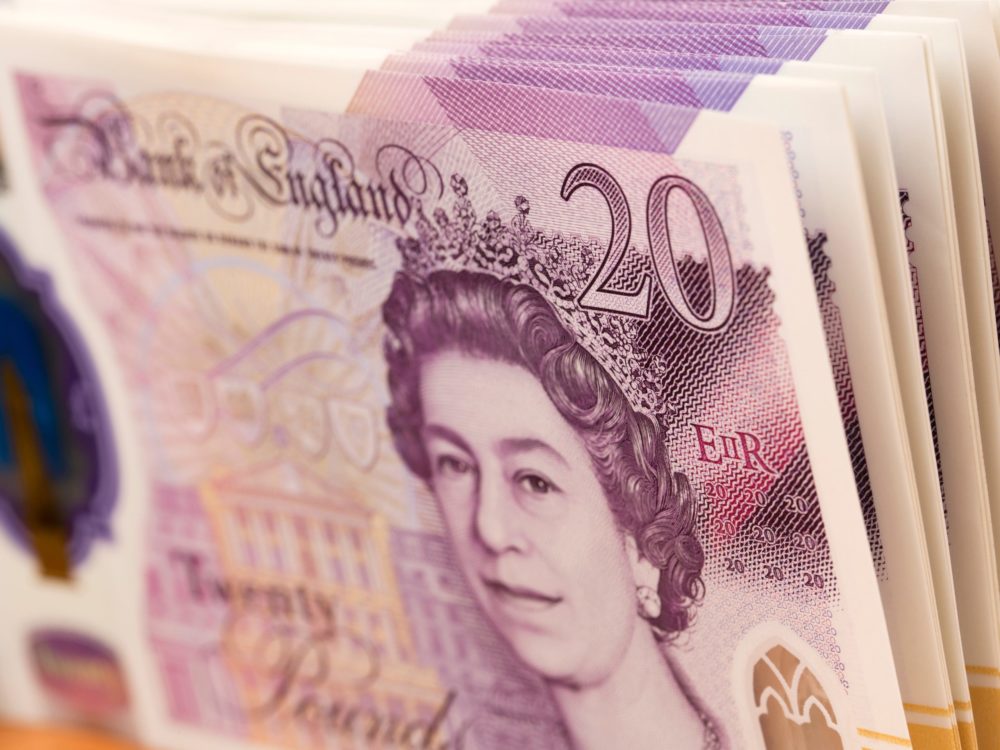
Now, in 2024, we are finding out a great deal about the extent to which the UK can act as an independent nation. The prime benefit of being a sovereign nation is facility to issue currency. If you can’t slap a pic of your leader on a piece of paper and use it to buy stuff from foreigners, then you ain’t no sovereign state.
Conversely, if you do have a magic printing press, then you can create money at will.
'Black hole'
So, Rachel Reeves’ ‘black hole’ of £22bn in unfunded spending pledges is either a ham-fisted and misleading metaphor or else a deliberate falsehood about how macroeconomics works in a nation state. Can she fund the pensioners’ fuel allowance? Yes, she can do so at the stroke of a pen. That she refuses, despite the political toxicity of her decision, is testament to the control exercised by international finance over the UK’s affairs.
It would seem a simple decision for a Labour Chancellor to fund the commitment by issuing currency and then taxing back the money to prevent inflation. This is, after all, not a wild indulgence, but the continuance of a social policy deemed necessary by previous governments. Reeves’ determination to go in hard and fast with this policy has caused uproar in the country and seems counterintuitive politically. It will, however, ‘reassure the markets’, and whatever we think the nation voted for is subsidiary to that.
Sovereign nations are also free to make military decisions and mandated to do so in the interests of the population at home. This is an aspect of sovereign power that many would argue has been abused by UK leaders for as long as we can remember. From Korea to Egypt to Yemen to Afghanistan, Iraq, and Syria, the UK has imposed itself on other sovereign nations without so much as an enquiry of the electorate. It has, meanwhile, been swift to defend areas like Northern Ireland and the Falklands against any suggestion that UK sovereignty is questionable there.
This week we were prepared for an announcement that UK missiles were to be made available for use by Ukraine within Russia. An escalating narrative about this was reported by the media, leading up to the Foreign Secretary’s joint visit to Kyev with his American counterpart and the following day’s meeting in Washington between Keir Starmer and Joe Biden. This, we were assured, was all theatre. The decision had been made.
When Starmer arrived in Washington, however, the UK press was surprised to find Joe Biden less enthusiastic about the idea than we had been led to believe. It was ‘one of the things we’ll be talking about’, he told them. The visit ended without a joint declaration on the issue.
The sticking point, it’s said, is that the missiles in question contain US components. Consequently, if Russia decided to treat their arrival on its territory as worthy of a direct response, then America would be on the hook along with the UK and France.
Weapons
The press was also surprised to find that David Lammy, a constant presence at pro-Palestinian events over the last decade, was refusing to release details of the licenses the UK has issued pertaining to weapons sold to Israel. As Shadow Foreign Secretary, Lammy had insisted that the Conservative government release these details, to be met with silence.
So, here we are. Our electoral system has produced a government from 33.7% of the vote. It commands a mighty parliamentary majority but is constrained from making decisions either at home or abroad.
We contrast Wales’ constitutional weakness with the apparent power of the UK, feeling its lean on our lives and remoteness from our wishes.
It seems to me that in the happy event of our gaining independence, the UK would have little sovereignty to hand over.
The pictures on the notes might change, but how many we are permitted to print would be decided elsewhere.
Support our Nation today
For the price of a cup of coffee a month you can help us create an independent, not-for-profit, national news service for the people of Wales, by the people of Wales.
Get more trusted Welsh news
Choose Nation.Cymru as a preferred source in Google News to see more of our journalism.