


Opinion
Labour offers hope to rural communities in Wales
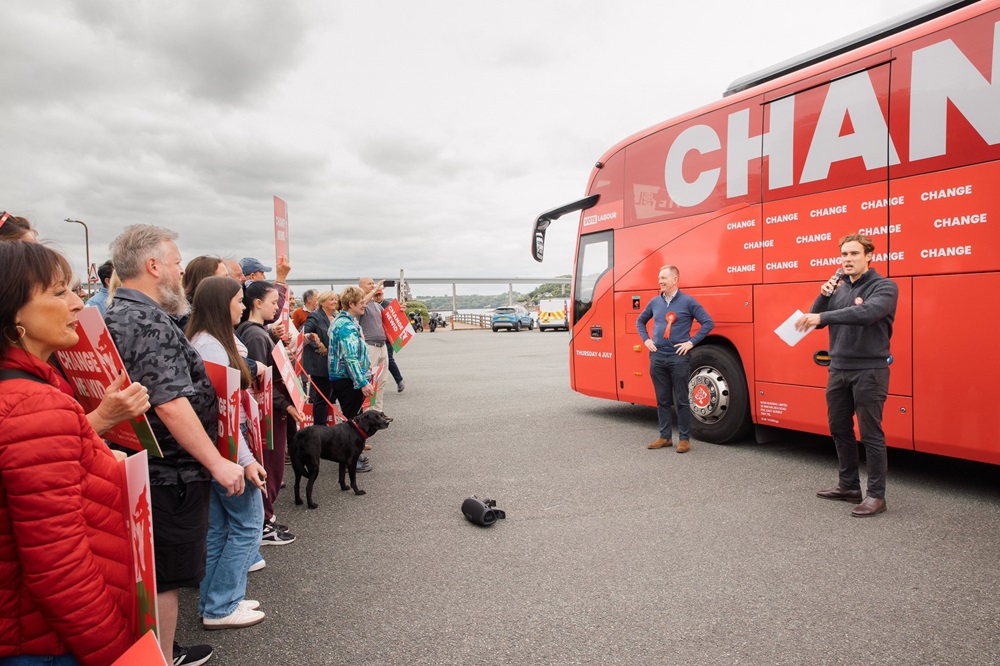
Henry Tufnell MP
The general election saw an unprecedented swing in support for the Labour Party from rural and coastal communities.
In my constituency of Mid and South Pembrokeshire in west Wales, parts of the county had not had a Labour MP for nearly 20 years and this story was reflected in many constituencies right across the country.
I am often asked how much this was driven by wanting to give the Tories a kicking rather than any formal embrace of the Labour Party project. Speaking with my Labour colleagues and anecdotal evidence from thousands of door-step conversations it undoubtedly played a role, but what was often overlooked was the economic vision for the future of the country provided by Labour – “Securonomics”.
[mid-content-banner]
Shift
Rachel Reeves’ plan to make, buy, and sell more in Britain presented a marked shift in economic outlook, particularly when compared to a Conservative Party that had failed to implement any coherent industrial strategy for 14 years.
In our former industrial heartlands and coastal towns these kinds of decisions make or kill off communities. The impact of Thatcher’s brutal approach to the miners in the 1980s and the absence of an economic strategy for those communities once the mining industry disappeared are still being felt to this day.
In Pembrokeshire we are particularly exposed to these decisions; with no university, and with energy, agriculture and tourism as our main economic drivers – 20% of the UK’s energy comes through the Port of Milford Haven, while agriculture and tourism provide 5.4% and 17% of local employment respectively. Therefore, an economic strategy centred on Artificial Intelligence and Bio Tech will not solve the problem of one in four children living in poverty in Pembrokeshire.
Regional inequality
Attempts to address regional inequality are clearly not unique to Labour. The 2019 Conservative government had their own attempt through the “Levelling Up” agenda. The scheme ultimately ended in failure because of the difficulty in holding together such a wide political coalition – personified in the differences between [former West Midlands Mayor] Andy Street and [Tees Valley Mayor] Ben Houchen or the traditional Tory voters in the leafy shires and the 2019 Red Wall contingent.
We are not immune to these schisms in a Parliamentary Labour Party that numbers 412, but the difference is that our remedy to these issues is structural with a desire to profoundly shift our economic agenda, rather than a redirection of cash through schemes that too often lacked a real long-term vision of how to achieve a positive economic feedback loop.
Labour’s Green Prosperity Plan to cut energy bills, deliver energy security and create good well-paid jobs while tackling the Climate Crisis represents a clean break after decades of neglect due to the absence of that viable industrial strategy on a UK-level. The creation of GB Energy backed with £8bn of public money, working in partnership with the Crown Estate will seek to leverage a further £60bn of investment from the private sector.
Offshore wind
The partnership will support the development of projects across a range of technologies, including offshore wind and newer technologies such as carbon capture and hydrogen. These projects are vital to us in Pembrokeshire to capitalise on being the closest port to the Celtic Sea development for floating offshore wind, and as we look to decarbonise across the energy sector with our oil refinery, two liquefied natural gas terminals and power station.
The future looks bright, with a mandate from the electorate and a clear route to implementation. However, organisations such as the Crown Estate must recognise their duty to help deliver this wider economic project and not simply focus on maximising their return on investment, particularly when 12% of their profits goes directly to the Crown rather than the public purse.
For example, in the case of floating offshore wind in the Celtic Sea, there must be binding commitments to the wider economic and social benefits for local communities or else we will end up back in the same economic model of the last 30 years where building takes place in China, and we merely assemble and service from ports like Pembroke Dock and Port Talbot.
After years of being left behind and forgotten about, it is time that communities like mine are given back their voice.
Henry Tufnell is the Labour MP for Mid and South Pembrokeshire
Support our Nation today
For the price of a cup of coffee a month you can help us create an independent, not-for-profit, national news service for the people of Wales, by the people of Wales.
Get more trusted Welsh news
Choose Nation.Cymru as a preferred source in Google News to see more of our journalism.
