


Opinion
Labour is likely to rue its hollow promise to save thousands of jobs at Port Talbot
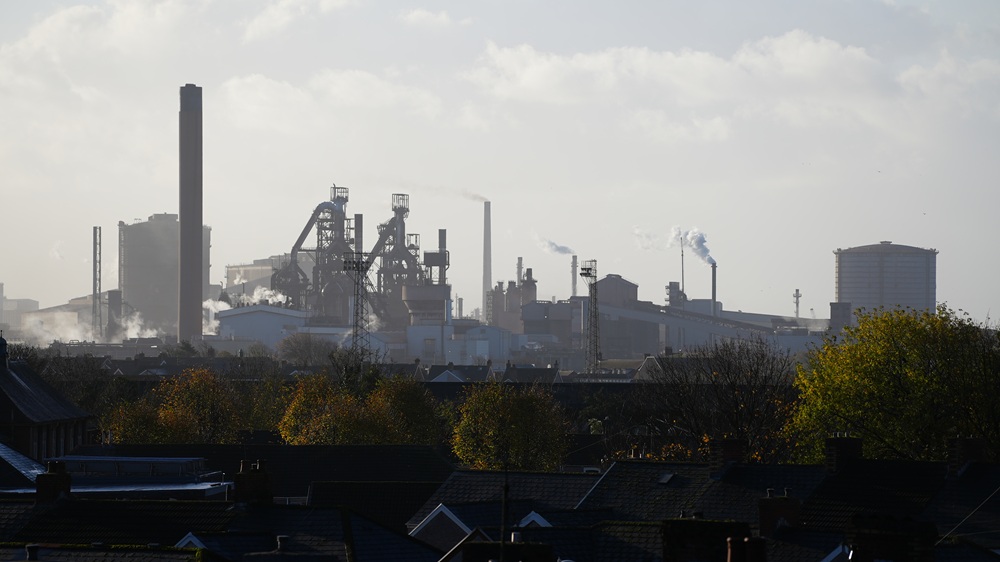
Martin Shipton
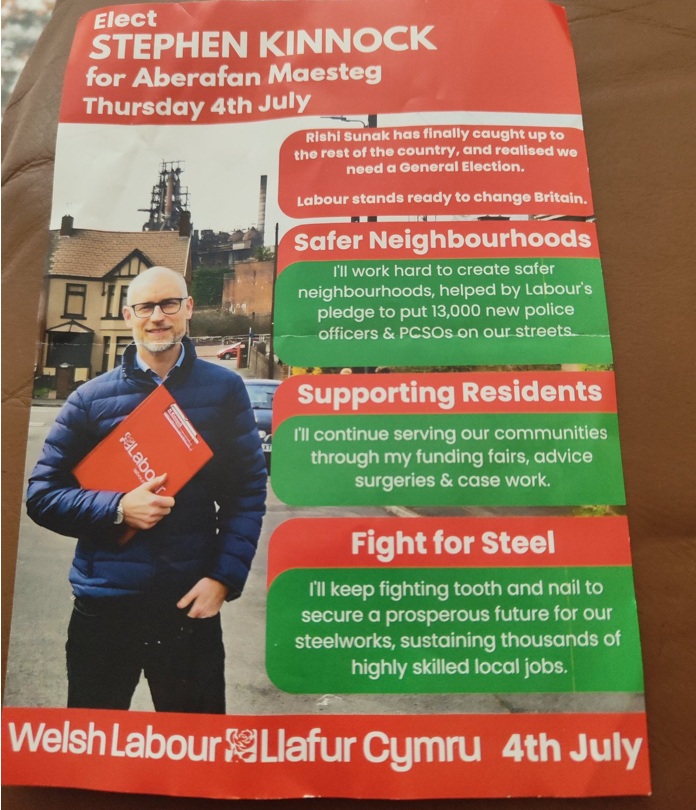
In the run-up to last year’s general election, Welsh Labour MP Stephen Kinnock, whose new constituency Aberafan Maesteg includes Port Talbot steelworks, distributed a leaflet that stated boldly: “I’ll keep fighting tooth and nail to secure a prosperous future for our steelworks, sustaining thousands of highly skilled local jobs.”
Nine months later the hollowness of Mr Kinnock’s promise encapsulates the trouble Labour has created for itself.
The deal secured by the incoming Labour government was in all meaningful respects no better than that offered by Tata to its Tory predecessor: two blast furnaces were shut down, a new electric arc furnace has been commissioned in return for a £500m “bung”, and around 2,800 jobs have been lost.
The idea mooted by Plaid Cymru of nationalising the steelworks was ridiculed by Labour as wholly impractical and ultimately the company’s plans went ahead as billed.
While trying to spin that their deal was better than the one negotiated by the Tories, Labour politicians claimed there was nothing more they could have done, given the huge weekly losses sustained by Tata.
[mid-content-banner]
Hand-wringing
While there was much hand-wringing about the loss of virgin steelmaking due to the use of scrap steel in electric arc furnaces, no practical alternatives were suggested by Labour.
As has become abundantly clear in recent days, the crisis threatening the survival of the British Steel plant in Scunthorpe has been handled very differently. The threat to Britain’s virgin steel production has been ramped up to an existential level, with commentators on all sides of the political spectrum arguing that it would be a disaster for the UK to be the only G7 state to abandon virgin steelmaking definitively.
So significant was the threat that Parliament had to be recalled at very short notice to stop British Steel’s dastardly Chinese owners from shutting down Scunthorpe’s remaining two blast furnaces, quaintly named Bess and Anne after English Queens.
Inevitably - and perfectly legitimately - the discrepancy between the respective treatment of Port Talbot and Scunthorpe by the Labour UK government has led to widespread criticism in Wales. It suggests that the preservation of jobs in Port Talbot is considered by Labour to be less important than the preservation of jobs in Scunthorpe.
That’s certainly how it appears - but the question arises as to the extent Welsh Labour politicians in particular have been cynical, and to what extent naive.
It is difficult to believe that Welsh Secretary Jo Stevens and First Minister Eluned Morgan, let alone Keir Starmer and Rachel Reeves, had future events at Scunthorpe in mind when they dismissed calls for the nationalisation of Port Talbot steelworks.
[lower-mid-content-banner]
On the hoof
More likely, in my view, is that they are making up policies - or more accurately responses - on the hoof, as the unexpected becomes the reality. That in itself is worrying, because it suggests there is no coherent strategy in place at UK Government level for the future of steelmaking in Britain. And if there is no strategy for steelmaking, what strategy is there for anything else?
It seems ridiculous that it is only at the time when virgin steelmaking is about to end that the seriousness of the crisis is recognised, at least to the extent of recalling MPs from their premature Easter break.
And the inescapable fact is that, for all the melodrama involved in passing an Act of Parliament in a day, the essential problem has not been solved. What has been put in place is no more than a sticking plaster.
The Scunthorpe steelworks continues to haemorrhage money at several hundred thousand pounds per week. For how long will the UK Government be prepared to withstand the losses?
What many seem to have forgotten is that the move to electric arc furnaces is a green policy aimed at reducing carbon emissions. Inconveniently, producing steel in an electric arc furnace is a lot less labour intensive than producing it in a blast furnace.
Unfortunately, the rhetoric of a “green new deal”, with masses of new jobs created by adapting processes so they are more environmentally friendly than conventional means of production doesn’t work in the steel industry.
Sustainable steel production leads to fewer jobs, not more.
Green rhetoric
The UK Government is making a fool of itself by trying to ride two horses at once. It insists that it wants to save well-paid jobs in Scunthorpe, while simultaneously subscribing to green rhetoric and committing itself to achieve ambitious carbon reduction targets. It can’t be done.
It also leads to a fundamentally dishonest approach.
Scunthorpe is a typical largely working class constituency that could easily be captured by Reform UK. A Labour seat for many years before being won by the Tories in 2019, it was regained by Labour in 2024. The Tories came in second, but Reform was creeping up. The troubles of a major steelworks are likely to have ramifications beyond a single constituency, especially now that its future has been elevated to that of a totemic plant whose continuing existence is seen as crucial to Britain’s status as a G7 nation.
Jeff Jones, the former Labour leader of Bridgend council, thinks the situation is a mess, both politically and industrially: “People in Port Talbot understandably believe that promises have been broken. It looks terrible, especially when the comparison is made with Scunthorpe.
“There’s a strong argument for keeping strategic industries like steel in the public sector, but Thatcher privatised it in the 1980s.
“We’re being told that we have to increase defence spending, and that will mean using a lot more steel. There’s a strong case for manufacturing it ourselves. In my view it was wrong to sell British Steel to a Chinese company in 2019. When you’re trying to save jobs, it’s much better if decisions are made by people who care about the industry and don’t just see it as an investment for their overseas shareholders.
“It’s been pointed out that new blast furnaces are being built in countries like the Netherlands. But they aren’t as committed to achieving net zero as we are.
“Meanwhile we don’t know what state the blast furnaces are in that caused the intervention. It will probably cost a fortune to maintain them, let alone invest huge amounts to replace them.
“The UK Government needs to come up with a credible strategy for steelmaking. They don’t have that at the moment and what is happening is politically very damaging.”
As in other contexts, Keir Starmer still, at least in theory, has time to turn things around before the next general election, which doesn’t have to happen until 2019.
But with a Senedd election taking place in just a year's time, Welsh Labour needs a lucky break. So far it’s proving elusive.
Support our Nation today
For the price of a cup of coffee a month you can help us create an independent, not-for-profit, national news service for the people of Wales, by the people of Wales.
Get more trusted Welsh news
Choose Nation.Cymru as a preferred source in Google News to see more of our journalism.
