


Opinion
Is Reform a British or English Nationalist party? The question that could determine the fate of the Union
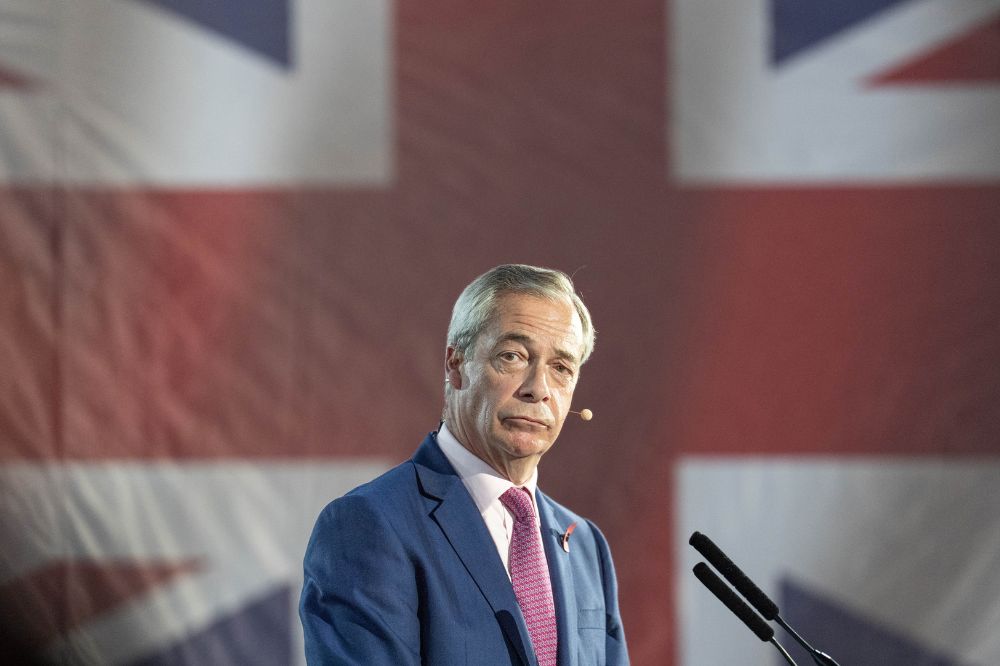
Jonathan Edwards
It is very tempting when faced with an imminent election to look at that event in isolation.
Much of Welsh political commentary is rightfully focused on the elections in May; however in reality the die is already cast as far as May is concerned. Current polls indicate that a change of government is coming to Wales and that Plaid Cymru Ministers will soon be occupying offices in Cathays Park.
One of the joys of writing a political column is the chance to speculate, and to join potential future happenings to forecast the future.
With this in mind, will future historians and commentators look at events that are before us today as a piece in the jigsaw that led to the end of the British state?
Some unionist politicians are warning that a vote for Plaid Cymru in May will lead to independence. Looking at the election in isolation, it is clearly an absurd argument. Firstly, Plaid Leader Rhun ap Iorwerth has kicked the party’s long-term objective into the long grass.
He isn’t going to make a speech on the steps of the Senedd proclaiming a unilateral declaration of independence.
The manifesto on which the party stands will not contain a commitment to seek the powers to hold a referendum. Even if it did and Plaid secured a majority, I cannot see the current UK Government signing a Welsh version of the Edinburgh Agreement of 2012 which paved the way for the Scottish vote on the big question in 2014.
However, what may be worthy of consideration is the impact of Plaid forming the next government of Wales (and the SNP winning again in Scotland) on political developments in England.
It would seem to me that the Labour Party, the Conservatives and the Lib Dems are clearly British nationalist parties in that they support the continuation of the British state. They also fundamentally promote a political identity with Britishness at its core. However, the big question is whether the same applies to Reform, the party at the moment in the lead in Westminster polls.
Until recently British and English identity was interrelated. The happy coexistence between Britishness and Englishness has been the central power source of the British state.
However, in recent decades all the academic research indicates that English identity has become more politicised and assertive. A certain Nigel Farage has tapped into this phenomenon and used it to deliver Brexit. Research by the London School of Economics estimates that 70% of English identifiers voted Leave.
Furthermore, support for his new project, Reform UK, is very much concentrated amongst strong English identifiers. So while the politics and values of the SNP and Plaid on the one hand and Reform on the other are poles apart, Reform has succeeded in becoming the political choice for those in England who strongly identify as English, much in the same way that Plaid and the SNP do for strong Welsh and Scottish identifiers in their respective countries.
Identities
The big unknown question going forward therefore is does Farage see Reform as a British or English nationalist project in an age where English and British identities are disentangling.
Faced with nationalist governments in Wales and Scotland, Farage will need to make a choice. Does he seek to exploit grievance in England to nurture and develop his electoral base and outflank the traditional Westminster parties? Or does he pursue a strategy of proclaiming himself as the only possible saviour of the Union and drape himself in the Union Jack at the risk of abandoning a major strategic advantage he currently has over the Tories and Labour?
The answer to that question may well determine the fate of the British state if Reform ends up winning a future UK general election.
Fission event
Therefore, while Welsh independence isn’t on the ballot paper in any meaningful way in May, the consequences of a Plaid government could be a fission event in the chain reaction that leads to the destabilisation of the British state.
What we know of the chain reaction process is that fission events trigger further amplified events in both scope and speed. The Welsh political class therefore needs to prepare because what might appear far off and improbable now might be upon us in no time at all.
Jonathan Edwards was the MP for Carmarthen East and Dinefwr 2010-24
Support our Nation today
For the price of a cup of coffee a month you can help us create an independent, not-for-profit, national news service for the people of Wales, by the people of Wales.
Get more trusted Welsh news
Choose Nation.Cymru as a preferred source in Google News to see more of our journalism.
