


Opinion
In a pandemic, fake news can become a lightning conductor for our fears and frustrations
Mike Parker
A neighbour played a brilliant April Fool on us last week. My partner took the call, and hotfooted it over to my office to repeat it on me.
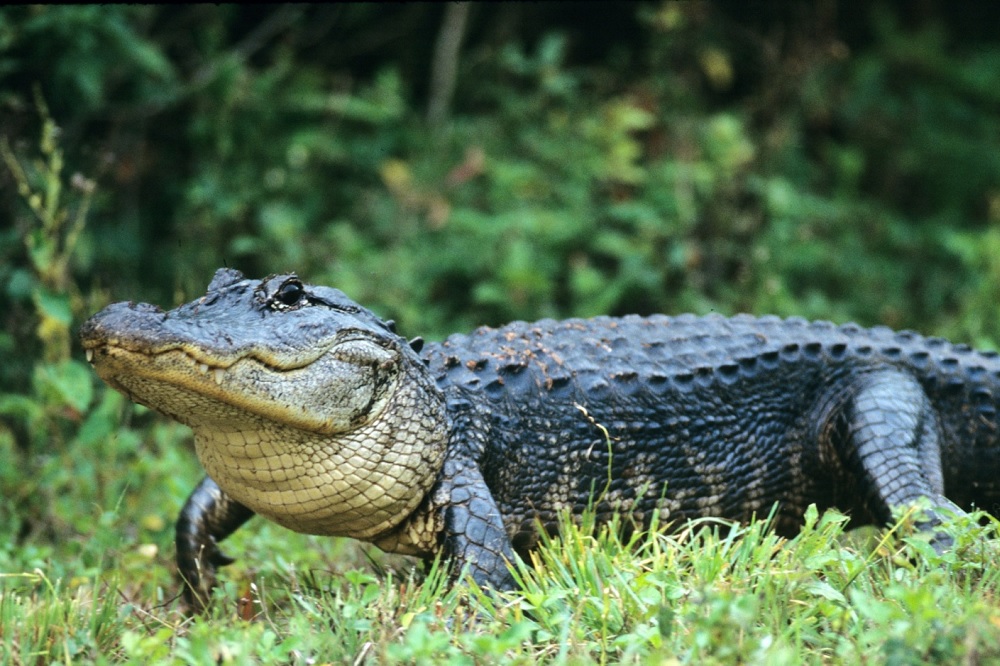
“That was Ian on the phone,” he said. “There’s an alligator on the loose. From one of the holiday homers in Abercegir. They decided to come up here to quarantine themselves, and had to bring it with them, and it’s escaped.”
My brain detonated with the hideous symbolism of it all. It made perfect, gruesome sense. There had been so much furious muttering about local holiday home owners swanning back to their semi-abandoned properties, bringing god knows what invisible threats with them, and now here was the threat made tangible and bloody terrifying. My jaw sagged wide.
“There’s police crawling all over the place,” he continued. “Have you noticed them?” The view from my desk is down the valley, and I can see distant traffic on three different lanes. I thought about it, and felt sure that I had noticed a few vans around that morning. There’s little enough traffic at the best of times, but these last few weeks, it’s dwindled to almost nothing. Yes, I decided, there were vans and perhaps yes, now you mention it, they had police markings.
“Oh my god,” I kept saying, mouth still agape. “Where’s the dog? Is she in? And the cat? Oh my god.” I paused. “Oh, the bastards. Just typical isn’t it? Putting our lives in danger, not giving a toss about anyone else...”. I tailed off, as he’d burst into gulps of laughter, and had had to clutch a bookcase to steady himself. “April fool,” he wheezed through the tears.
Thankfully, he cracked only seconds before I tweeted the news of the alligator prowling the fields and lanes of Montgomeryshire. When the yarn was first spun to my partner, his immediate instinct was to phone around all our farmer neighbours and warn them of the threat to their livestock. Mine was to tell Twitter. He is unquestionably the better man.
[mid-content-banner]
Symbolic
The imaginary alligator is only the latest in a rapid succession of corona-fuelled allegory. We’re awash in it. Toilet rolls as gold dust, drone patrol, Zoom parties, deserted motorways, the Llandudno goats, viral clusters of Stereophonics fans and Cheltenham racegoers: it all seems to have leapt straight from the pages of Philip K Dick.
Then of course there’s the densest metaphor of all, the Westminster bubble, a literal nexus of Covid-19 infection, but also of its catalyst, the age-old viruses of hubris and machismo. I’d say that there’s never going to be a sharper example of that than one short month from “I shook hands with everybody, you’ll be pleased to know” to a hospital bed, but these are extraordinary times and we should never underestimate English exceptionalism, nor its ability to trump its own stupidity. With or without a capital ‘T’.
Everything seems so painfully symbolic right now. No surprise that holiday homes, a running sore for many rural and coastal communities, have again leapt into the frame as the lightning conductor for fears and frustrations. That people with second homes (step forward Dr Catherine Calderwood, former CMO for Scotland) are prime purveyors of the school of ‘do as I say, not as I do’ comes as a shock to precisely no-one, though if it’s verboten for Dr Calderwood to drive 44 miles to her second home, I’m not quite sure why it’s acceptable for Prince Charles, having tested positive for Covid-19, to be driven 500 miles to his what, third house? Fourth? Anyone still counting?
Of course, we gravitate to the things that confirm either our fervent beliefs or our deepest hatreds, and whether they’re real or not can become incidental. Over the weekend, an inveterate joker found a two year old Twitter photo of a road accident near Wrexham, and re-posted it with the message “Police roadblocks into #Wales pulling over cars with English plates and fining them £750. Just an easy money earner”.
Despite the poster owning up sharpish on the thread to it being fake, despite the original photo being quickly found and added too, and despite the fact that it was clearly not taken in early April, hundreds re-tweeted it, added messages of support or approving emojis, and debated it furiously as fact.
Fake news – and dangerous fake news at that – is not just the stuff we disagree with. If I had launched the Allegorical Alligator of Abercegir on to Twitter, I suspect he’d still be on the loose now.
Read more in Mike Parker’s series for Nation.Cymru below:
Part 1: We’ve been told before that things will never be the same again – can we mean it this time?
Part 2: Last weekend’s pandemic-panic awayday was inevitable – but so was the visceral response
Part 3: Will we use this crisis to rediscover the value of community – or for more suspicion and othering?
Part 4: The BBC needs to start listening to doctors – not government spin

Support our Nation today
For the price of a cup of coffee a month you can help us create an independent, not-for-profit, national news service for the people of Wales, by the people of Wales.
Get more trusted Welsh news
Choose Nation.Cymru as a preferred source in Google News to see more of our journalism.
