


Opinion
How Wales' future generations policy is being used as 'window dressing' for a new right-wing European Commission
Luke James, Brussels
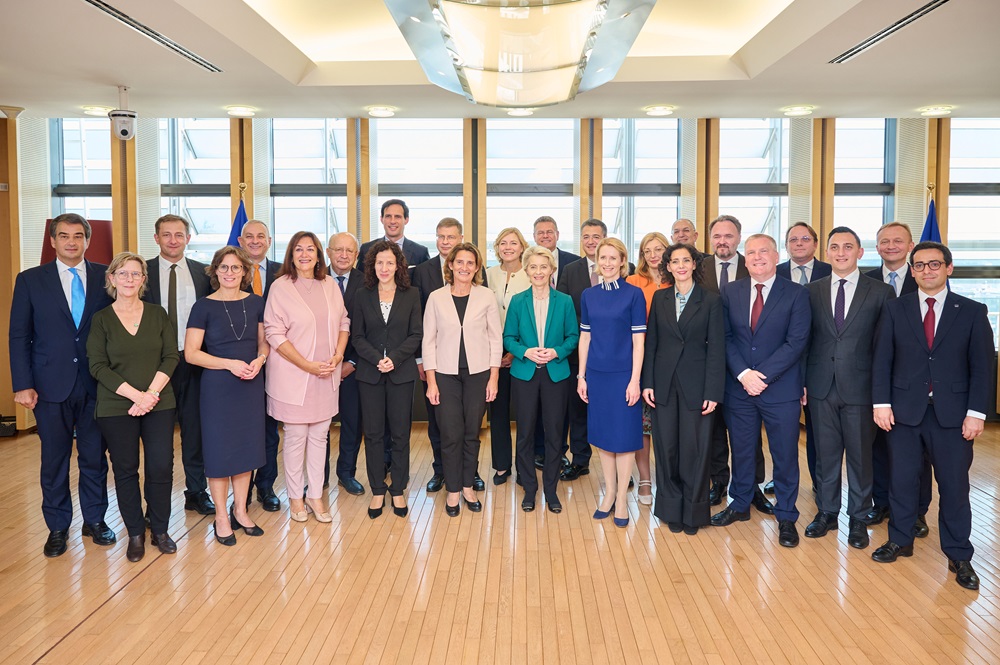
The new look European Commission unveiled this week includes a role that’s groundbreaking for Brussels but now rather familiar in Cardiff.
The team of 27 commissioners named by President Ursula von der Leyen includes, for the first time, a role dedicated to the task of ensuring “that decisions taken today do not harm future generations.”
As Nation.Cymru reported earlier this year, the campaigners who pushed for its creation said “the Welsh commissioner has been and remains one of the major sources of inspiration.”
There has then, naturally, been satisfaction that Wales is having a positive and outsized influence on the rest of Europe, even after Brexit.
Unfortunately, this week made clear that the EU’s future generations commissioner is going to be exactly what some have accused their Welsh counterpart of being: window dressing.
Advocates had hoped the role would be given to one of von der Leyen’s vice-presidents and would help prevent any further backsliding on the EU’s green policies.
The health of the planet is, after all, the most important responsibility one generation has to the next.
[mid-content-banner]
Junior member
In the end, the role has been given to the most junior member of what is widely considered to be the most right-wing Commission ever assembled.
Glenn Micallef, a 35-year-old Maltese civil servant, has been nominated to be commissioner for Intergenerational Fairness, Youth, Culture and Sport.
A portfolio described as “weak” by the Maltese Times, it’s not a coincidence that Micallef is listed last on the list of commissioners on the Commission’s website.
Nonetheless, Micallef’s mission letter from von der Leyen charges him with the task of ensuring that the “interests of present and future generations are respected throughout our policy and lawmaking.”
The Welsh experience shows it is difficult enough to begin making the intentions of a future generations policy a reality even when it’s law.
But Micallef is meant to oversee this fundamental change across the whole continent merely through a new “strategy on intergenerational fairness” which risks being quietly shelved.
The European Green Deal was the flagship policy of von der Leyen’s first time as Commission President, which began at the high point of the ‘Fridays for Future’ protests for climate action.
The German conservative says “we must and will stay the course”, but the evidence shows the interests of future generations are slipping down the Commission’s agenda.
Shell
The new Commission no longer includes a vice-president for the European Green Deal. Instead, there is a lower ranking commissioner for ‘Climate, Net Zero and Clean Growth’ – a role held by Wopke Hoekstra, who began his career at Shell and was last year subject to an investigation by the Dutch parliament for “allegedly promoting oil and gas exploration in the Netherlands for personal financial gain,” according to the Corporate Europe Observatory.
This week also saw the European Ombudsman, the ethics watchdog, open an investigation into the Commission over a complaint that it “relaxed” environmental requirements in response to farmers’ protests without having ensured the new rules would not “undermine the environmental and climate goals of the EU.”
This approach is not limited to the environment. It’s the modus operandi of the new Commission.
Deregulation
Every member has been told they must contribute to a deregulation drive that will require new legislation to pass an “SME and competitiveness check”. What was once a protection for the environment, workers or consumers now risks being seen as a ‘burden’.
Von der Leyen even got rid of the title of commissioner for ‘jobs and social rights’, a role which has existed, including under its previous guise of ‘employment and social affairs’, since the 1970s.
The mandate for these changes is unclear given von der Leyen’s political family, the centre-right European People’s Party, won just one extra seat in the European Parliament in May’s elections and leads the government in only one of the EU’s five largest member states.
Not only is it all rather contradictory to the future generations policy they’ve adopted, but it also risks trampling on the legacy of one of Wales’ most dedicated Europeans, Hywel Ceri Jones.
Best known as a founder of the Erasmus scheme, Jones was also the director general of the Commission’s department for employment, social policy and industrial relations and worked closely with former Commission president Jacques Delors, who famously told the TUC Congress that “nobody falls in love with a market.”
Wales was a major beneficiary of the cohesion policy launched by Delors in his efforts to reduce inequalities as part of his vision of a ‘social Europe’.
Far-right
One can only imagine what he would think of the cohesion portfolio being handed this week to
Raffaele Fitto, a member of the far-right Brothers of Italy party led by Georgia Meloni.
Two days after his appointment, von der Leyen’s party then broke the cordon sanitaire around the far-right in the European Parliament by passing a joint resolution with representatives of parties led by Meloni, Viktor Orbán and Marine Le Pen.
Far from following Wales’ efforts to act in the interests of future generations, this week points to a Commission guided by political opportunism and short-termism.
It could be a long five years for progressives campaigning to rejoin the EU.
Read more: European Commission to follow Wales’ future generations policy
Support our Nation today
For the price of a cup of coffee a month you can help us create an independent, not-for-profit, national news service for the people of Wales, by the people of Wales.
Get more trusted Welsh news
Choose Nation.Cymru as a preferred source in Google News to see more of our journalism.
