


Opinion
Has Welsh Labour lost the ability to represent the interests of Wales?
Martin Shipton
Evidence is emerging that Welsh Labour’s blind panic over the rise of Reform UK is seriously compromising its ability to represent the interests of Wales.
The party’s broken-record style assertion that two Labour governments - one in Westminster, the other in Cardiff - are working together to deliver for Wales no longer seems credible, if it ever did.
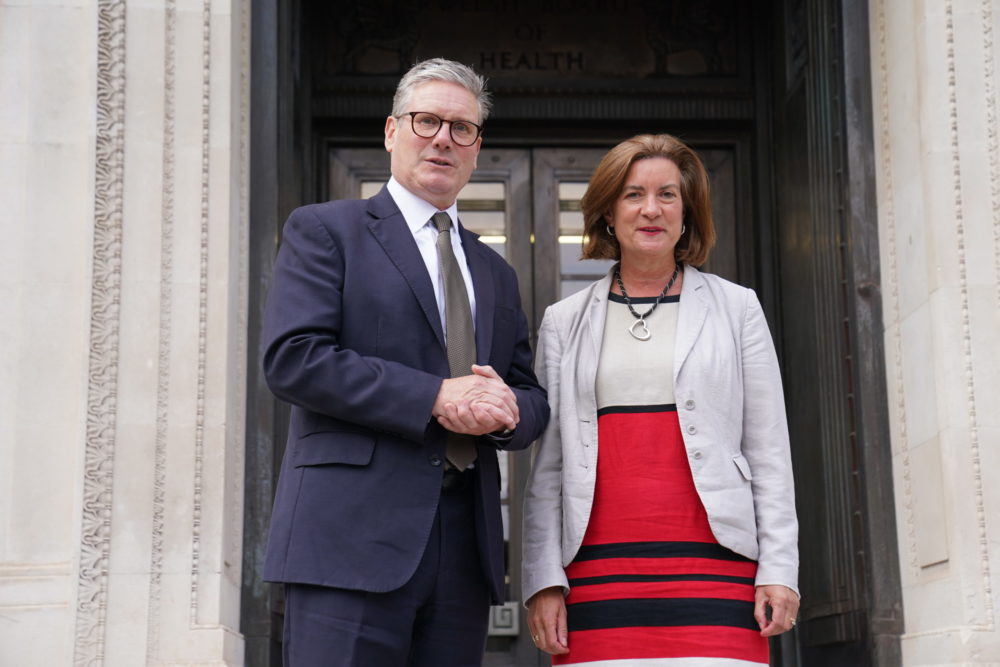
Wales is the poorest UK country and has a higher proportion of disabled and sick claimants than elsewhere. If the two governments were genuinely working in harmony together, it might seem reasonable to expect that, at the very least, Rachel Reeves or even Keir Starmer himself would enter a dialogue with Eluned Morgan about the cuts that were widely trailed before the confirmatory announcement this week.
But no. Instead we had a series of mishaps that demonstrated how hollow the claim of working together in Wales’ interests really is.
[mid-content-banner]
'Reserving judgement'
Welsh Secretary Jo Stevens told journalists that the First Minister was fully behind the cuts, while the First Minister herself told the Senedd committee scrutinising her that she was reserving judgement until getting an impact assessment on the implications for Welsh claimants. Meanwhile Baroness Morgan was unable to say who she’d spoken to about the cuts in the Downing Street policy unit. What’s clear is that there had been no conversation with Reeves or Starmer.
There is, in fact, no hard evidence that our First Minister has been able to change the mind of the Prime Minister about anything.
She has previously told how every time she meets him, she badgers him about the injustice of HS2, whose misdesignation as an England and Wales rail project has already robbed Wales of hundreds of millions of pounds in Treasury funding before a metre of new track has been laid.
Viewed most charitably, the UK Government’s attitude towards the Welsh Government seems to be that of a relatively well-off individual who regards their poorer country cousin as a bit of a time-wasting nuisance who is constantly hovering outside with a begging bowl.
The emphasis is on the adjective ‘relatively’ because the wealthier relative has in fact fallen on hard times and is having to adjust their own spending accordingly.
In Wales, of course, we should be viewing the situation differently. We’re not offering up a begging bowl, but demanding our fair share of what’s available.
[lower-mid-content-banner]
Fair finances
Since democratic devolution was inaugurated in 1999, Wales has been pressing for a fairer financial deal based on social need. We’ve become well-versed in the workings of the Barnett formula, which hasn’t served us well over the decades, but which has been tweaked to ensure a minimum below which allocations can’t be dropped.
But Westminster has stuck to its guns in refusing to reclassify HS2 so we get the money that should rightfully be ours, or to devolve the Crown Estate to Wales, as the Senedd and so far 19 of the 22 local authorities have demanded.
Now a former Welsh Labour MP has been in touch with me to flag a further funding injustice that grotesquely suggests that the health service in Wales would receive more money if Wales was part of England.
Until the 2024 general election, Geraint Davies represented Swansea West at Westminster. He’s homed in on a House of Lords report and some research done at the University of Stirling to illustrate the point that Wales’ health service would be funded at a higher level if Wales was an English region.
In 2009 a Lords committee examined the Barnett formula, which changes allocations to Wales, Scotland and Northern Ireland in line with population growth, and recommended that funding should instead be calculated on the basis of need, using indicators like the age of the population, income levels, the prevalence of ill-health and disability, and local rates of unemployment.
Later researchers at Stirling established that if the UK Government switched to a needs-based funding arrangement, Wales could spend £181 more per person on healthcare each year.
Under the Barnett formula, Wales received £2,127 per head to spend on health, £21 more than England got.
Disparity
However, the disparity in funding terms would be much greater if allocations were based on need.
In fact, a needs-based allocation of health funding does already exist in the UK. But it’s not used by Westminster to allocate funding to the nations of the UK. It’s used by NHS England and NHS Scotland to allocate funds internally among their own primary care trusts.
England and Scotland use slightly different methods, but the idea is roughly similar: areas that have more elderly people, more children, higher mortality rates and higher economic deprivation will get more money to spend per person.
In 2015-16, it was calculated that, according to NHS England’s assessment of needs, the NHS in Wales would need to spend 9.7% more per person than England to meet the needs of the Welsh population. In cash terms, that meant £2,310 per head in Wales, against £2,106 in England.
Mr Davies said: “While that detailed calculation was made a few years ago, the situation remains the same today. It is ridiculous that Wales would get more money if it was an English region. This is something people need to understand and campaign on.”
Dividends
In the current climate it seems unlikely that Welsh Labour will take up the gauntlet and press vigorously the case for Wales. It is too busy trying to pretend that the partnership between it and UK Labour is on the verge of delivering dividends - indeed, that the good times have already arrived, with dips in hospital waiting times for two successive months.
But not many are convinced. Welsh Labour is spooked by Reform and doesn’t know how to respond to its challenge. Instead, it’s resorting to formulaic attacks on Plaid Cymru as the party of separation, with a silly graphic showing Wales drifting off towards Ireland, a nation significantly more prosperous than the UK.
Labour are the real separatists, having signed up to Brexit, which is having a hugely negative impact on the UK economy.
The Office for Budget Responsibility stated in the report relied upon by Rachel Reeves in delivering her Spring Statement: “ Weak growth in imports and exports over the medium term partly reflect the continuing impact of Brexit, which we expect to reduce the overall trade intensity of the UK economy by 15% in the long term.”
Hemmed in by her self-imposed fiscal rules, Reeves can’t even make meaningful moves towards realigning the UK with the EU as a bulwark against the spiteful narcissism of Donald Trump.
Tragic
It is richly ironic, as well as desperately tragic, that having hitched Labour to the Brexit bandwagon, Starmer is playing right into the hands of Nigel Farage, who launched the chaos in the first place.
Thanks to Morgan McSweeney, now his chief of staff, Starmer had a plan to get elected.
But he clearly had no plan about how to run Britain and fend off a right-wing populist like Farage who has surely caused enough damage already.
Support our Nation today
For the price of a cup of coffee a month you can help us create an independent, not-for-profit, national news service for the people of Wales, by the people of Wales.
Get more trusted Welsh news
Choose Nation.Cymru as a preferred source in Google News to see more of our journalism.
