


Mon, 20th July Cardiff 23°
Nation.Cymru wordmark
Advertisement

Opinion

From Wuhan to Wallia: Why we need a Land Army for Wales
By NationCymru
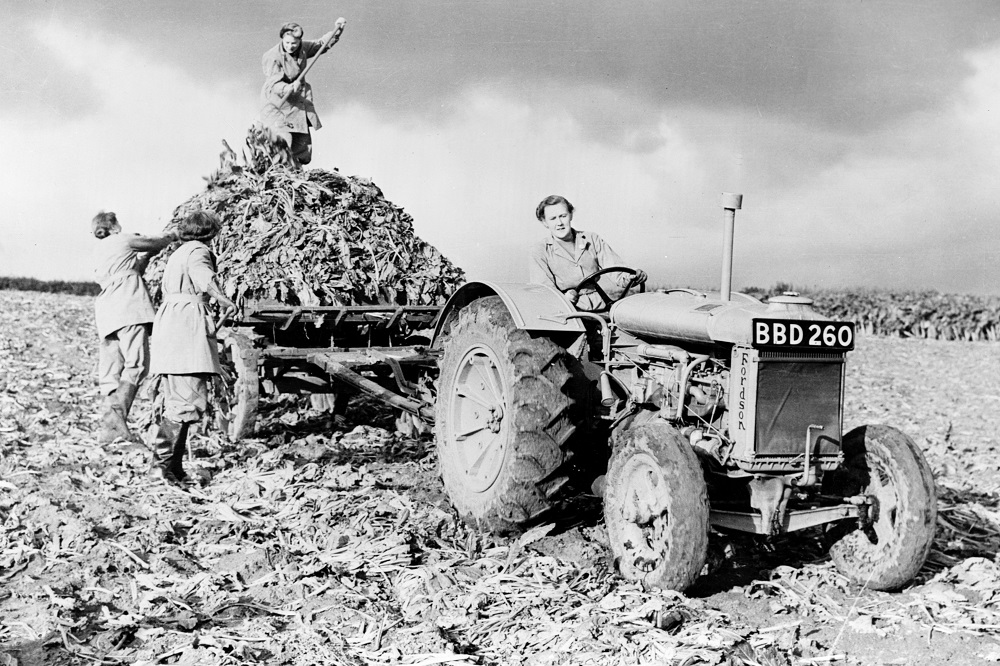
Members of the British Women's Land Army harvesting beets in 1942/43.

Jim Dunckley

Born from the plight of illegally traded animals in the "Wet Markets" of Wuhan, Covid-19 has unleashed catastrophic economic and social consequences on the rest of the world. But from panic-buying in supermarkets to the prospect of summer food shortages as farmers and growers struggle to deal with the loss of a seasonal workforce on lockdown, there's one thing that ties all these disparate elements together: food.

In Wales and the rest of the UK we sit at the end of a long and surprisingly delicate food chain. We import around 50% of our food supply. A recent article in the Guardian flagged up a warning by the United Nations' Food and Agriculture Organisation that protectionist measures on the part of exporting nations could disrupt food supplies and lead to food shortages. In the UK we now face a potential double-whammy; we can't pick everything we grow, and we can't import what is picked elsewhere either.

In response, farming leaders and land-owning interests are pushing for the formation of a "Land Army" to make up the shortfall of up to 60,000 seasonal workers. Such an army would be drawn from the rapidly growing pool of unemployed, redeployed from industries that have gone into cold storage as the crisis bites. But putting aside the practicalities for a moment, the question has to be asked, why rely on the UK government, or the farming lobby? Should a Land Army really be a creature of that bastion of the ordinary man on the street, the Country Land and Business Association?

In a Welsh context, the Land Army concept has been given a modern twist in a fairly recent Plaid document, the Greenprint for the Valleys. But what was envisaged there was just that, an organisation dedicated to relocalising food production in the Valleys. What we're talking about here is a bit bigger; a truly national organisation covering the whole country. For my part, I have a personal interest; my Irish granny was a 'Land Girl' conscripted into the Land Army in it's original incarnation during World War 2. But this is 2020 and we need an organisation for everyone.

There are those who will say that it's just not possible to build such an organisation when we're all on lockdown. My answer is simple; just take a look out your back garden. In Britain during World War Two, "Digging for Victory" didn't just happen in fields and farms around the country; it happened in back yards too. And it was good for morale. And in much the same way that thousands of neighbourhood mutual aid groups are being organised via Whatsapp to maintain physical distancing, so "Sections" covering discrete geographical areas can be organised in exactly the same way.

[mid-content-banner]


Cabbage patch

The basic building blocks of our army are already here.

If we're serious about food security and re-localising food supply, then we need to start as close to home as we possibly can. And lockdown presents us with a golden opportunity to make a start on our own doorstep. And that means doing gardening the way our grandparents did it. It means raised beds and greenhouses and veg patches, and even humble window boxes. We can all do our part in some small way, and who knows? Maybe families - parents and children alike - will find a new sense of purpose in that short distance between the cabbage patch and the dining room table.

Beyond lockdown, there's one other fruitful avenue of opportunity to build our new army which observes the requirements of physical distancing; Council Estates. Council estates are littered with random green patches of land, many of which are too small for a kick-about, but still big enough to grow food. Such patches could be transformed into "micro-plots" and households could be encouraged to "adopt a plot" on a first-come-first-served basis.

Because such plots are dispersed all over estates it allows residents to retain physical distance but still co-ordinate through Whatsapp. Turning these little patches over to food production further offers the potential to generate employment and even save cash-strapped Councils money which can then be reinvested in maintenance and maybe even new build.

There are hundreds of such estates of varying sizes all over Wales.

For now, many of us are adjusting to life under lockdown. But life on the other side of lockdown promises much deeper and more long-lasting social and economic changes. Is it really good enough to simply plug gaps in a seasonal labour force and then expect things to revert back to business as usual when the dust settles? If we want to insulate ourselves from future food supply shocks then we need to re-design a system that is broken, and here in Wales we can make that much-needed change now.

In a world of spiralling climate chaos and ecological degradation, land armies could well be the armies of the 21st century. And in Wales we’ve been here before. In the 1960s a massive “army” of local volunteers cleaned up over a century of industrial devastation and reforested the lower Swansea Valley. Fast forward to 21st century China and 60,000 troops in the People’s Liberation Army were recently enlisted in an even larger tree-planting scheme; the area they planted was roughly the size of Ireland, from where my dear-departed Granny came to join the original Women’s Land Army all those years ago.

But what we need now isn’t a useful tool of government and landowners, but a genuine grassroots movement of volunteers. And the battlefield will be what it’s always been; land - who owns it and who controls it. Battles will be fought plot by plot, field by field, estate by estate. And victory will come to those prepared to dig for it.

So let's get our hands dirty.

For the price of a cup of coffee a month you can help us create an independent, not-for-profit, national news service for the people of Wales, by the people of Wales.

Get more trusted Welsh news

Choose Nation.Cymru as a preferred source in Google News to see more of our journalism.

Choose Nation.Cymru as a preferred source in Google News

21 comments

KC Gordon

… and bring back allotments.

Reply
AJP

Firstly, there is no conclusive evidence Covid-19 originates from the wet market in Wuhan. They do not know how Covid-19 transferred to humans, but they do have suspected pathways. There are reports from France of cases of Covid-19 diagnosed in February, and other reported of cases in China in November. Secondly, if we are considering ow to pick the fruit and vegetables grown in Wales over the next few months, it is quite simple - farmers need to pay at least minimum wage for the food to be picked. This will lead to increased cost in fruit and veg, but the industry and consumers have been relying on poorly paid overseas seasonal workers for too long. Even without Covid-19, Brexit has impacted the availability of seasonal workers from overseas - a case of Brexit Britons taking the contribution of our friends in the EU for granted. Maybe Brexiteers should be the first to join this 'land army' and show everyone how its done. Increased food costs will prompt many to start growing their own in their gardens or allotments - it will become better value for money considering the time invested. Investment by government at grassroots level can transform our villages, towns and cities to become more green and grow more food. Bramble hedgerows, Apple trees lining city streets, and a new engagement with the provenance of food and the ecology for growing it. This transformation can result in more effective drawing of carbon from the atmosphere, contributing to Wales' Green Deal to become carbon neutral.

Reply
Plain citizen

People do like to grow some of their own food for occasional eating. It's a nice pastime with many health benefits. It's not a substitute for feeding the population which takes the resources of a vast industrial farming system. The current Brexit battle over farming is between those who want the population to be able to choose cheap food if they want it (properly labelled to say where it's come from and what standards apply) and those who have imposed various regulations on farmers and growers which means their products must be sold at a much higher price to make a profit and therefore the population must be forced to pay that price to keep those farmers (often rather wealthy landowners) in pocket. The elite who govern us say ordinary people must not be allowed (because they are too stupid, don't gave the 'right values' etc etc) to make this decision. The elite must make these decisions for us.

Reply
G. WESTACOTT

Alas, so much of our best agricultural land has disappeared under tarmac and housing estates for people from over the border and further afield.

Reply
Sian Ifan

What about windmill plantations? G.

Reply
John

I concur with most of this article, but please can we get away from invoking the language of World War Two. Our nation faces exceptional challenges, many of them of our own making, thanks to the fools who voted for, and delivered, Brexit. Yes, we do need to look for exceptional solutions. But we will not find them in the mindset of the past.

Reply
Adam York

No we don't need a Land Army,and no it's not a war. Central planning and stability we do need however to create and maintain an agricultural sector in Cymru(and the rest of the UK).Horticulture is a tiny sector in Cymru but could be readily expanded.Gardens/Allotments are good for many reasons but they are not going to be a significant part of the national food supply(good on nutrients, not so great on calories,terrible on protein).Arable farming is also tiny in Cymru but of much more signifance-it effectively feeds us all.Both sectors can be massively improved by Welsh Farmers,they basically need a viable price to up production,with some underwriting of market stability. Spending nearly all Welsh state ag.money defending red meat and dairy sectors when their mkt is evaporating is wasting time when global grain trading and food security is very much on the line.We have much more fertile land than is popularly accepted,a very favourable climate but v.poor processing capacity and a seeming determination never to tackle the oligopoly of Tesco,Aldi and co. PS higher food prices are anathema post WWII but if you want resistance to viruses and degenerative disease spread then get used it.Jobs,functioning soil and clean air look quite attractive to me

Reply
Ceri

Very sensible post. A higher focus on nutrition and supplementing our diet via the garden or allotment is a great idea, but not when it is a requirement for the citizenry to do so by fiat. There does seem to be a lot of collectivist fervour now, positing mass-anything kind of misses many key lessons from the current crisis, I fear. If we look at the penultimate paragraph in the article - 'battles will be fought plot by plot, field by field, estate by estate', further erasing much of our heritage, natural beauty and, I assume, penelising private land owners simply for being private landowners. This isn't WW2, it isn't the great leap forward, this isn't the Spanish Flu - this is the Covid-19 pandemic. Lessons should be learnt from past successes, but by simply alluding to the past, we run the risk of repeating its mistakes.

Reply
j humphrys

Royston is always saying that it would make a change for W. Gov. to help our farmers instead of being a pain in their butts. How about we get rid of the third sector and support the farmers?

Reply
Ceri

Once again, I'll try to be that annoying fence sitting guy. Socialised institutions can work very well alongside private ones and, in theory, could be vital in a small independent nation like cymru. Large scale government programs, a social safety net, grants (with a view for grant recipients to eventually become self sufficient) are great. But the suggestions in the article go a tad too far for my taste, as would, say, abolish the NHS and introduce a totally privatised system.

Reply
Steve Duggan

I suspect you are right Jim, food is set to become more expensive and less available. People may well be driven to growing their own food - as they will have little choice. That sounds rather dramatic but we do not, as yet, fully understand the consequences of our recent worldwide shutdown and let's not forget the stupidity of Brexit on the horizon too.

Reply
vicky moller

Are you recruiting Chris Paul? I guess we could go out, community by community, tribe by tribe, whole clans at a time, with pay. Why not, lets go, better than festivals. I offered to help the farms to organise harvesters but no joy, my son offered his services, been a builder since he was 14, 26 yrs of work, stopped by covid, but he was rejected. So not sure what is going on there, I guess we could muster scores if not hundreds within days from one village for a few weeks harvesting. Got tents and wheels, can travel. Just need a recruiting sergeant to call. Chris?

Reply
Jason Evans

Very interesting article, I particularly liked the taking over of green spaces. I have no problem admitting this is idealistic of me but post “Lockdown”, when things are “back to normal” I think it would be a great idea to have community growing areas i.e the “random green patches of land”, as an example the Mount Estate in Milford (like many Estates around the country) is littered with these areas which are being put to no use at all, hand them to the community and get growing, introduce a community grocers, cheap produce, and the money generated can go back into the community to make life that little bit better for all.

Reply
j humphrys

If I could add, insect butterflies and bees in decline; please allow grasses and flowers to grow?

Reply
Jason Evans

A very fair comment. The areas I'm talking about are the greens which are "to small for a kick-about", usually untouched by the residents, left to grow until nigh on calf height then cut by contractors. Maybe turning these strips into mini allotments and using different types of flowers along the edges of these strips, along with companion growing and perhaps this would encourage butterflies, bees and other wildlife into these areas as an added bonus ?

Reply
Sian Ifan

Do we get a Pitchfork as well as a shovel? Cofiwch Rhyfel y Sais Bach 1826, Land and Liberty not just Allotments! Gethin.

Reply
Sian Ifan

Land and Liberty: Do we get a Pitchfork as well as a shovel? COFIWCH RHYFEL y SAIS BACH 1826 also read up on Hanes Tai Un Nos in Antur Gadarn Posts blog CYMRU EIN GWLAD. Gethin.

Reply
Glasnost UK

Some CV facts: https://www.youtube.com/watch?v=TPpoJGYlW54

Reply
Ceri

By that noted Research Lab... Vox.com - Dear, oh dear.

Reply
Josh Foster

This is just bonkers. Window boxes to feed the nation. For god's sake.

Reply
Sian Ifan

WHAT WE NEED IS A WALES LAND COMMISION AND WALES LAND ACT CAMPAIGN Gethin

Reply

Leave a comment

Comments are reviewed before they appear.