


Opinion
Drakeford and Price’s Senedd reforms are a big step forward – but hopefully not the end of the journey

Ifan Morgan Jones
Today was Christmas for Welsh politics geeks as Plaid and Welsh Labour leaders Adam Price and Mark Drakeford put forward their plans to reform the Senedd.
They include enlarging the Welsh parliament to 96 members and the creation of 16 multi-member wards, each electing six Senedd Members through proportional representation.
While these are just recommendations to a cross-party commission, with the weight of both party leaders behind them, who together have a hefty majority in the Senedd, it’s very likely that the final system will look something quite like this.
I won’t relitigate whether the Senedd needs 36 new members here. Personally, I think that short-staffing your parliament, whose members are collectively in charge of billions, just to save a few million is a false economy.
I will instead discuss the voting reforms. These don’t perhaps include everything that proponents of progressive voting reform would have liked to see, but it’s a great deal better than the current system.
At present, over half of the seats are decided by the archaic ‘winner takes all’ First Past the Post, which forces voters to vote tactically for whoever they think has a chance of winning the constituency.
The new system proposed by Drakeford and Price is fully proportional – the norm around the world, but it would be the only fully proportional system on the UK mainland.
It would essentially allow people something close to a free vote for the party of their choosing, from a list of candidates chosen by each party, and there would be less need for tactical voting as long as they are confident that their party was likely to pick up at least one of the six seats on offer.
The system used at last year's Senedd election also had an element of proportional representation on the list system, which ‘topped up’ those parties who lost out on the constituencies.
However having two different voting systems in one election – one of those extremely confusing - was always a bad thing. Under the new system, everyone will have one vote, and you vote for whoever you want to win, which is much simpler to explain to the public.
Very welcome too are proposed changes which require parties to put forward equal numbers of male and female candidates, and alternate between men and women when preparing their candidate lists.
Drawbacks
What this isn’t, however, is the Single Transferable Vote – a more proportional system which would allow the public to list their candidates in order of preference.
STV would have been much more helpful to the smaller parties, as it would have allowed people to rank them high up their ballot paper without feeling they were wasting their vote. Smaller parties like the Greens, for instance, would have benefitted particularly from such a system.
STV would also have allowed the public to rank candidates as well as parties. This would have been important I think as a closed list essentially means that a few Senedd Members are going to be almost impossible to get rid of. If you’re, say, a Labour member at the top of a closed list in the south Wales valleys or a Plaid Cymru candidate on a closed list in Dwyfor Meirionnydd you would almost be guaranteed re-election in a way you wouldn’t under STV because you’d also be ‘competing’ against other candidates from your own party.
So why not go for STV? Well, voting systems are always decided by the winners of the elections and there are elements of the system chosen by Drakeford and Price that suit them as the larger parties.
Electing six Senedd Members to every constituency essentially guarantees a seat or two each for the big three (Labour, Plaid, Tories) and will also keep out some of the smaller parties that tended to target the regional list at previous elections. Mustering some 7-8% of the vote will no longer be enough to bag yourself a Senedd seat on the tail end of the list. It will raise that bar to closer to 12% or so.
This will mean in practice that what we’re likely to see are most constituencies dominated by the three main parties – probably two or three Labour in every seat in the valleys and a Plaid and Conservative member, and perhaps a Lib Dem on the tail end. And the reverse in areas where Plaid or the Conservatives dominate.
While it won’t help Wales-wide smaller parties whose support is broad but shallow, this system might however make it easier for geographically concentrated smaller parties to get elected - a Blaenau Gwent People’s Voice or Llais Gwynedd type party, perhaps.
Constituencies
There are also issues with Drakeford and Price’s proposals regarding how the constituencies are going to be carved up. As it’s too late to redraw them before the 2026 elections, these proposals suggest just grouping the new 32 constituencies created for future Westminster elections to create 16 new ones.
I had a go at this and couldn’t find a way of doing so without creating some unavoidably very odd combinations. Some of the new Westminster seats are problematically huge anyway and linking them up creates some very oddly shaped, very large behemoths.
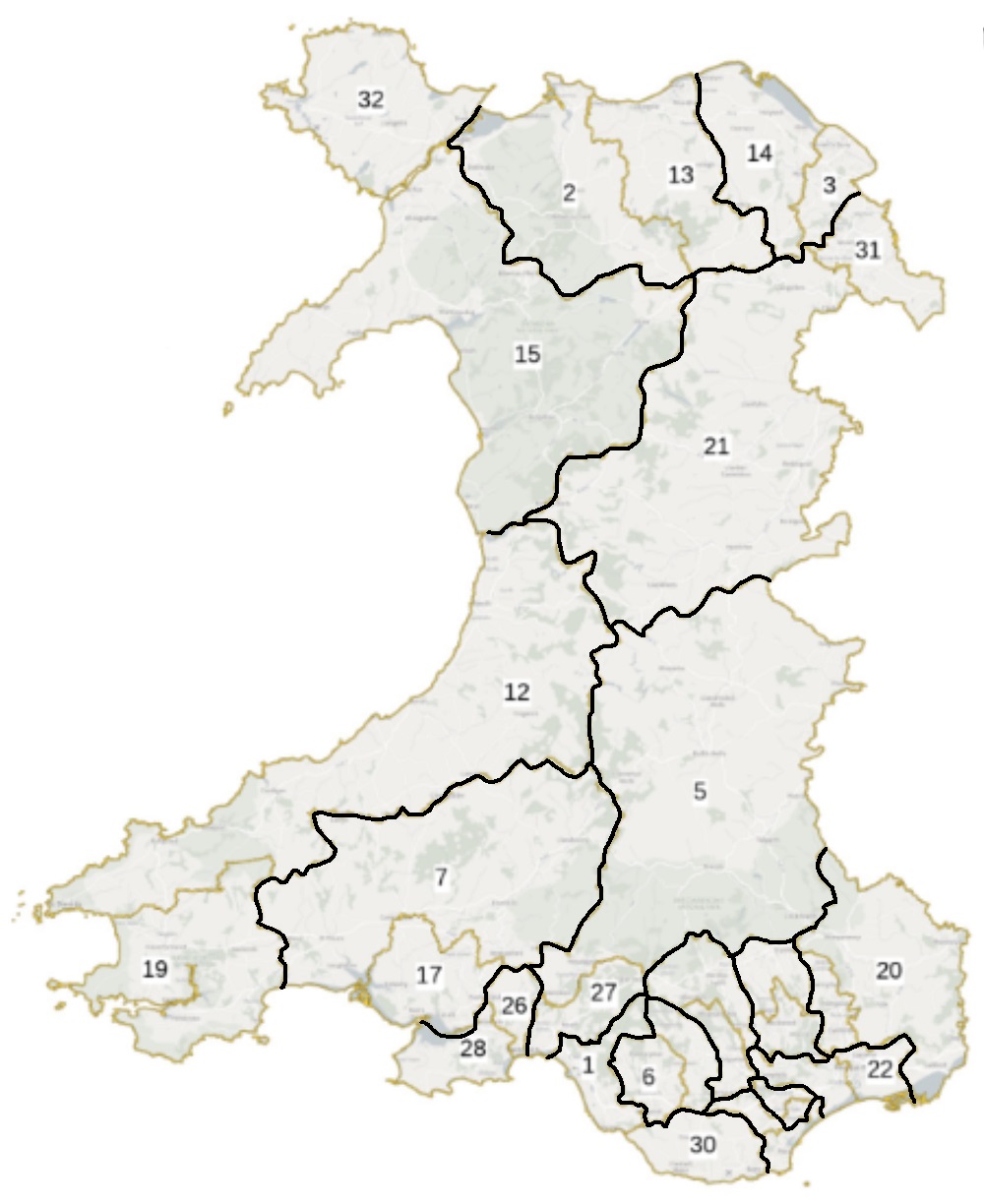
The biggest problem is that an odd number of seats in the north of Wales makes it necessary to separate Powys and link that constituency up with a seat in the south. A greater Brecon and Radnorshire reaching down the Vale of Neath to Port Talbot is probably the best solution but nevertheless a strange one.
An alternative might be to place Dwyfor Meirionnydd and Ceredigion together, which solves some issues elsewhere but creates one very long Cardigan Bay constituency.
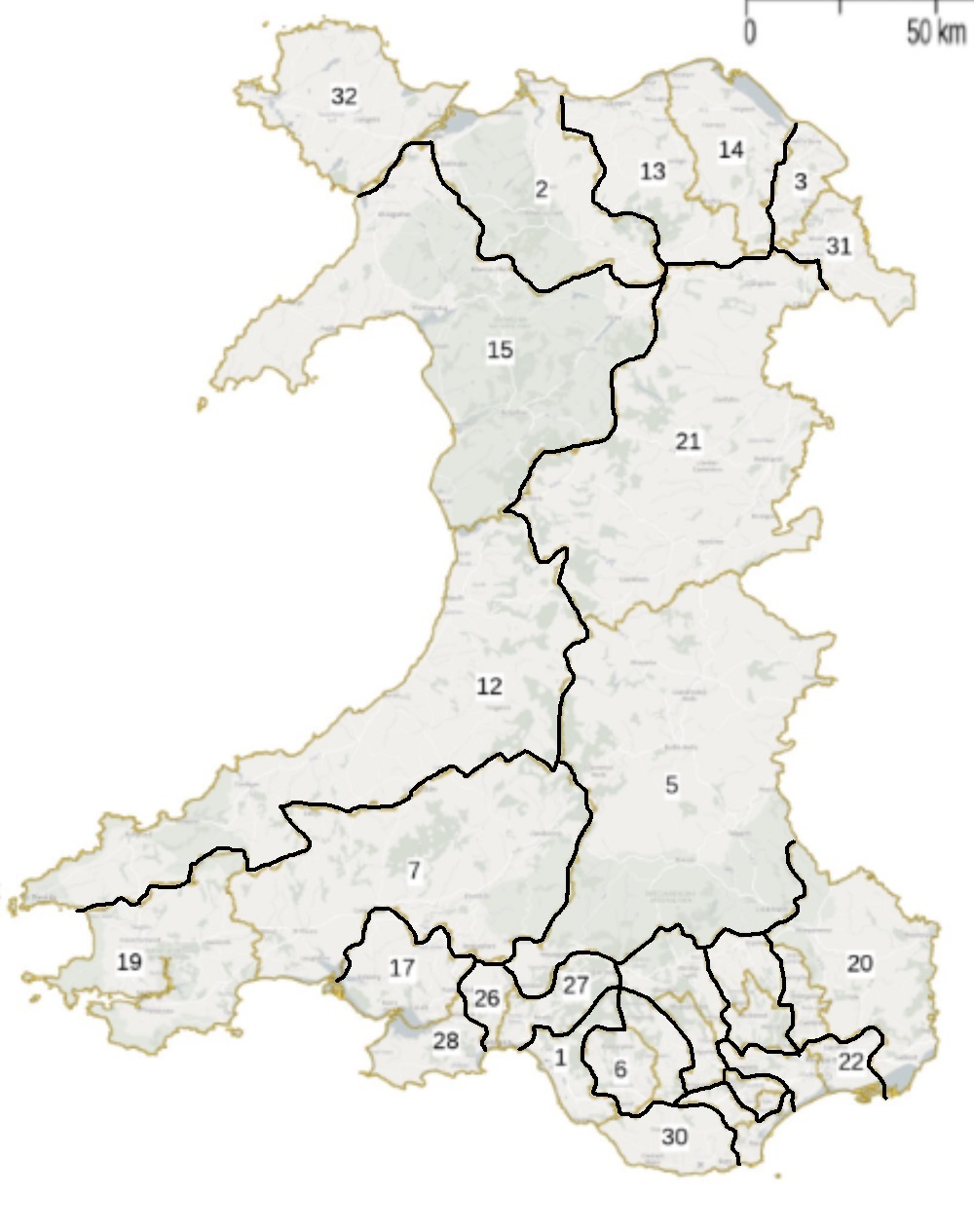
There is also the issue that, because Ynys Môn is smaller than the other constituencies (ironically to grant it protected status as an island), it would have a marginally weaker voice in any potential pairing.
This is likely to just be a temporary fix however until the Senedd constituencies are revamped again post 2026.
Good, not perfect
It’s important to remember that devolution is always ‘a process not an event’ as Ron Davies said. While this compromise isn’t perfect, by creating larger multi-member wards it makes it easier to move towards an even more proportional system in future.
The statement by Adam Price and Mark Drakeford made clear that these changes could be on “an interim basis” in order to be able to get them in place by the 2026 elections.
British politics is the embodiment of the saying ‘there’s nothing as permanent as a temporary solution’. So I wouldn’t be surprised to see us linger at this halfway house longer than anyone perhaps expected.
But if devolution is to progress, perfect can’t be the enemy of getting good things done. And these wide-ranging reforms are, overall, a step in the right direction.
Support our Nation today
For the price of a cup of coffee a month you can help us create an independent, not-for-profit, national news service for the people of Wales, by the people of Wales.
Get more trusted Welsh news
Choose Nation.Cymru as a preferred source in Google News to see more of our journalism.
