


Opinion
Before the general election, let's have some political honesty about the dire state of the Welsh economy
Martin Shipton
How many politicians will have the honesty to tell us that we’re entering a general election year at a time when the economic prospects for Wales are, frankly, dire?
Not many, I imagine.
The Conservatives in particular like to pretend that the outlook isn’t as bad as it actually is, and hint at cuts or even abolition of “iniquities” like inheritance tax. The fact that only tiny numbers of people in Wales would benefit is a minor detail.
The important objective is to give the impression that the UK Government can afford to be generous to its citizens - or at least some of them.
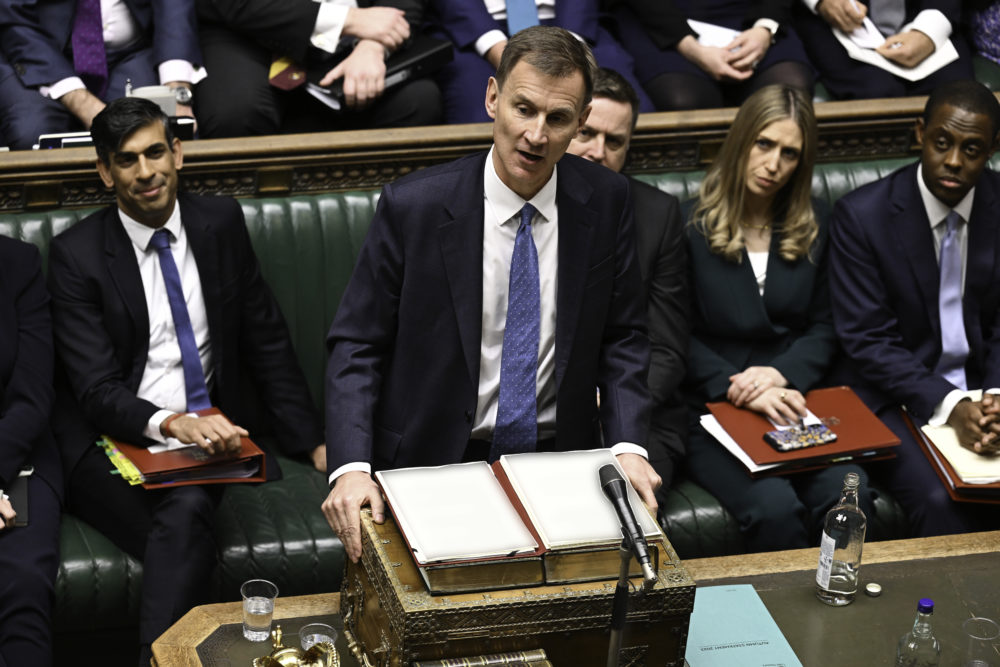
This is meant to create a “feel good factor”. Some believe that Jeremy Hunt’s Budget in March, with its inevitable giveaways, will be quickly followed by the calling of an election for May. Perhaps. But I suspect that before committing himself, Rishi Sunak would want to see polling evidence that Labour’s lead was narrowing significantly. So far that hasn’t happened.
[mid-content-banner]
Independence
Welsh nationalists have often been accused of failing to grapple with Wales’ real challenges in the here and now by seeing independence as a panacea for all the ills we suffer as a peripheral nation in a centralised UK economy. “We wouldn’t be in such a mess if only we were independent with all the fiscal tools at our disposal,” is the get-out clause and the refrain.
But while it’s always important to take note of the world as it is, rather than how we’d like it to be, I would argue that a more pernicious political fantasy is to disregard the nation’s all too real problems and pretend that things are better than they are, with a view to gaining political advantage.
In the week before Christmas, the Welsh Government published its draft Budget for 2024-25, making it clear that its priority was to protect spending on the NHS and frontline public services. Pretty much everything else would face cuts.
We’ve heard voices raised within the arts sector and the housing sector, among others, warning of job cuts and company closures. Amgueddfa Cymru, responsible for Wales’ national museums, is talking of an existential crisis.
For everyone who wants Wales to be a prosperous nation, it’s important to understand the nature of the plight we’re in. While politicians will inevitably produce their different varieties of partisan spin, there are others who can steer us in a more considered direction.
[lower-mid-content-banner]
Senior civil servants
Senior civil servants usually stay behind the scenes, while Ministers prefer to be in the limelight. The officials are happy with that, because if anything goes wrong it’s the Minister who carries the can rather than them. The convention is that technical briefings to journalists about the content of a Budget are given by officials while political on-the-record statements are made by the Minister. That, in line with common practice, is what happened when the Welsh Government's recent draft Budget was published.
On rare occasions, however, it’s permitted to name senior officials. Accompanying the draft Budget were a number of documents including a report from the Welsh Government’s Chief Economist Jonathan Price. Mr Price does not pull his punches. His report is a sober analysis, based on statistics not rhetoric. At the start of the report it is made clear that it does not represent Welsh Government policy. In other words it is not tainted by political partiality.
These are its highlights:
* Wales is deeply embedded in the wider UK economy, and over the short-term outcomes in Wales are mainly driven by factors which are common to the UK as a whole.
* High and prolonged inflation has eroded living standards, with high energy and food prices disproportionately affecting people on low incomes and other disadvantaged groups.
* By the third quarter of 2023, UK GDP per head had barely surpassed the pre pandemic level, and household incomes remained below that level – four years of lost growth. This compounds a long period of poor performance for the UK economy, stretching back to around the time of the financial crisis [in 2008]. The available data indicates that the economy in Wales has followed essentially the same trajectory.
* Recent data shows a softening of the labour market in Wales and the UK, with an increase in inactivity due to ill health. However, in historical terms, the labour market in Wales continues to perform better than in the 1990s, prior to devolution.
* As of 2023, UK trade intensity remains 1.7% below its 2019 level, versus an average increase of 1.9% across other G7 economies, and the trend in Welsh export performance since around the time of the [Brexit] referendum has been very similar to that for the UK as a whole.
* Although inflation has fallen sharply, the OBR [Office for #Budget Responsibility] expects inflation to remain high for longer than previously expected. The OBR also expects growth to remain sluggish and for unemployment to rise, albeit relatively modestly.
* Low growth, high inflation and tax increases in combination reduce living standards. Real household disposable income per person is forecast to be 3.5% lower in 2024-25 than their pre-pandemic level. This represents the largest reduction in real living standards since ONS [Office for National Statistics] records began in the 1950s.
The OBR forecasts for the UK are broadly applicable to Wales. As the latest data suggests income fell slightly less in Wales in the years following the pandemic’s initial impact (probably reflecting government support measures), incomes in Wales may recover pre-pandemic levels one year earlier than in the UK, in 2025-26. This would nevertheless represent an unprecedented seven lost years of income growth.
* A key long run challenge remains relatively weak productivity, the main long run driver of sustainable increases in pay, prosperity, and the tax base.
* Challenges also remain in the labour market: employment opportunities are restricted for many disadvantaged groups, particularly the disabled, those with long term health conditions, and people with low skill levels.
* Employment creation has been unevenly distributed across Wales. The rapid growth of remote working presents both a new challenge and an opportunity. - the Welsh population has been growing more slowly than in all English regions.
* With the number of deaths exceeding the number of births over recent years, due principally to a low fertility rate, in-migration has prevented overall population decline. - Population change varies across Wales, with a number of local authority areas experiencing a decline in population over recent years.
* The OBR has noted that the UK’s fiscal position has improved since the previous forecast in March 2023. However, this improvement has been mainly driven by higher-than-expected inflation boosting tax revenues. These additional tax revenues have been used by the UK Government to fund tax cuts. No additional funding has been provided to take account of the impact of higher inflation on the cost of the provision of public services. Over the longer term, the value of the new tax reductions is almost equal to the additional unfunded pressure on public services from inflation.
* Beyond the current spending review period, day to day spending is projected to increase only very modestly in real terms and capital spending is fixed in cash terms. This represents a continued severe squeeze on public spending, with a large real-terms reduction in public investment.
* The OBR has also judged that the UK fiscal position is unsustainable over the longer term. This principally reflects the effects of an aging population, compounded by the impact of higher interest rates on the cost of government debt. The OBR also notes additional pressures arising from increasing global security threats and the costs to the public sector of both the transition to net zero and adaptation to a changing climate.
* Further pressures and risks are associated with poor health, inactivity, and the loss of fuel duty revenues without replacement as the UK transitions to net zero.
* Wales is facing similar demographic pressures to England over the coming years. Whether resources are available to meet those pressures in Wales will depend to a large extent on whether the UK Government funds them appropriately in England. The devolved taxes are expected to continue making a positive contribution to Welsh Government finances.
* The large gap between total public sector revenue and expenditure for Wales represents a major transfer to Welsh people through the UK fiscal system. This transfer is the main reason for the gap between measures of household income and GDP in Wales and means that potential UK Government policy choices represent a key risk to Welsh living standards.
Quantitative easing
All the indications are that if, as expected, Labour wins power at the general election, it will maintain the Tory government’s neo-liberal economic approach.
With the current Shadow Chancellor Rachel Reeves running the economy, there are unlikely to be any radical innovations like using quantitative easing to stimulate growth.
Printing money to mitigate the damage to the economy caused by Covid-19 was, it seems, acceptable. But using such a policy choice to relieve poverty and promote prosperity in the post-pandemic period is seen as unacceptable. So much the worse for us.
Meanwhile, in a few months time we can look forward to a charade of an election campaign in which fixing the economy is reduced to unconvincing soundbites and Daily Mail culture wars focussing on migrants in small boats take centre stage.
Support our Nation today
For the price of a cup of coffee a month you can help us create an independent, not-for-profit, national news service for the people of Wales, by the people of Wales.
Get more trusted Welsh news
Choose Nation.Cymru as a preferred source in Google News to see more of our journalism.
