


News
Why Wales would be a loser from the European Union’s new bigger budget
Luke James, Brussels
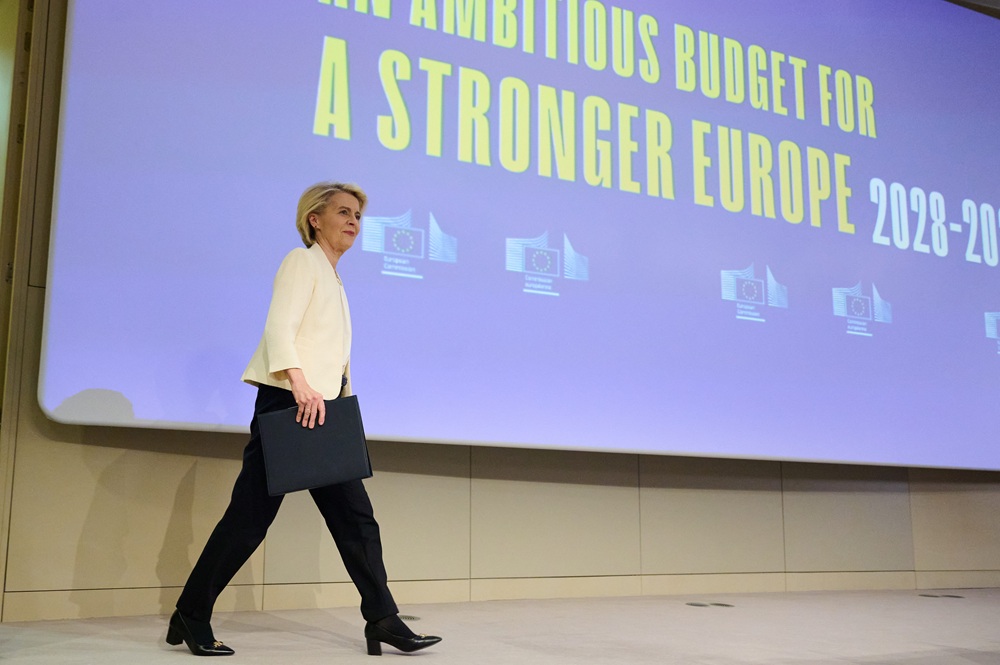
The European Commission published its plan for the EU’s next long-term budget this week and there’s little doubt that, if Wales were still part of the bloc, we would be one of its biggest losers.
The EU’s total budget is to be made substantially bigger, growing from €1.2 trillion between 2021 and 2027 to €2 trillion between 2028 and 2034 if the Commission’s plan is adopted.
But a bigger cake doesn’t mean a bigger slice for everyone. Commission President Ursula von der Leyen has taken the knife to the parts of the budget which were most important to Wales.
During the last budget cycle in which Wales was part of the EU, the Welsh Government’s two priorities were funding for farmers through the Common Agricultural Policy (CAP) and investment in the poorest communities through the EU’s cohesion policy.
[mid-content-banner]
Ring fenced funding
The new budget plan slashes ring fenced funding for CAP from €386.6 billion to €300 billion – a 22 per cent reduction.
The Commission insists this is the “minimum number” that will be spent on agriculture, which member states can top-up with wider EU funding.
Farmers demonstrating in Brussels as the budget was unveiled on Wednesday were not reassured. “The very foundation of European agricultural policy is being undermined and dismantled in what could go down as a Black Wednesday in Brussels,” said a statement from Copa-Cogeca, Europe’s main farming lobby.
When it comes to cohesion, funding has been increased by €28 billion, but only half of that is now ringfenced for Europe’s poorest regions.
Ultimately, whether farmers or disadvantaged families see their support cut will now depend on how much national politicians allocate to them through new ‘national and regional plans’.
[lower-mid-content-banner]
Merged
The plans will see more than 500 EU funds accounting for almost half the entire budget merged into one pot managed by member states, which the Commission says will create a more flexible budget “tailored to local needs”.
“Not everything should be decided once for 7 years,” argued von der Leyen. “We cannot foresee how the years 2033 or 2034 will look like. Therefore we want less rigidity in this budget, and therefore the big funds that give us more flexibility.”
However, many believe this represents a dangerous centralisation of power in the Union. The Committee of the Regions said the “monster national plans…risks silencing the voices of those closest to our citizens.”
The Commission’s proposal rather ironically follows in the footsteps of Brexit Britain. When Wales was part of the EU, Welsh ministers decided how to spend CAP and cohesion funds. Now decisions about which schemes benefit from the Shared Prosperity Fund, which was created to compensate for the loss of EU cohesion funds, are made Westminster rather than in Wales.
Controversial
Applying this approach at EU level is particularly controversial at a time when the Commission is in conflict over the rule of law and human rights with member state governments.
In Hungary, the right-wing government of Viktor Orban banned Pride events. A march went ahead in Budapest thanks to the capital’s liberal mayor and was attended by the EU Commissioner for equality.
But local government representatives warn that standing up for EU law in this way could be punished by central governments with the removal of their EU funding.
“This not only risks stalling local efforts for stronger cities…but also poses a serious threat to democratic governance in Europe,” said the mayor of Gdansk in Poland, which has also been taken to court in recent years by the Commission for failing to uphold the rule of law.
The primary beneficiaries of the budget is the defence sector, which saw a five-fold increase in funding, and large companies who stand to benefit from a €400 billion competitiveness fund.
Funding crisis
In the midst of a funding crisis, Welsh universities could also access some much-needed cash through the Horizon scheme, the research and development fund which the UK is still part of and whose funding almost doubled from €95 to €175 billion.
It should be stressed though that all of this is still up for debate. The proposal made by the Commission this week is only the start of negotiations with the European Parliament and national governments that could last up to two years and both are in a combative mood.
The German government has already come out against the Commission’s tax-raising plans. The Irish government says fair payments for farmers will be among its top priorities for its six-month presidency of the EU next year. And even von der Leyen’s own political centre-right political party has threatened to vote against any budget “where our farmers must compete with our regions for EU funding” when it comes to the European Parliament.
The outcome of these arm wrestles will decide whether the parts of the EU from which we most benefited remain intact and to what extent rejoining the bloc is an attractive prospect for Wales.
Support our Nation today
For the price of a cup of coffee a month you can help us create an independent, not-for-profit, national news service for the people of Wales, by the people of Wales.
Get more trusted Welsh news
Choose Nation.Cymru as a preferred source in Google News to see more of our journalism.
