


Sun, 9th August Cardiff 16°
Nation.Cymru wordmark
Advertisement

News

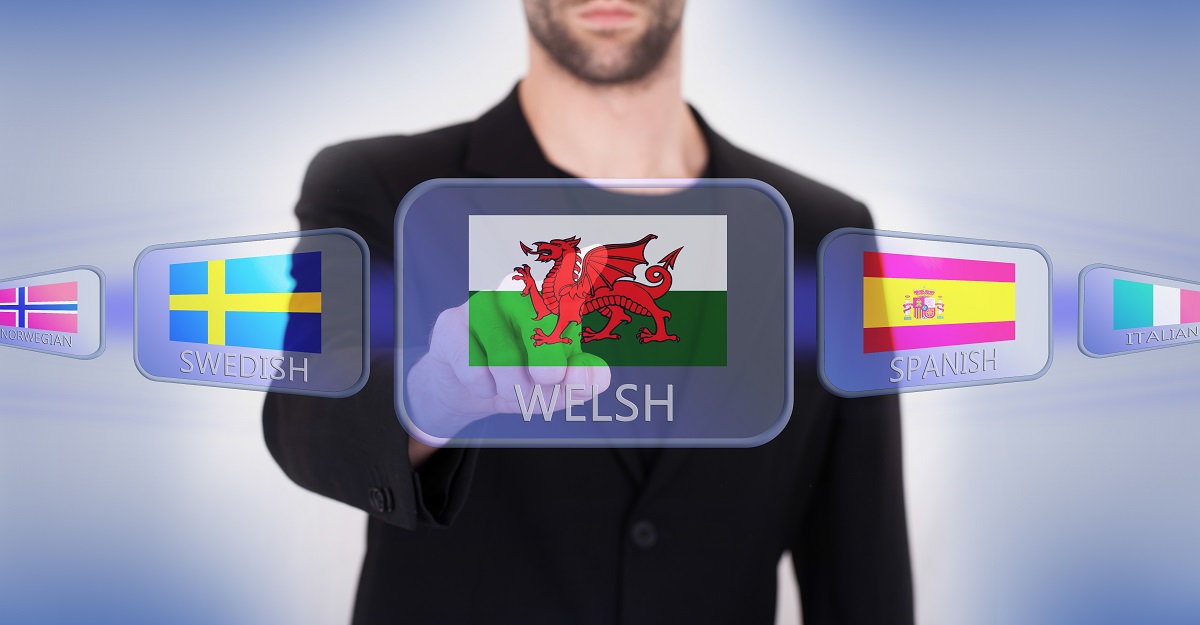
Welsh translation sector worth up to £8 million a year - new report
By Mark Mansfield
The majority of translators are based in Gwynedd and Cardiff, according to the research.

Wales’ translation sector contributes up to £8 million annually to the Welsh economy, according to a major new report.

The study, carried out by research company Arad, provides the most detailed picture yet of the size, value, and prospects of the sector.

Based on responses from 180 individuals, 29 organisations, and 13 companies, it paints a picture of a highly skilled and economically important profession that underpins the commitment to bilingualism in Wales

The report estimates that between 561 and 665 professional translators are currently active across the country, working across the public, private and voluntary sectors.

Together, they are worth an estimated £7.8 million to £8 million to the Welsh economy in 2024–25.

[mid-content-banner]

Gwynedd

Researchers found that the majority of translators are based in Gwynedd and Cardiff, reflecting the areas of strongest demand for bilingual services.

The workforce is also experienced — with nearly three-quarters aged over 40 — suggesting that translation is seen as a stable, long-term career for many.

While text translation continues to dominate the field, around a fifth of practitioners also offer interpreting services, while just 3% work solely as interpreters.

The findings confirm that written translation remains the main driver of income within the sector.

Beyond its economic significance, the report highlights the social and cultural value of the profession.

Most respondents reported high levels of job satisfaction, confidence in their skills, and pride in their role supporting bilingualism in Wales.

Translators described their work as “a vocation” tied to identity, public service, and the Welsh language’s continued vitality.

[lower-mid-content-banner]

Artificial intelligence

However, the study also raises concerns about the sustainability of the profession in the face of rapid technological change. Around a third of translators (34%) expressed fears about the long-term future of the industry, with the growing use of Artificial Intelligence (AI) among the main factors cited.

Nearly half of individual translators (45%) now use AI tools in some form, alongside 70% of translation companies and 59% of public or third-sector organisations.

While many respondents acknowledged that AI could improve productivity, they also warned that overreliance on automation risks undermining quality, accuracy, and cultural nuance — areas where human expertise remains critical.

The report calls for ongoing investment, collaboration and training to ensure the profession remains resilient and adaptable.

For the price of a cup of coffee a month you can help us create an independent, not-for-profit, national news service for the people of Wales, by the people of Wales.

Get more trusted Welsh news

Choose Nation.Cymru as a preferred source in Google News to see more of our journalism.

Choose Nation.Cymru as a preferred source in Google News

2 comments

David J

I thought translators were about to lose their jobs to AI? If AI improves, as it is bound to do, doesn't that mean that the translation errors mentioned in the article will disappear? I would be very interested in hearing knowledgeable opinions on this point.

Reply
Gwen R

"Errors" is maybe an incomplete way of putting it. We're well past AI and computers being used for significant portions of translation, but in the effort to standardise the process with computers we've (the public at large) forgotten that translation is an art that deals with the fact that not all ideas are equally or consistently expressible in every language. The choice of how to translate or say ideas can sometimes depend on your age, region, membership in certain communities, and even your personal flavour of politics - equally so in English, Welsh, or any other language. Often, there's enough room for interpretation that the accuracy and conformance to standards of a translation is something you want someone responsible for - it's basically useless right now to ask an AI why it made a decision weeks ago if it turns out that choice caused problems, or had a tone or implication that the original person didn't intend for it to have. Translators are involved in politics and law, so it's necessary that we have clear communication going on! Personally, I also worry that in doing so we would also stop being able to take responsiblity for directing change in our language. If a translator or writer today chooses, in a given context, to deviate from a linguistic convention, they are both responsible for and intentional about that choice, and because of that we have languages that for the most part develop and grow due to their speakers. Languages are alive like this and have been forever: sometimes we need new words for new ideas, need to replace old words with ones that reflect modern times, or sometimes just get tired saying two whole words and so skip half the syllables! I don't fancy big tech companies and their AI models having more of a say over that evolution of culture than Welsh speakers in Wales, myself, so it's hard for me to be fully on-board with AI for all translation; especially when so much Welsh-language written text, including most of the first "official" uses of new terms, is bilingual and thus has translators working in one direction or the other all over it. I can't claim to know exactly what the translators asked meant by "cultural nuance", but I imagine part of it was this grey area, where having a single "right answer" given by an AI might actually fool someone into not knowing there are a variety of different ways that people of different stripes might say that, and that translators actually do an important job in taking ownership of and responsibility for those choices. I'm not saying AI will never do that - people are certainly working on it - but that's a really different and much harder problem than just reducing the number of explicit errors in those translations. Disclaimer: not a translator myself, but I do work on software that lets translators localise programs in multiple languages.

Reply

Leave a comment

Comments are reviewed before they appear.