News
MPs support proposed law to boost promotion and teaching of Cornish
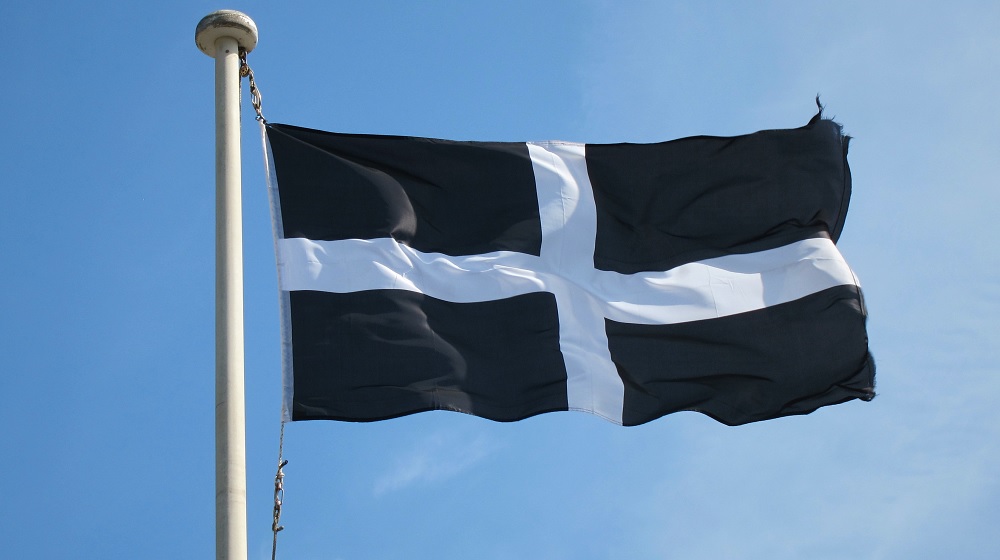
A proposed law to help improve access to learn Cornish and increase the use of the language, including on road signs, has been tabled at Westminster.
MPs heard the Cornish Language and Heritage (Education and Recognition) Bill aims to boost efforts to provide “sustained support” to the “beautiful and expressive” language.
The Bill was tabled by Labour’s Anna Gelderd (South East Cornwall) and is supported by the other five MPs representing Cornish constituencies.
[mid-content-banner]
Cultural identity
Ms Gelderd told the House of Commons: “Today is not just about preserving Cornish language, or Kernewek in Cornish, it’s about protecting a cultural identity that is woven into the fabric of Cornwall’s past, present and our future.
“Cornish can be traced back 4,000 years and over that time Cornish speakers were driven further west due to conflicts and invasions from Europe. It was our fishermen who kept the language alive until it faded in the 18th century.
“Despite this, Cornish was officially recognised as a regional language by the UK Government in 2002 under part two of the European Charter for Regional and Minority Languages.
“This was a landmark moment affirming that Cornish, alongside Welsh, Scottish Gaelic, Irish, Scots and Ulster Scots, is a language to be protected and promoted.
“The UK Government has committed to supporting these languages and yet Cornish remains part two status while four of the other five Celtic languages have part three protection, which offers stronger commitments in areas like education, public life and the media.
“In November 2024, the European Charter for Regional and Minority Languages issued recommendations urging the UK Government to take stronger measures to support minority languages, including enhancing educational provision and promoting language awareness.
“This Bill would work in lockstep with those recommendations and strengthen the UK’s commitment to linguistic diversity, recognising Kernewek is growing but it needs sustained support.
“Cornwall Council and the Cornish national minority working group have championed its survival through initiatives such as Go Cornish, which now reaches over 8,000 primary school children in 51 schools.”
[lower-mid-content-banner]
Embedded
She added: “Yet Cornish is still not formally embedded in secondary or higher education. A GCSE in Cornish once existed but was discontinued in 1996.
“The option to learn should always be available and the Government’s own charter commitments state that minority language education should be strengthened and must ensure that learning Cornish is a viable, accessible option for those who wish; not a requirement but a choice for those who wish to engage with their cultural heritage.
“Teaching Cornish should not be an added burden for over-stretched schools, but rather an exciting opportunity for students who wish to learn and the Go Cornish programme proves that effective teaching can be done without increasing teacher workload as it provides structured resources, sound files and low administration learning models.”
Ms Gelderd added there should be the chance for people to access “lifelong learning opportunities”, as she highlighted Kernewek courses previously offered by universities.
She said: “If Welsh and Gaelic can be successfully integrated into higher education, why not Cornish?”
Ms Gelderd went on to note that Cornish does not have official status in Cornwall and there is “no legislative requirement for its promotion”.
Road signs
She said: “However, Cornwall Council has worked hard since 2013 to implement a strategy promoting the language. I want to see this work and local efforts strengthened by increasing the use of Cornish in road signs, place names and public services.
“Kernewek is a beautiful and expressive language reflected in the meanings behind some of the names of our towns and villages.”
Ms Gelderd asked for her Bill to be considered further at second reading on June 20.
It faces a battle to become law in its current form because of a lack of parliamentary time to consider private members’ bills.
Support our Nation today
For the price of a cup of coffee a month you can help us create an independent, not-for-profit, national news service for the people of Wales, by the people of Wales.
Get more trusted Welsh news
Choose Nation.Cymru as a preferred source in Google News to see more of our journalism.