


News
'Politicised Englishness most potent force in contemporary UK politics' - think tank
Emily Price
Analysis of English political attitudes suggests that Keir Starmer’s efforts to resolve the linked protests around flag-flying and "asylum hotels" is unlikely to settle longstanding discontent among large numbers of the English electorate.
A review by the Wales Governance Centre of data gathered by the Future of England Survey between 2011 and 2024 suggests that the root of the problem is the lack of an effective political voice for England.
The think-tank based in Cardiff concluded that this has led to a militant political Englishness and, critically, the radicalisation of middle England.
The survey’s most recent publication, The Shameful Conquest of England (2025), highlighted that anger and fear are the emotions most associated with those members of the English electorate who identify primarily as English rather than British.
[mid-content-banner]
'Frustration'
The Centre says this group is the bedrock of Reform UK support and overwhelmingly provided the electoral impetus for Brexit.
Professor Ailsa Henderson of the University of Edinburgh said: "For more than a decade our Future of England Survey data have tracked English frustration with political life in the UK.
"There is no shortage of grievance, about the EU, about resources going to Scotland, about immigration and about a lack of English political voice in the UK.
"The latest political developments suggest two things.
"First, there remains a fundamental problem with efficacy in England.
"Folks don’t think their voices matter, they think that England is poorly served by its political system and keep identifying foreigners – Europeans, Scots, immigrants - as the source of the problem.
"Second, since none of the previous efforts to address this have solved the grievance problem - not Brexit, not English Votes for English Laws, not metro mayors – there is little reason to believe radical immigration changes will either.
"But address the efficacy issue and the grievance might well resolve itself."
[lower-mid-content-banner]
Protests
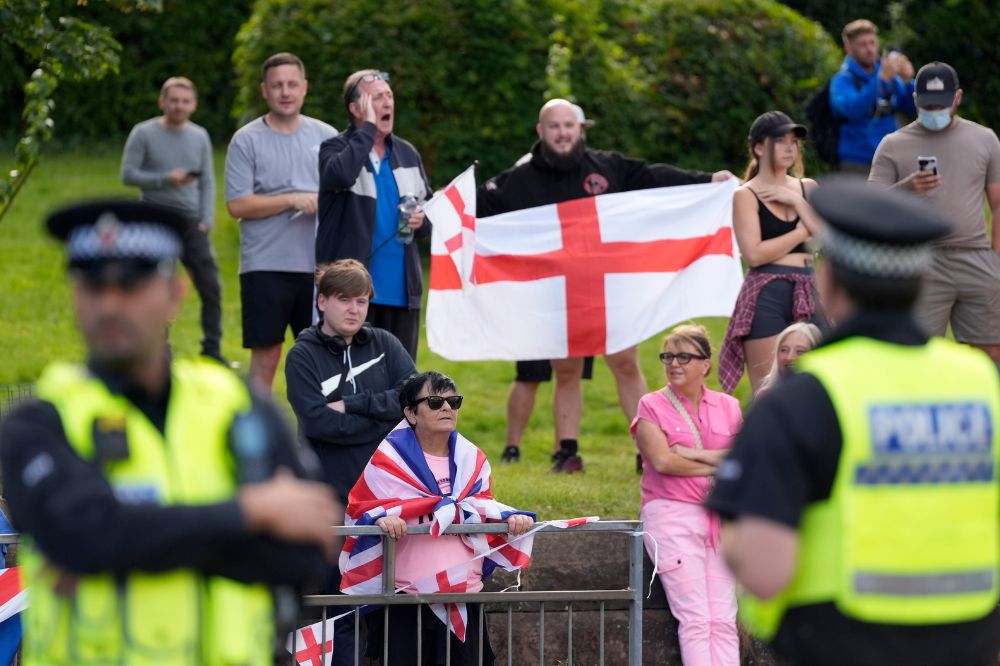
In recent weeks, the red and white St George's Cross and Union Jack flags have been raised along streets in England amid protests against asylum seekers and refugees.
Some areas of England have seen roundabouts, pedestrian crossings and buildings spray painted with the English flag - although some so-called patriots in Hereford accidentally painted Denmark's flag on a roundabout.
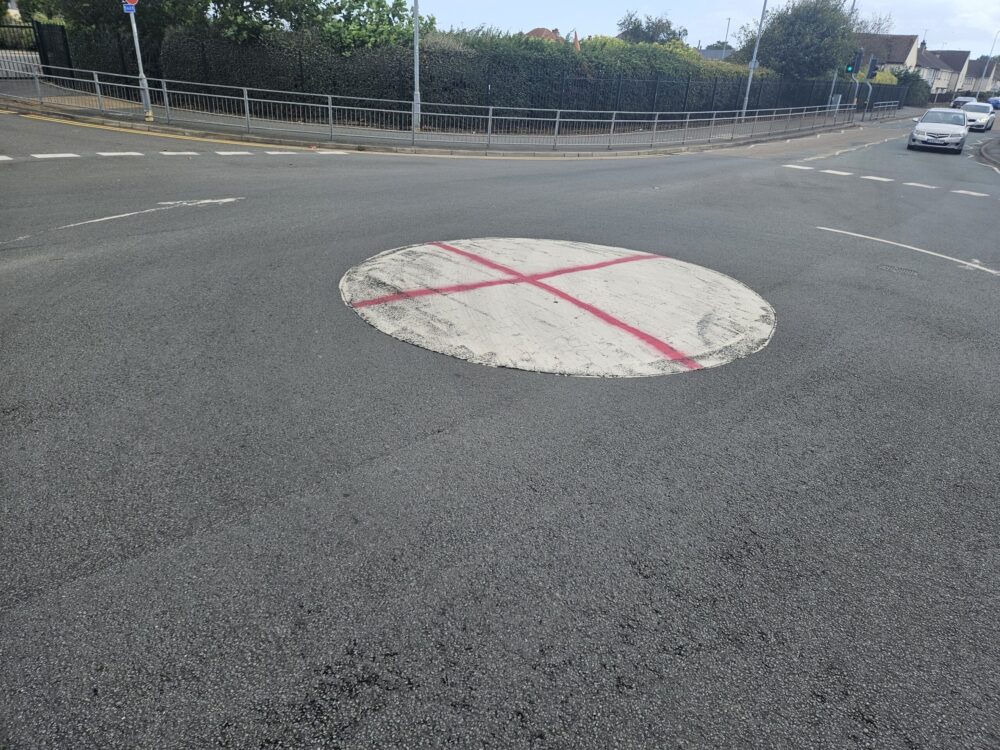
The vandalism spilled over the border into Wales at several spots with England flags and fascist symbols plastered around some areas including a village in Cwmbran.
Professor Richard Wyn Jones of Cardiff University said: "As flags continue to proliferate on roadsides and bridges and as Farage’s Reform – a party that in England enjoys overwhelming support among those who emphasise their English identity – continues to lead in the polls, it is clear that politicised Englishness is the most potent force in contemporary UK politics.
"In this, our latest investigation of English politics, we show how 'anger’ and ‘fear’ have come to characterise the political attitudes of the English.
"Those who wish to understand the on-going radicalisation of middle England should start here."
A copy of the Wales Governance Centre's full report and the underlying data is available here.
Support our Nation today
For the price of a cup of coffee a month you can help us create an independent, not-for-profit, national news service for the people of Wales, by the people of Wales.
Get more trusted Welsh news
Choose Nation.Cymru as a preferred source in Google News to see more of our journalism.
