


News
First minister tells scrutiny committees to cool it with recommendations
Chris Haines, ICNN Senedd reporter
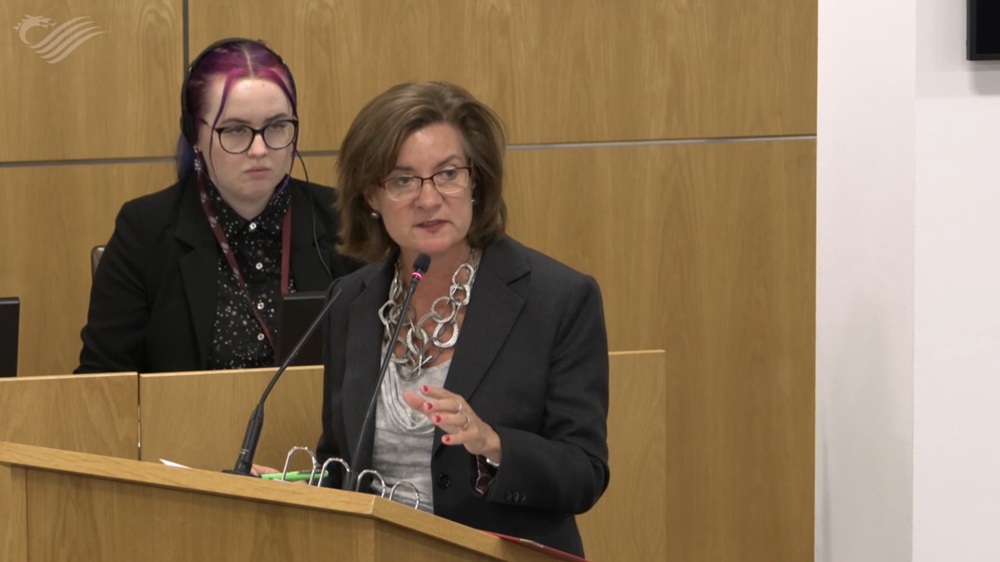
Tensions over parliamentary scrutiny have emerged after first minister Eluned Morgan told Senedd committees to make fewer recommendations to the Welsh Government.
Baroness Morgan wrote to Elin Jones – the Senedd’s speaker or Llywydd – over the summer, expressing concerns about the volume of committee recommendations.
She said: “We need to be realistic about our ability to deliver committee recommendations and of the need to consider… the context of the limited resources which are available. If the current volume continues, the government is likely to need to reject more recommendations.”
In the letter, the first minister stressed she was not seeking to fetter the critical work of Senedd scrutiny committees in holding the Welsh Government to account.
But Senedd members have rebuked Baroness Morgan, arguing it is not for ministers to tell scrutiny committees how to do their work.
[mid-content-banner]
‘Mealy mouthed’
During a meeting of the public accounts committee, Labour’s Mike Hedges partly agreed with the first minister. “I think committees produce far too many recommendations,” he said.
“But it’s not for the first minister to say how many recommendations she wants.”
Mr Hedges was “hugely disappointed” with the number of recommendations for ministers that actually get accepted and implemented following committee inquiries.
He criticised ministers’ “mealy mouthed” tendency to accept many recommendations “in principle” rather than in full: “If you’re not going to do it, you’re actually rejecting it…. it’s just a reason to not have a row over it but ‘we’re not going to do anything about it’.”
Mr Hedges called for a meeting with the first minister to discuss the Welsh Government’s concerns instead of simply saying: “We don’t like all those recommendations.”
[lower-mid-content-banner]
‘Fundamental’
Mark Isherwood, who chairs the committee, pointed to a 2018 promise by the Welsh Government’s then-permanent secretary to end the “accept in principle” practice.
Tom Giffard, a fellow Conservative, also called for the Welsh Government to be clearer in its responses to recommendations to aid committees in tracking implementation.
During the committee’s meeting on September 17, Alun Davies argued it’s perfectly fair and reasonable for the first minister and the Welsh Government to take a view.
But he said: “If the government made fewer mistakes, we'd make fewer recommendations. So, I think there's a point to be made there and I think we can push back on that.”
Adam Price, the former Plaid Cymru leader, agreed with the Labour backbencher about the value of forensic, more micro-level recommendations made by committees.
‘Additional antenna’
He raised concerns about the fundamental principle of the separation of powers, warning of lines being blurred between the roles of the Senedd and Welsh Government. The Senedd’s role is to scrutinise and create laws while the Welsh Government implements them.
He told the meeting on September 17: “We’re there to scrutinise the government, not the government to scrutinise us. And I think that’s an important principle, ultimately. Committees need to make their own decisions about how they fulfil their remit and purpose.”
Mr Price said the Welsh Government should not see recommendations as criticism nor an additional burden but as a useful additional antenna to identify potential policy solutions.
But he stressed: “If there’s a change in the role of committees… then [the] government needs to honour its implied promise that if there are fewer and more focused recommendations, then more of them are going to be implemented.”
Senedd members proposed arranging a meeting between committee chairs and the Welsh Government to discuss the issue in greater detail.
Support our Nation today
For the price of a cup of coffee a month you can help us create an independent, not-for-profit, national news service for the people of Wales, by the people of Wales.
Get more trusted Welsh news
Choose Nation.Cymru as a preferred source in Google News to see more of our journalism.
