


News
Company insolvencies jump in March ahead of cost increases and tariffs
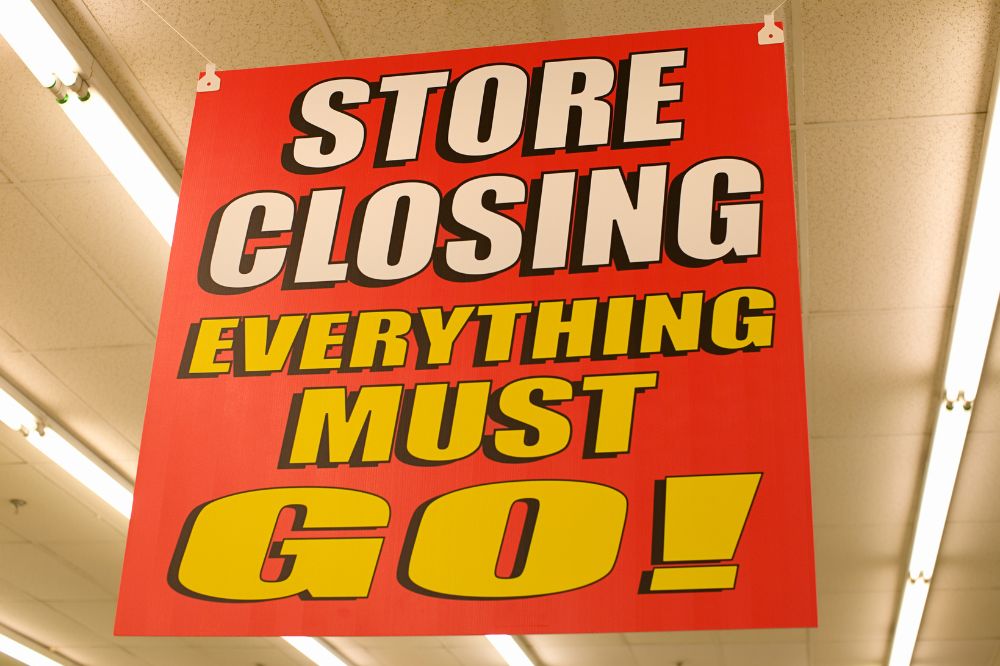
Nearly one-tenth more companies went insolvent in England and Wales in March than the same time last year, according to new figures.
The number of registered firms that went bust was 1,992 last month, according to the Insolvency Service, a 2% fall compared with February but a 9% increase compared with March 2024.
Creditors’ voluntary liquidations (CVLs), when the directors of a company choose to close it down, made up the majority of the numbers, at 1,543, an 8% year-on-year rise.
The number of compulsory liquidations, when a company is forcibly wound up by a court, was up 5% while administrations, which tend to apply to larger firms, were up some 30%.
The figures relate to the period directly before firms faced higher employment costs, with Labour increasing company national insurance contributions in April.
[mid-content-banner]
Imports
They also reflect the last month before Donald Trump upended the global trading system by slapping steep import tariffs on virtually all countries.
Already, more recent surveys have shown a significant drop in company confidence and output across the private sector following the US president’s trade policies.
Jennifer Lockhart, a partner at law firm Brabners, said: “An increase in insolvency levels makes for sobering reading, even despite recent unexpected growth in the UK economy.
“These figures represent the relative calm before the Trump administration’s tariffs were unleashed on global trade – causing significant uncertainty for those operating in export-heavy industries such as manufacturing.
“With the IMF (International Monetary Fund) already slashing the UK’s growth forecasts, it’s highly likely that we will see an increasing number of distressed businesses going to the wall over the next few months as investors tighten their belts and the pool of rescue funds diminishes.”
It comes after the IMF recently said both global and UK-specific economic growth will be significantly slower this year as a result of trade tariffs.
[lower-mid-content-banner]
Inflation
The IMF slashed its global growth forecast by 0.5 percentage points this year, with nearly all countries seeing a downgrade, earlier this week.
The UK economy is predicted to grow by 1.1% this year, 0.5 percentage points less than January’s forecast, partly reflecting tariffs as well as weaker consumption amid higher inflation driven by bills and energy price hikes.
David Hudson, a consultant at the advisory firm FRP, said: “Insolvency numbers are likely to remain elevated for the foreseeable future with weaker appetite from would-be investors a key factor.
“Whereas in the past distressed companies might have been able to avoid the worst by securing fresh capital or selling to a competitor or consolidator, market stagnation has reduced the likelihood of a white knight arriving.
“Investors are increasingly discerning about where they put their money as elevated costs, weak demand and geopolitical volatility in areas like tariffs all dampen their appetite for risk.”
Support our Nation today
For the price of a cup of coffee a month you can help us create an independent, not-for-profit, national news service for the people of Wales, by the people of Wales.
Get more trusted Welsh news
Choose Nation.Cymru as a preferred source in Google News to see more of our journalism.
