


Wed, 19th August Cardiff 21°
Nation.Cymru wordmark
Advertisement

News

Chancellor on track to miss fiscal rules, says economic forecaster
By Mark Mansfield
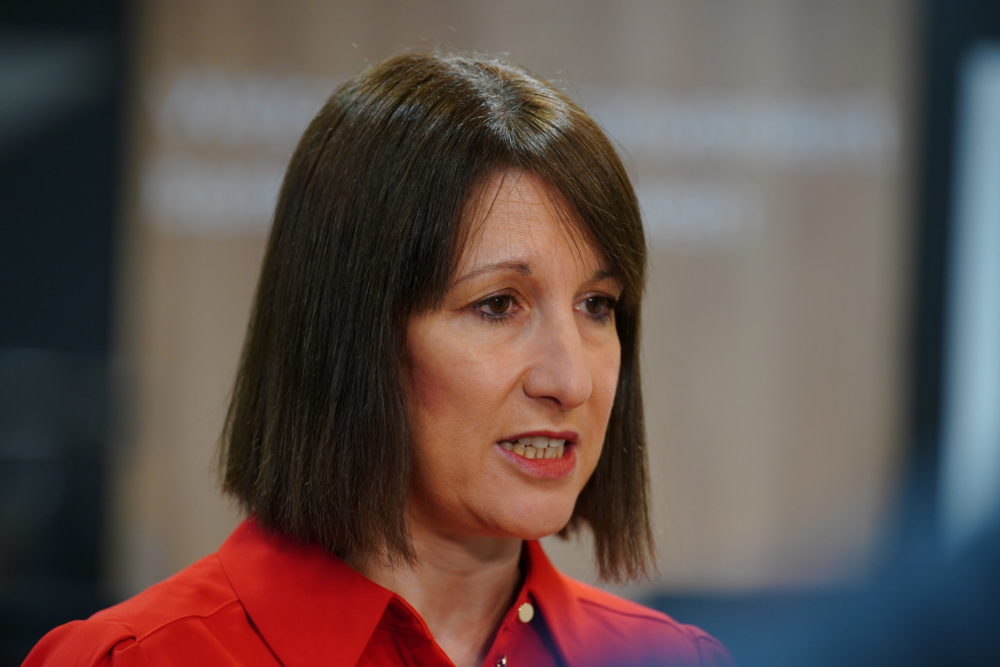
The Chancellor of the Exchequer Rachel Reeves Image: Peter Byrne/PA Wire

The UK Government is on track to miss its key fiscal rules, increasing the likelihood of tax hikes later this year, an economic think tank has warned.

Economic growth is also on track to be weaker than previously expected this year, according to the National Institute of Economic and Social Research (Niesr).

Fresh forecasts from the organisation indicated that a slowdown in domestic demand and global economic uncertainty will impact potential growth throughout the year.

It predicted that the UK economy will grow by 1.2% in 2025 ā€œamid low business confidence, high uncertainty and rising cost pressuresā€.

In its previous forecasts in February, Niesr had pointed to 1.5% growth for the year.

[mid-content-banner]

Tax receipts

The think tank indicated that the reduced level of growth will result in lower than previously predicted tax receipts.

As a result, it said the Government is now expected to miss its fiscal rules requiring UK national debt as a share of the economy to fall and to be on course for a budget surplus.

In the Government’s spring statement, Chancellor Rachel Reeves said state finances were on track to give a headroom worth around Ā£9.9 billion by 2029/30.

Niesr’s forecasts suggest this could now be set for a shortfall of Ā£62.9 billion over this time frame, suggesting the Treasury could need to look at more spending cuts or tax increases to achieve a surplus.

[lower-mid-content-banner]

Tax rises

Stephen Millard, Niesr interim director, said: ā€œThe Chancellor’s self-imposed and arbitrary fiscal rules have led to a situation where twice a year the Chancellor has to either find further departmental savings or announce politically unpalatable tax rises.

ā€œThe uncertainty created by this leads to low investment and lower growth, the precise reverse of what the government wants to achieve. We have to rethink the fiscal framework.ā€

The organisation’s fiscal outlook also pointed towards rising inflation for the year, which it expects to average 3.3% in 2025.

Previously, Niesr had predicted it would average 2.4% for the year, with a peak of 3.2%.

It is the latest body to trim back the UK’s economic growth contexts amid pressure from changes to US tariff policies on the global economy.

Last month, the International Monetary Fund (IMF) cut its UK growth forecast by 0.5 percentage points to 1.1% for this year.

Adrian Pabst, deputy director for public policy at the organisation, said: ā€œThe Government’s ambition of boosting growth and living standards in every part of the United Kingdom requires a comprehensive, credible plan of economic transformation which is yet to emerge.

ā€œWhile planning reform and infrastructure investments in London and the South East will add to GDP growth, we need higher public investment in second-tier cities and poorer regions to unlock greater business investment.ā€

For the price of a cup of coffee a month you can help us create an independent, not-for-profit, national news service for the people of Wales, by the people of Wales.

Get more trusted Welsh news

Choose Nation.Cymru as a preferred source in Google News to see more of our journalism.

Choose Nation.Cymru as a preferred source in Google News

9 comments

Neil Anderson

Alas, Andrew Bailey, Rachel Reeves, bankers in The City and their acolytes are well out of their depths and will continue to fail to meet their own objectives, let alone more realistic and real-world ones. What is completely wrong is their paradigm - the wholly unworthy but nevertheless currently sanctified neo-liberal capitalist economic model. It only works for those 10% who have lots of capital to play with, not the rest of us (90%) who are variously over-taxed, underpaid, underemployed, struggling or hungry. Richard Murphy's recent article https://www.taxresearch.org.uk/Blog/2025/05/06/neoliberal-economics-is-a-work-of-fiction/ pins the tails on these donkeys. If you ever read only one article about economics, this should be it.

Reply
Lord Custard

The only fiscal rule these people have is to make themselves and their rich mates more money. If that's at the expense of the rest of us they don't care. Neoliberal economics has utterly failed the vast majority of people. It delivers more poverty, less services, less hope, less investment, and has destroyed our industrial base. It is built on a false set of assumptions, and cannot ever work. Its only popular because the wealthy fund a significant number of economists to be their cheerleaders. If we'd turned to their policies after WWII, we'd have no NHS, wouldn't have built enough housing, and wouldn't have had the post war boom when more people owned their own homes than at any other time in our history.

Reply
Peter J

It has been patently obvious since the last budget that the Treasury will have to raise taxes or cut spending, probably before the end of this year. The UK is running an enormous deficit, and annual interest payments on the national debt have reached Ā£100 billion. This is more than we spend on education. The current economic situation is arguably worse than when Cameron came to power, as we still face a 3–4% hit to GDP in the next 5 years from Brexit, alongside much higher interest rates and inflation The government can’t really increase borrowing. UK 10 year gilt %’s, for example, is the same as when after Liz Truss implemented her unfunded nonsense. Raising 20 bn from the NI hike was never going to be enough – and the other things like VAT on schools or ending non-dom status raise a pittance. The NI increase doesn’t even come close to even offsetting the unfunded NI cuts by Jeremy Hunt in the last year of the Tory government ('salting the earth'). The foolish thing Labour did was to say there would be no major tax rises on income, VAT, or NI. One of these needs to be increased significantly. It will take 1-2 parliaments to sort out the financial mess we’re on.

Reply
Tucker

End tax evasion by the rich and corporations then they wouldn't need to hit the disabled and vulnerable. Or raise taxes for the rest of us.

Reply
Peter J

As a comment from someone with experience in the area; tax evasion is so difficult and exspensive to clamp down on in the UK for several interconnected reasons e.g. the complexity of the tax system, the use of offshore structures, limited enforcement, and the blurred line between legal tax avoidance and illegal tax evasion.The expert accountants and lawyers always work for the avoiders, not HMRC. Even with clear evidence from leaks like the Panama Papers, tax evasion goes on due to legal loopholes, lack of transparency in overseas territories, and the sheer difficulty in legally proving wrongdoing beyond a reasonable doubt - especially as other countries want to protect their interests.Germany was a great example - they tried very hard to prosecute people for the panama papers saga regardless of status , they recruited special task forces, many police raids to banks/accountants etc. In the end they recovered about 150 million. But the cost of doing this was estaiamted at anything between Ā£100-300m. I personally agree with the approach they took, even if it lost money., as I don't think people should get away with it. But it won't be a money spinner for the government.

Reply
Barry

The problem seems to be they're not willing to make the big decisions needed because it would affect the decision makers themselves. First, removing the NI discount enjoyed by those earning over £50k is a quick win that would hurt treasury mandarins and politicians far more than the average person. Second, we need to abolish the retirement age. If someone is still healthy at 66 they should still be helping to make a success of their Brexit. Third, state pension benefits when people eventually qualify should be means tested. We can't afford to give free money to those that already have enough, but we should give more to those that don't. After all, that's what (national) insurance is supposed to be about, it only pays out when you need it.

Reply
Peter J

I agree. I think they are too timid of making big and unpopular decisions. To be fair, the press and public mood is febrile at the moment. I would also like to add; from experience, I've rarely seen decision makers only thinking about themselves when deciding policies. It's only my opinion, but given current geopolitical trends, I would be recommend seeing massive investments in pubic infrastructure and spaces - across all regions, education, skills training and business support. Even if it means higher taxes.

Reply

In reply to Peter J

Barry

I'm not sure how you would know that decision makers were only thinking about themselves. Take the top Treasury mandarins who all live in or within easy reach of London. They're not going to voice an opinion that says "I live in London therefore I only support investment in London". Instead they'll concoct superficially convincing narrow arguments to ensure their desired outcome is achieved, like making a green book rule to ensure the primary requirement of infrastructure investment is a quick return on that investment (great news for taxpayers!) which almost always happens in areas of high GDP (London and its commuter belt) - the very areas that least need the support. It's genius really, using a short-term taxpayer value for money argument to ensure your own area has the best of everything. Imagine instead if those mandarins were generously bonused on closing the GDP per capita gap between London and the rest of the UK. Would they be so quick to build a new railway for their old university, or would they be focused on the low hanging fruit in the poorest parts of the UK?

Reply
Neil Anderson

Just another voice for the status quo there, Peter J... Raising taxes or cutting spending are NOT the only option a sovereign government with a fiat currency has. Though you wouldn't know that from following the right-wing media, including the BBC. All in blissful or mendacious ignorance! Try my comment above... We don't have a tax and spend economy - we have a spend then tax economy. The people have had enough of promises made by the Truss-lites and failing Labour governments that go unfulfilled. As Lord Custard correctly says above, neo-liberal economics cannot ever work. People want real change, not the cosmetic Starmerchange. The Farrago won't work out either. Change to the system, to something that actually works for all. But, with due respect to Lord Custard, he should not be too concerned about the enormous deficit. In the post-war period, it was more than 200% of the GDP (er, not a good measure of anything much - see Bobby Kennedy). But his point about interest on the deficit is something which the otherwise moribund Bank of England should have acted upon years ago. It is not too late! Much of that interest should not be paid, and the interest rate should be reduced to 2 - 3%. Immediately.

Reply

Leave a comment

Comments are reviewed before they appear.