


Feature
Letter from Magor Marshes Nature Reserve
Hattie Aella Lane
A loud squawk greets me as I step out from the car, a pheasant trying to warn me away from his territory. I am not deterred by this, I’m encouraged.
Any birdwatcher will tell you that the best time for birds is the hour around sunrise and sunset, so arriving at the reserve over four hours before sunset wasn’t ideal but hearing the pheasant before I even leave the carpark seems like a good omen.
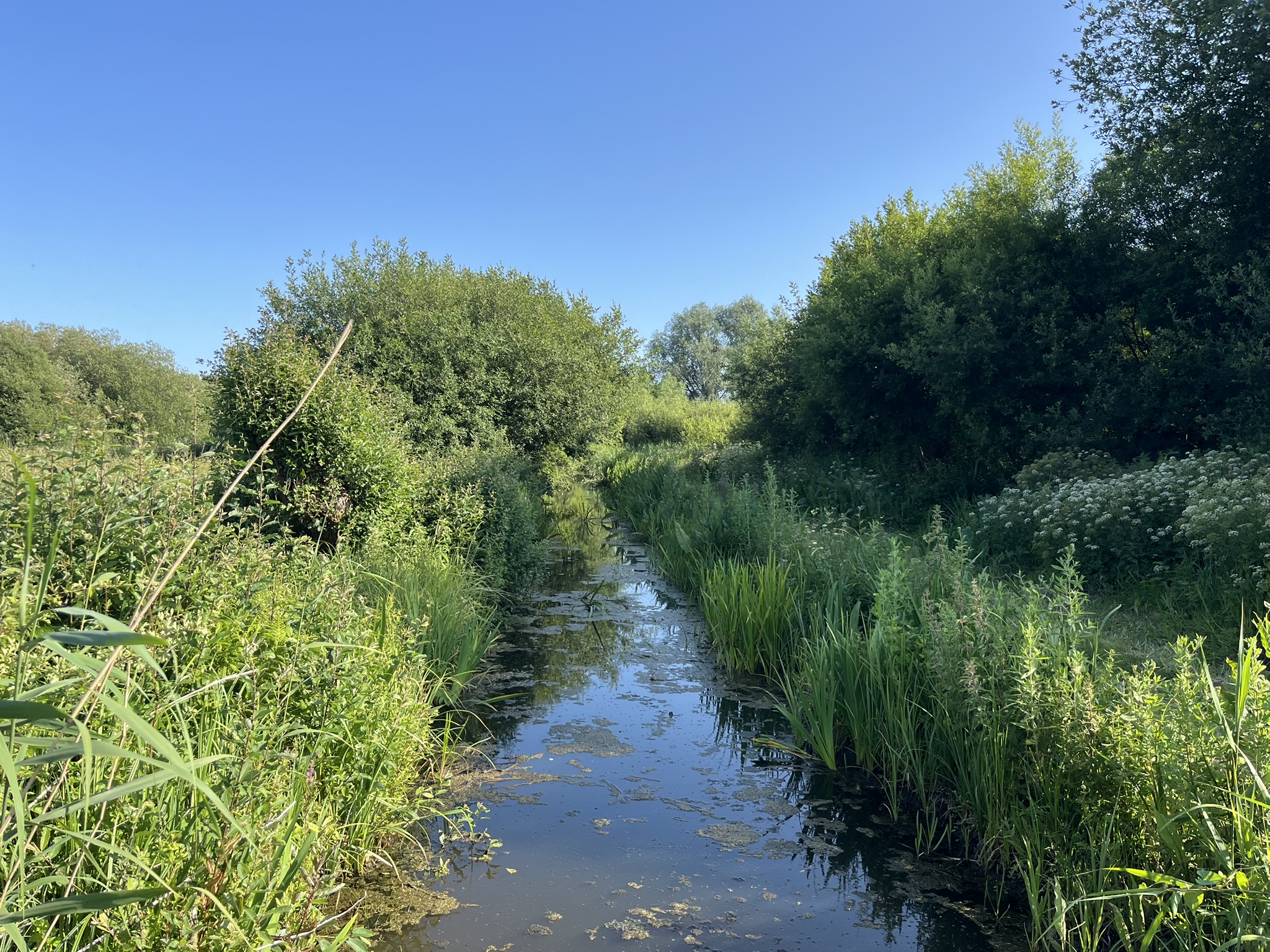
Armed with my Hen Daid’s binoculars, I start down the path. Since I last came here in Spring, the marshland has exploded with new growth. What was before a straw-tinged yellow is now green and vibrant; reeds and nettles spilling over onto the walkway.
I usually come here before 8 in the morning. At that time there is a concerto of warblers but now they stay relatively quiet. The repetitive chittering of the Chiffchaffs follows me around the reserve, never sounding far away.
[mid-content-banner]
The Hide
Soon, I reach a canopied boardwalk and the path splits: one direction leads to the Hay Meadow, the other to the Bird Hide. I follow the path to the Hide, scouring the trees for any Song thrushes or other species that are lurking there. It is, as most hides are, a simple wooden structure. The walls are lined with bird-identification posters and there are seven glassless windows.
As I approach a window, the view of a luscious pond greets me. There is something about a natural pond that cannot be beaten; maybe it’s the perfect balance of pondweed and reeds, or the variety of birds gliding on the surface.
Female teals are swimming and diving, males suspiciously absent. Teals are fairly rare to see at this time of year, not many breed in the UK, but Wales seems to be a hotspot -- I’ve also witnessed them year-round at Yns-Hir in Machynlleth.
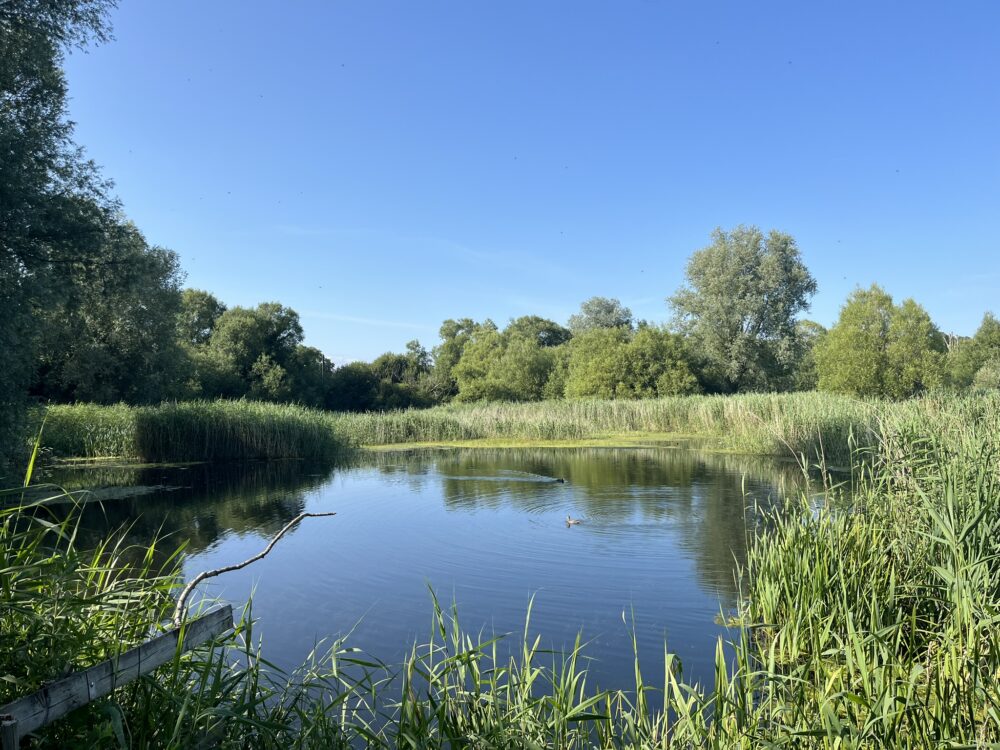
A singular coot hangs behind, sitting peacefully against the reedbed.
A noise catches my ear. Some kind of large bird is flapping its wings against the water just out of view -- a swan, or perhaps a heron? As hard as I try, I cannot see the source of the noise.
I am promptly distracted by a Cetti’s Warbler making a quick dash over the pond. Another less common sighting. I always hear them but often struggle to pick out the small bird from between the thick reeds.
Just as I turn to leave, I hear the distinctive call of one of my favourites: the Little Grebe. Small and simple, I am not quite sure what draws me to them. It suddenly dives under the water. I love watching them do that, it takes me back to a moment in Spring where I was watching two Little Grebes at the Gwent Wetlands feed their chicks.
The Grebe takes a while to resurface, but eventually its little head breaches the surface. The sun catches on its feathers, showing the lush brick red of its head. I admire it for long enough that a second male appears, doing the same graceful diving routine.
It is always hard to leave a Hide. I always think that something spectacular will happen the minute I turn my back. Still, must keep moving. There will be plenty more to see in the meadow.
[lower-mid-content-banner]
The Meadow
I’m only a few feet from the Hide when a Song Thrush bursts into song. Beautiful and loud. I know exactly what tree it's hiding in and yet it remains just out of view. I carry on down the path.
There’s a very specific creature I want to see today, but it might be hard to spot. If anywhere, it’ll be the meadow. Magor Marshes is lucky enough to host one of Britain’s rarest bee species, the Shrill Carder Bee.
In 2022, it was estimated that there are only 5 population areas left in the UK. Mid-June is around the right time of the year for the workers to be out, maybe I’ll get lucky.
I pass through the creaky gate and enter the field, Song Thrush still filling my ears. Grass up to my waist, speckled with flowers of pink and yellow. Immediately I can see insects flitting around. Large White and Meadow Brown butterflies were the first.
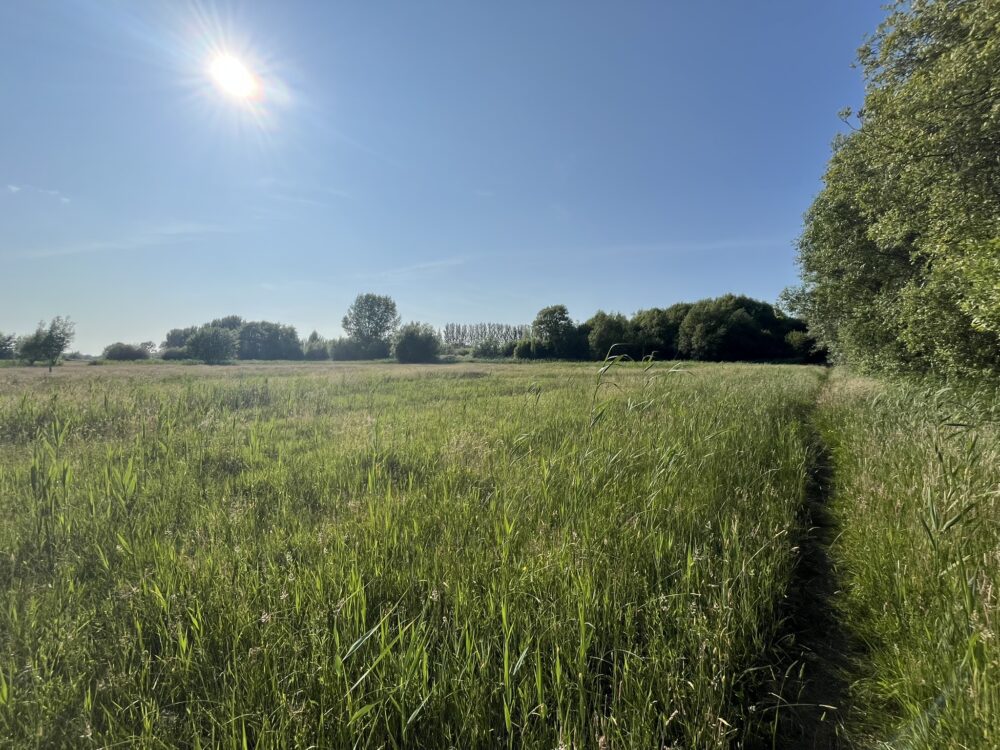
I stray off the path, thinking the bees will be further infield. Electric blue streaks between grass stems. I haven’t seen any dragonflies today but the damsel flies are in abundance. I see a few species of bee, including the Common Carder Bee. It’s more orange than its rare cousin, easily identifiable. After about an hour of scouring the field, I accept defeat. I rejoin the path and carry on.
As an amateur birdwatcher (I only started pursuing it seriously this year), I often use an app to help identify bird song. I am out of the field and following the trail through a woodland area when my phone detects two uncommon birds. The first, a Bullfinch (UK conservation status: Amber). Whilst not super uncommon, their numbers have declined over the years and I couldn’t name the last time I saw one. The second, a Treecreeper! I’ve never seen one before, so am greatly excited by the possibility.
Of course, the apps are not 100% accurate but they help as a guide. I cannot see or hear the Treecreeper, they are known for their camouflage so I have no idea whether or not it is in there. I’m leaning over the fence, still searching, when a flash of bright orange catches my eye. The Bullfinch. I’m slightly disappointed in the lack of Treecreeper, but I actually saw the rarer of the two birds!
Unexpected obstruction
Just down the path, I come to an unexpected stop. My route is blocked. Two Swans with at least seven Cygnets are happily sat right in the middle, making the most of the sun. If it were any other bird, I would probably walk around them but I don’t dare to get too close to Swans with their babies.
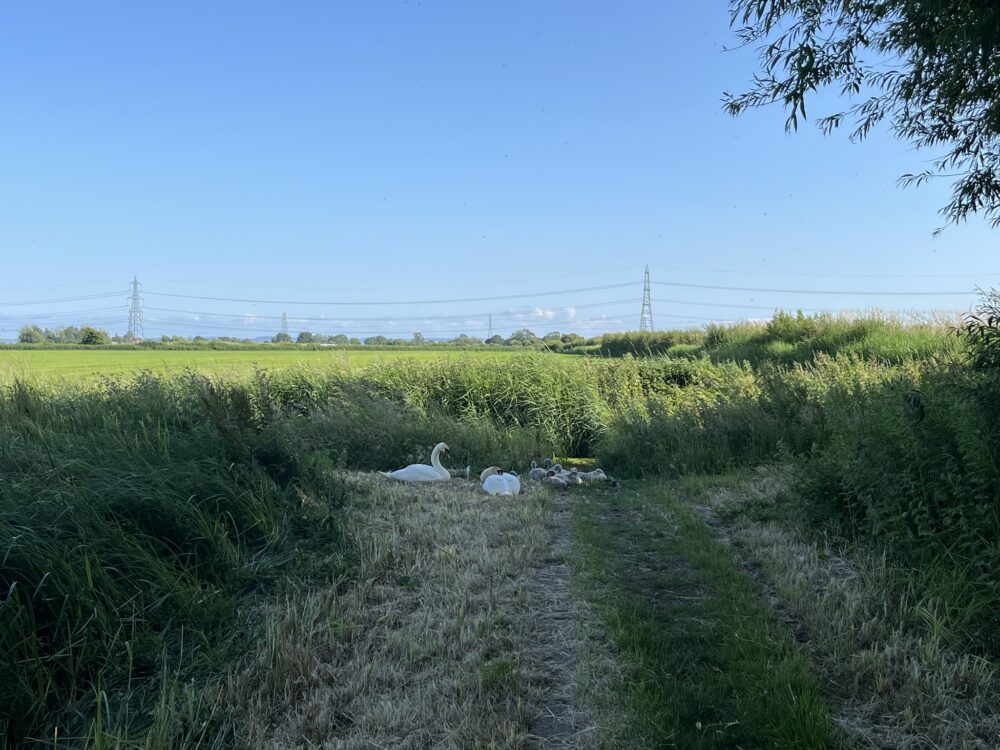
I spend a few moments snapping pictures and admiring the soft grey youngsters before figuring out where I can go. I have to turn around.
Thankfully, the route at Magor Marshes is not too long and so I go back the way I came. As I finally approach the car, two Egrets fly gracefully overhead.
I wasn’t expecting to see nearly as much at this time of day, so I brand it as a successful walk.
Support our Nation today
For the price of a cup of coffee a month you can help us create an independent, not-for-profit, national news service for the people of Wales, by the people of Wales.
Get more trusted Welsh news
Choose Nation.Cymru as a preferred source in Google News to see more of our journalism.
