Feature
Great British Railways - is it fit for purpose in Wales?
Professor Stuart Cole, CBE. Emeritus Professor of Transport Economics and Policy, Prifysgol de Cymru / University of South Wales
The UK government is intending to restructure Britain’s railways by merging the UK government owned Network Rail and the UK government controlled contracted train operating companies (TOCs) into Great British Railways (GBR).
The consultation paper, A railway fit for Britain’s future, published in February asks for comments by the fifteenth of April. The consultation is on-line under its title or at [email protected].
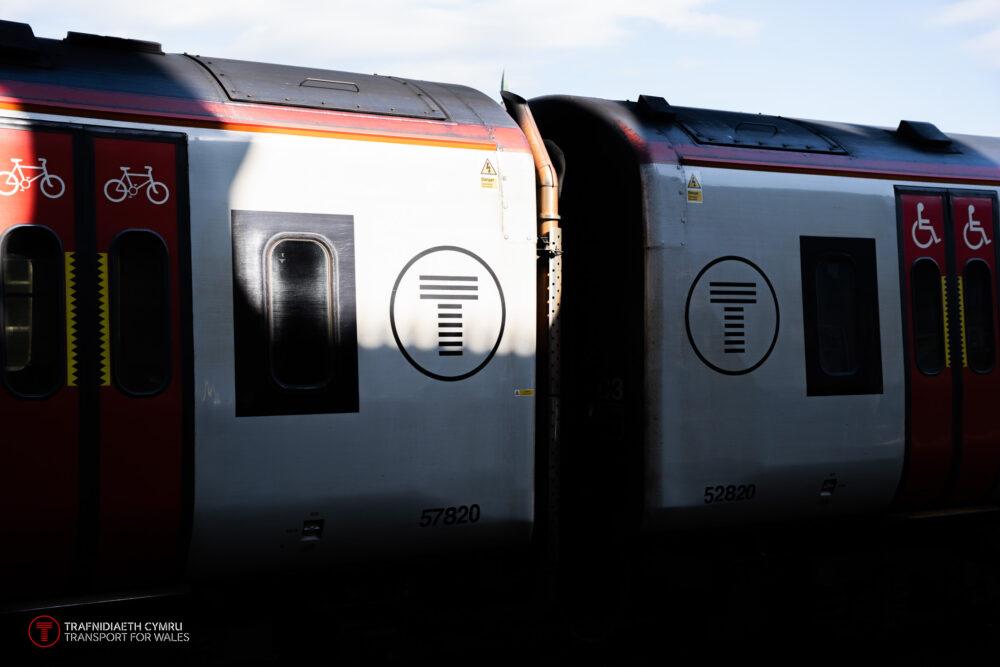
Most railway passenger services in Wales are managed by Welsh Government-owned Transport for Wales Rail Ltd.
Inter-nation services are mainly operated by GWR, Avanti and Cross-Country under England’s Department for Transport (DfT) contracts.
Most Rail infrastructure excluding Wales owned Core Valley Lines is operated by Network Rail and will be by GBR.
[mid-content-banner]
Unfair criticism of the railway
Great British Railways (GBR) is ‘a new organisation with a new customer-focused culture responsible for the day-to-day operation of the network.
Decades of sticking-plaster solutions and attempts at incremental change have failed, leaving behind a system that is fragmented, inefficient and without leadership’ according to UK Transport Secretary Heidi Alexander MP.
If that were even partly true, I would have stopped using the railway years ago. However, my colleagues, friends and my car (2023 BMW 128 TI – 7,000 miles annually) know that most of my travelling is by bus and train.
Thousands of people working all hours provide us with the best they can and moving the deckchairs (sorry, re-structuring in Whitehall speak) will not provide the solution in Wales.
[lower-mid-content-banner]
What changes?
Ken Skates MS, the Transport Cabinet Secretary, said in September 2024 that ‘we need an empowered Wales and Borders business unit within GBR – a GBR Cymru accountable to Welsh Ministers and the Senedd’.
That suggests that TfW would continue to run the trains along track operated, one presumes, through GBR Cymru to coordinate timetables and access to one another’s infrastructure as currently with Network Rail. This ensures connecting services between Cymru-Wales and England. Not dissimilar to the present position.
The consultation paper makes no reference to reversing a mistaken decision by Welsh Government of refusing the transfer of rail infrastructure from Network Rail to Welsh Government. And consequently, no mention of adequate increases in the block grant to cover that expenditure.
Such a move would have allowed Welsh Government to decide on road and rail infrastructure expenditure within an integrated transport policy.
The paper does suggest ‘further benefit of interaction between track and train’ At least we will see a statutory requirement for GBR to collaborate with Welsh Government which was not the case with Network Rail and which this column hopes means moving forward to that integration under Welsh Government. Such a transfer is essential if Wales is to run its own railway to maximum efficiency.
Funding the railway
Restructuring has always been the answer from government officials. However, it requires adequate funding to be forthcoming.
GBR Cymru is a business unit which will be allocated capital funding by the GBR central board along with other business units in England. Its infrastructure strategy, priority setting and funding will continue to be determined by the Secretary of State for Transport in Whitehall.
On that basis Valley Lines electrification would not have been built and new trains all over Cymru-Wales not forthcoming. Of a £1.1 bn infrastructure investment only £125 million came from DfT.
Network Rail’s current infrastructure replacement funding is based on a five-year financial and planning process which remains, despite being an anathema to HM Treasury but now subject to cuts during the 5-year period. That is no way to fund a railway, and the supply chain will not be at all happy about it.
The UK government offer is to ‘involve the Welsh Government in the creation of the High-Level Output Specification (HLOS)’ – the basis of network enhancement. Scottish ministers by contrast will continue to deliver the HLOS and the funding statement for the Scottish network.
Y FFordd Ymlaen – how integrated public transport fits
Welsh Government are in the process of preparing a bill to go before the Senedd based on their ‘One Network, One timetable, One ticket’ white paper. This moves to an integrated public transport network set out in FFordd Ymlaen and first proposed for Wales in the 1980’s by this columnist.
Trains, TrawsCymru buses and regular or demand responsive bus routes would be planned together on a national and local basis. Opportunities to locate new bus interchanges adjacent to railway stations would be an essential part of such planning. The Wales model better achieves the needs of the bus / train customer.
Welsh Government will continue to set financial targets and agree the achievable longer-term strategy with its transport authority Trafnidiaeth Cymru / Transport for Wales (TfW). TfW then sets the budget for government-owned TfW Rail Ltd which runs the trains.
Who determines fares is a tricky one for GBR and TfW. There is Great Britain fare’s structure where tickets are interchangeable between operators. However, TfW may introduce cheaper fares for example by advance purchase for a particular train which may not be used on GWR or Avanti. The consultation paper gives GBR the responsibility for ‘discretion in overall fares’ and to balance the interests of passengers and taxpayers (or more like HM Treasury)’. However, this has to mean agreeing a compromise between the two parties and not directed by GBR.
Pushing the UK Government
Train users and the government need to be given clear information by the UK government about the restructuring of the railway in England and how it affects Wales. This column (28 July 2024) put a more independent line, and one which Mr Skates ought to push for.
This column has consistently suggested – ‘beware of Greeks when bearing gifts’ (Aeneid, Virgil 29BC from Trojan priest, Laocoon 1200BC) especially when HM Treasury is the bearer.
Mr Skates needs clear wording from Whitehall where the classicist mandarins are trained wordsmiths. Said on Y Byd yn ei Le (S4C last Thursday), Wales ministers are ‘not kicking hard enough against the London fence’ (Professor Richard Wyn Jones). It is easy to kick a Tory London government but not when Labour controls Westminster it was suggested.
The consultation paper says ‘GBR’s decisions will be underpinned by long term strategies set by the Secretary of State for Transport with Welsh ministers and in Scotland by Scottish ministers’. Those two words ‘with’ and ‘by’ sum up the way Westminster sees Wales.
Using the Department for Work and Pensions recent failure to respond to Eluned Morgan’s letter and Cymru-Wales Secretary Jo Stevens not decrying it when asked by BBC Cymru-Wales, suggests an unacceptable Whitehall view of Wales and a pre-warning of the working with a UK government on our railway’s future.
Hopefully we are not returning to the old British Railways days when Wales was at the end of the line literally and financially.
Support our Nation today
For the price of a cup of coffee a month you can help us create an independent, not-for-profit, national news service for the people of Wales, by the people of Wales.
Get more trusted Welsh news
Choose Nation.Cymru as a preferred source in Google News to see more of our journalism.
