


Feature
Ellen Morgan of Beddgelert
Norena Shopland
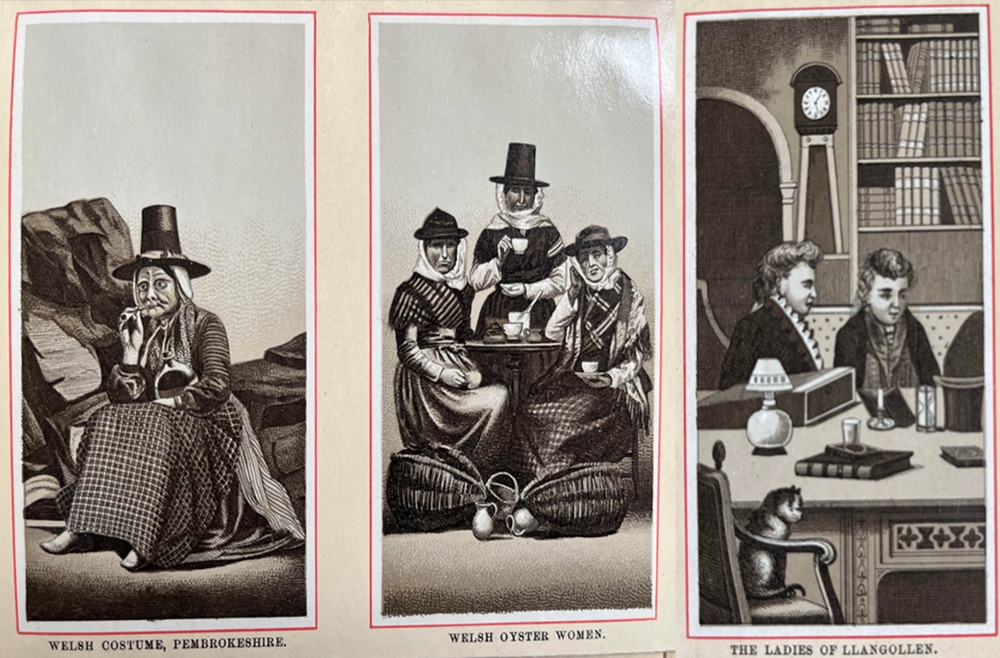
In 1850 a small booklet, Twenty-Four Costumes of Wales, was published. Its origins are not clear, there are no publisher’s marking on it, but it is a panoramic fold-out of 12 pages, each page containing two Sepia images and most likely intended for the tourist market.
Despite the title, one of the images is not a costume, but the ‘Emblem of Wales.’ Of the remaining twenty-three, one features two men as ‘Salmon Fishermen,’ holding coracles, and the other twenty-two are female characters in Welsh costume.
[mid-content-banner]
'Welsh Peasantry'
Most are very similar in dress, and included captions such as ‘Welsh Peasantry,’ ‘Welsh pets’ (two children), ‘Welsh Farmers Daughters,’ and ‘Welsh Oyster Women.’
Most of the costume styles, particularly the use of the tall hat, follow that promoted by Lady Llanover who ‘created’ the ‘traditional’ image.
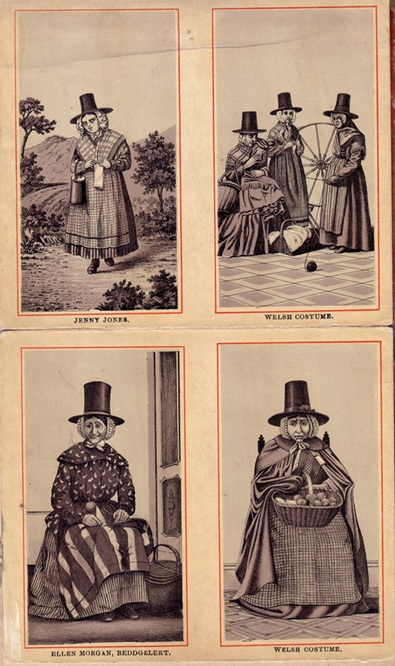
There are a few named women, the symbolic Jenny Jones, and two illustrations of real women, the Ladies of Llangollen (featured twice), and Ellen Morgan of Beddgelert.
The latter’s real name was Margaret Evans. She had become an attraction in her own right selling dolls dressed in Welsh costumes, and other items for the rapidly expanding tourist trade of the late 19th century.
These dolls were handmade, using a variety of materials and were often detailed replicas of the ‘traditional’ Welsh dress — probably Margaret made her own.
They were popular items at fairs, and other events as children’s toys, tourist items, or general gifts. The Welsh Costume Dolls Project, which ran from 2011-2102 analysed the fabrics (possibly the oldest surviving Welsh fabrics), and the styles of dress in thirty-eight dolls, details can be found on People’s Collection Wales.
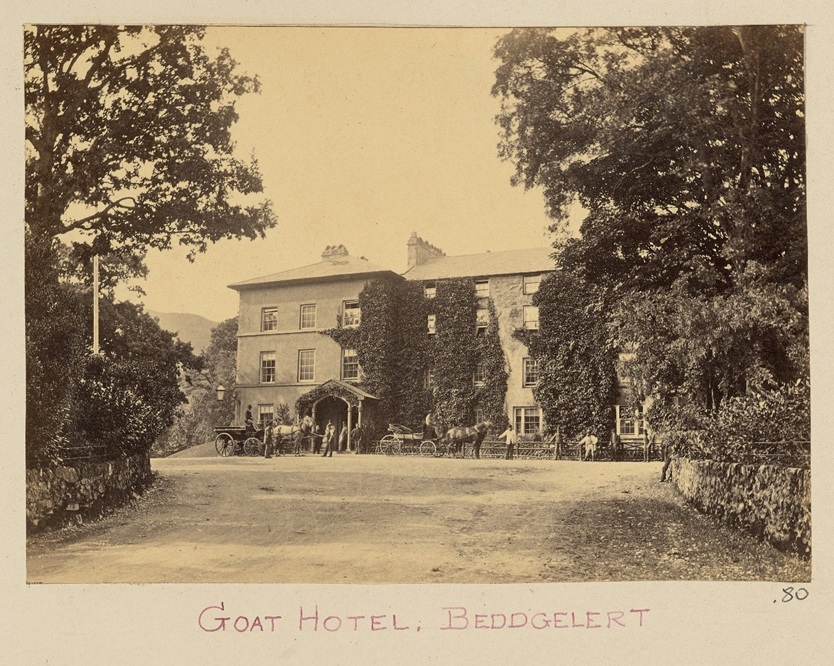
Two Irishwomen Violet Florence Martin and Edith Anna Œnone, authors of Beggars on horseback: a riding tour in North Wales, (1895) seem ignorant of the dress and thought Margaret was simply promoting herself: “Do the [visitors] support the venerable fraud who sits outside the Goat Hotel in full Welsh costume, selling rag-doll replicas of herself. It would seem so, for she apparently prospers.”
However, after Margaret’s death in 1901, her obituary writers were much kinder, such as the Cambrian News and Merionethshire Standard. Described as a ‘local character’ for many years, Margaret:
“was well-known to a host of visitors frequenting this romantic village as a vendor of Welsh dolls. When her morning labour as postman in the rural district of Nantmor was done, she used to take up her station opposite the Royal Goat Hotel dressed in Welsh costume with a basket full of her wares for sale.”
[lower-mid-content-banner]
Letter carriers
Female ‘postmen’ also known as ‘letter carriers’ were frequent throughout the 19th century. It could be a dangerous job though; in 1840 an unnamed woman was blown by a hurricane into a river and drowned, probably weighed down by her sack. Mary Williams, known as the ‘Saint David’s post woman’ died in 1841 while on her way to Haverfordwest.
She was thrown when the horse slipped on an icy road, and she was run over by her own cart. Sometimes we only know of these women, like Margaret, in their obits. When Elizabeth Williams died in 1869, her family notice in the Llangollen Advertiser noted that she was “better known as Betty Williams, the old post-woman of Nannau.”
As well as letters, carriers delivered newspapers and were often employed by both the paper and the post office. Miss Jones of Criccieth died at an advanced age, much beloved by the town as she would brave many a storm to complete her deliveries.
Back with Margaret, the Western Mail in 1895 had noted, that “after every tourist season is over, the good lady who sits in front of the Goat Hotel admirably got up in as tall Welsh hat and picturesque dress relegates these adornments to a place of safety and appears amongst the neighbours in ordinary garb.” When not an attraction, she lived at Tan Rhiw, a 17th century cottage (now restored and available to hire) with her husband, William, a copper miner at Ffestiniog (about 12 miles from Beddgelert) and their son, Richard also a copper miner who became a well-known local preacher but died young, at 57 just three years after his mother.
The Cambrian News’ obit continued, “The picturesque appearance of the old dame, her pleasing smile, and her affable ways made more than a momentary impression upon those who came in contact with her, and locally her death will be sincerely mourned. She died after a brief illness at the age of seventy-three” and is buried at Beddgelert Parish Church.
Support our Nation today
For the price of a cup of coffee a month you can help us create an independent, not-for-profit, national news service for the people of Wales, by the people of Wales.
Get more trusted Welsh news
Choose Nation.Cymru as a preferred source in Google News to see more of our journalism.
