


Feature
Bob Dylan in Cardiff part three: Is Dylan named after Dylan?
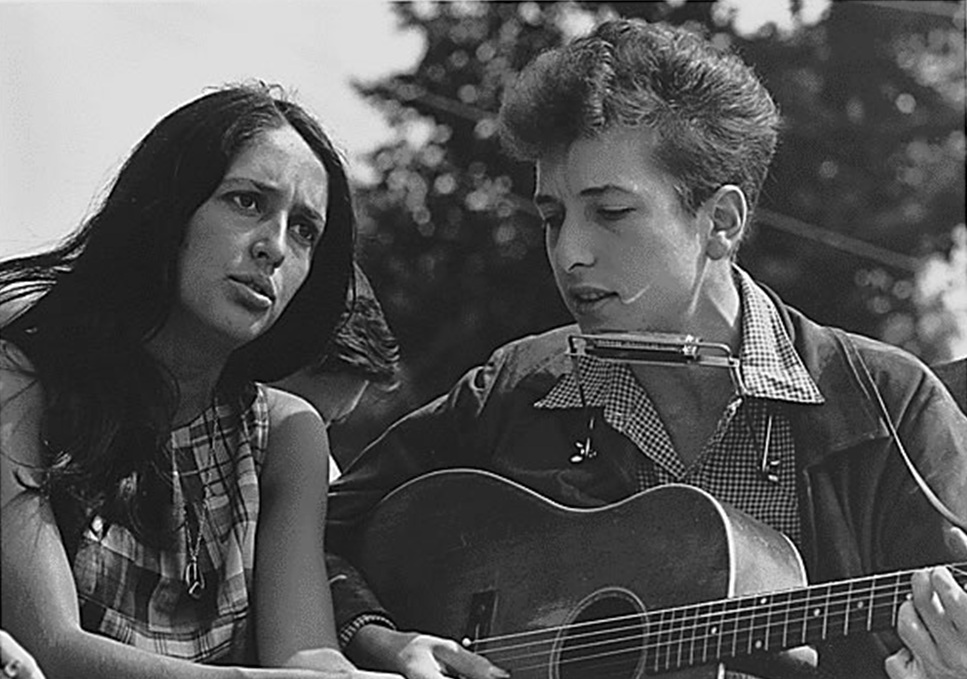
Desmond Clifford
Bob Dylan invented his identity. It was clear to the young man arriving on New York’s folk scene, pumped with ambition and destiny, that Robert Allen Zimmerman was a name unlike to carry him to his future in music.
Nor did he much fancy his origins as a petit bourgeois from small-town Hibbing, Minnesota, up on the Canadian border.
As well as the name Bob Dylan, he invented what we now call a backstory as a hobo from New Mexico, incorporating train jumping in Oklahoma – the life he felt, artistically, he should have had rather than the secure childhood with loving parents and their electrical goods shop.
So, did he name himself after Dylan Thomas? This is one of the questions that pre-occupy Dylan-ologists. It doesn’t matter much, but it would be nice, wouldn’t it?
[mid-content-banner]
Elusive
Undisputed facts can be elusive in Bob’s story; evasion, dissembling and false trail has helped him pull a protective veil around his life. Bob argues that the whole of what we need to know about him is right there in his music, and he’s probably right.
The evidence on Dylan Thomas is inconclusive and Bob has said different things at different times. He addresses the issue, sort of, in his superbly readable memoir “Chronicles, vol. 1” (2004).
If Dylan Thomas was a major inspiration this would have been the place for homage, but no such thing; “…unexpectedly, I’d seen some poems by Dylan Thomas,” is all we get. Hardly a lavish tribute, and how do you see poems “unexpectedly”? Can you read Milton by accident!
Bob had contemplated simply dropping the Zimmerman, leaving Robert Allen. He thought “Allen” looked better with a “y”, so “Allyn”. Then he thought “Dylan” sounded better than Allyn, and “Bob” better than Bobby, so: “Bob Dylan”.
Got it? That’s what he said in 2004.
In an interview with Joseph Haas of the Chicago Daily News in 1965 he denied any link at all with Dylan Thomas, saying he got the name from an uncle. “I’ve read some of Dylan Thomas’ stuff, and it’s not the same as mine. We’re different.”
They certainly are. I know Bob won the Nobel Prize for Literature while Dylan Thomas didn’t, but Thomas is a better poet.
On the other hand, Dylan Thomas couldn’t sing (some say, neither can Bob…).
[lower-mid-content-banner]
Fatally!
Daniel Mark Epstein in “The Ballad of Bob Dylan: A Portrait” (2011) has no doubts: “he tried the name Elston Gunn for a spell and then Robert Allyn, but after reading some poems by Dylan Thomas he changed it fatally to Bob Dylan.” (“Fatally” is what he says but, surely, he means “fatefully’ – Dylan Thomas didn’t kill him!).
Epstein also references a vinyl album of Dylan Thomas reading his most popular works released in America in 1952 by Caedmon Records, including Fern Hill and Do Not Go Gentle Into That Good Night. Epstein supposes that every culturally aware American in the 1950s/60s was aware of this album. If that includes Bob, the man himself makes no reference to it.
Bob’s 2001 biographer Howard Sounes (“Down the Highway: the Life of Bob Dylan”) puts Dylan Thomas actually in Bob’s hands: “…when Bob visited he usually had a poetry book in his hand, sometimes the poems of Dylan Thomas”.
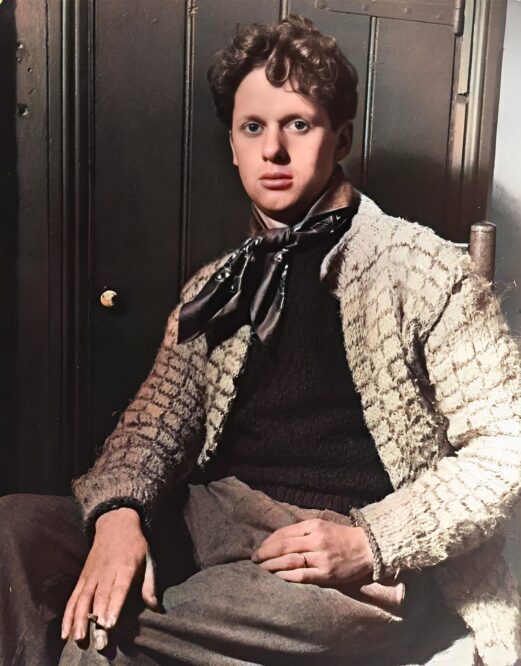
This was the testimony of Bob’s schoolfriend Larry Kegan, who Bob visited in a Minnesota hospital.
One of Bob’s more recent biographers Clinton Heylin (“The Double Life of Bob Dylan”, 2012) addresses the same issue. He quotes another schoolfriend, John Buckler, reporting a young Bob saying, “Down there when I play my name is Dylan…after Dylan Thomas”.
Clinton goes on to quote an interview “on the day he first visited the country of Thomas’s birth, May 9th, 1966” (which is strictly incorrect; Bob got to Cardiff in 1966 on 11 May) in which Bob denies the Dylan Thomas connection with this strange dismissal: “I knew he was a drunken, so he couldn’t be groovy.”
Well pardon us, Bob, but talk about pot, kettle and black.
Also in Cardiff in 1966, Bob told journalist Michael Brown (whose claim on immortality is being the subject of The Beatles’ song “Paperback Writer”): “I got a weird feeling tonight. I never thought in a million years I’d get to Wales. I started thinking [about] Richard Burton, Tom Jones, that chick Shirley Bassey…”. (That chick Shirley Bassey!). And he went on again to deny the Dylan Thomas connection.
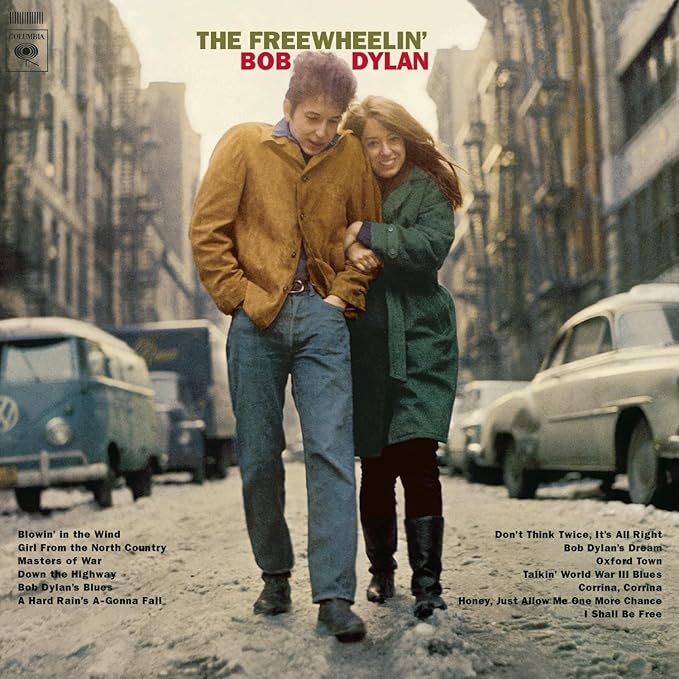
On the album cover of The Freewheelin’ Bob Dylan (1963), Bob’s girlfriend, Suze Rotolo, is wrapped around his arm against the cold of West Village, NYC. This photo, taken by the CBS house photographer Don Hunstein, was a minor revolution. It was the first album cover to feature a natural photograph as opposed to a stylised studio-posed shot – to verify this, check out the covers of The Beatles’ early albums.
Suze and Bob had an intense relationship. In her memoir “A Freewheelin’ Time” (2009) she refers to “suspicions about that Welsh last name” and her upset when she found out his real identity. Her complaint was his lying.
Invented
He lived in fear of being discovered. He had invented what he believed was a beguiling back story and, more than that, wanted to keep the world at bay. She acknowledged: “Fame came fast and hard for Bob Dylan. He was barely twenty-one when it hit”.
Here is a parallel with Dylan Thomas, whose genius also manifested early. Bob might also have succumbed to excess at points in his career, but he found the off-switch which eluded Thomas.
Thomas’s death at St Vincent’s hospital in New York occurred only a few years before Bob’s arrival, and Dylan Thomas was certainly in the air culturally. Bob drank at The White Horse with The Clancy Brothers and Thomas was part of the live-fast-and-die-young legend to which 1960s music contributed so many sacrificial offerings.
Part of Bob’s greatness in 2025, his 85th year, is to explode the mythical connection between drugs/ drink/early death and creativity. It turns out, there is no connection at all, as Bob’s lifetime and continuing output amply demonstrates.
On the day I write this, Bob is touring his 40th studio album and next plays on 20 June in Clarkston, Michigan.
Where there is talent and application, inspiration follows, albeit in its own good time.
Support our Nation today
For the price of a cup of coffee a month you can help us create an independent, not-for-profit, national news service for the people of Wales, by the people of Wales.
Get more trusted Welsh news
Choose Nation.Cymru as a preferred source in Google News to see more of our journalism.
