


Culture
Cerys Hafana shares 2025 live dates
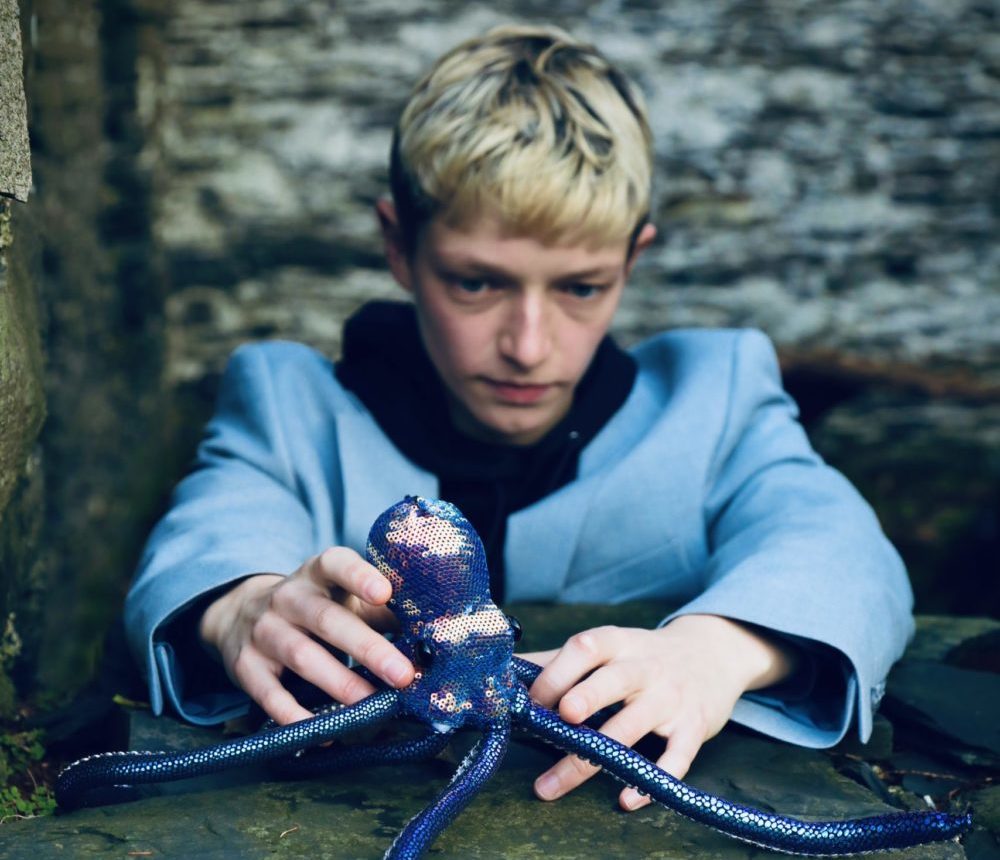
Stephen Price
Acclaimed singer songwriter and triple harpist, Cerys Hafana has shared details of a series of live dates for early 2025 - with events lined up in Wales, Bristol and London.
Cerys is a Welsh triple harpist and composer who mangles, mutates and transforms traditional music - and is fast becoming one of Wales' most captivating, restless and exciting new artists.
Cerys' work is a glorious and limitless mash up of archival material, folk songs and psalms, found sounds and electronic processing, alongside ethereal original compositions.
We recently spoke with the Machynlleth native about the current revival of folk music and traditions, being questioned on singing in Welsh, the joy of the triple harp and their latest release, Crwydro.
You’re known for your use of the triple harp and your interest in reinterpreting traditional music.. how did your love for both the harp and traditional music come about?
I think I was the only child in all of Wales who enjoyed doing dawnsio gwerin at the Urdd Eisteddfod.
I’m not from a folk music family, and it was pure chance that I started harp lessons with someone who only taught folk music.
I think I immediately thought it was more fun than doing grades on the piano, especially once I was introduced to the triple harp and realised how rare that was.
Now I also appreciate working with folk music for creative reasons – it gets rid of the ‘blank page syndrome’ because you’re always starting with something, be it a song or a strange little fragment of a psalm tune from the archive.
I can’t talk to you or about harp music in Wales without touching on the work of John Thomas, and through him, one of my idols - Elinor Bennett. So much transcendental music we overlook these days - work that sounds as fresh today as ever… Ffarwel y Telynor, Dafydd y Garreg Wen, Codiad yr Haul, Cwynfan Prydain, Ymadawiad y Brenin, Bugeilio’r Gwenith Gwyn…
I actually haven’t played a huge amount of John Thomas’s work, although I’m very familiar with it and have played lots of arrangements of the same Welsh melodies that you mention.
I think I remember him getting referred to as a bit of a traitor by some of my teachers, because allegedly he abandoned the triple harp (which is what I play) for the more classical pedal harp (although personally I can’t say I hold that decision against him).
I’m not classically trained on the harp, nor have I ever really played a pedal harp, so I’m not very familiar with that aspect of the Welsh repertoire. But I am of course familiar with and have a lot of admiration for Elinor Bennett’s work (and she’s a lovely person!).
I did play a lot of music by a different John – John Roberts, the Welsh Romany triple harpist from Newtown – and slightly more recent arrangements by people like Nansi Richards, or my teachers Robin Huw Bowen and Rhiain Bebb.
But from the age of about 15 I’ve had much more interest in writing my own music to perform rather than performing pieces by other people, and triple harpists like Llio Rhydderch (who was taught by Nansi Richards and has been arranging and composing music for the triple harp for decades) show that this approach can also be part of the ‘tradition’.
Whilst you often sing in Welsh, songs like Child Owlet and many others are in the English language, and your takes on them are a wonderful marriage of contemporary and traditional - what inspires you to bring them to new and current audiences today?
I started working on those English-language folk songs during the first lockdown, when I got involved with a podcast called Old Tunes Fresh Takes.
The hosts would pick a folk song every month and invite anyone to contribute a version, and I got stuck in because I needed something to do instead of revising for my cancelled A-levels.
I don’t think I would have started arranging English-language folk songs if it weren’t for that (desperate times, desperate measures…).
There’s a massive revival and interest in Welsh, and indeed all of the countries of the UK’s folk traditions and music - with artists such as Meinir Mathias, or Ben Edge across the border, and musicians such as Lleuwen and Mari Mathias - all seem to have a determination to bring back forgotten or lost traditions. Is this something you feel your work aims to do?
In some ways I’m not sure my work has a specific aim – I’m just trying to make stuff I enjoy – but if drawing attention to things that have been forgotten or ignored is a side effect of doing that then that’s great.
I think I have progressively been consciously trying to work with things that are slightly unusual or don’t fit into our collective idea of what Welsh folk music should sound like.
Lleuwen’s current project does an amazing job of that – drawing attention to styles of singing that seem very unfamiliar to us now but were extremely common throughout Wales a century ago. And I love Mari’s almost psychedelic approach to very traditional folk songs.
I do think it would be cool to raise more awareness of the triple harp.
It plays such an important role in our musical history, but there are so many Welsh people who aren’t aware of it.
I’d like to draw attention to is as both an instrument of historical significance, and also as an instrument with all sorts of untapped musical possibilities.
It would be great if more harpists started playing it and bringing their own backgrounds and inspirations to it.
On the subject of returning to our roots, or something more substantial than throwaway mobile phone driven music and mass media, faith is also something that many people are looking back at with different eyes, having almost thrown the baby out with the bathwater in a rejection of our old traditions.
Lleuwen, again, is reviving so many forgotten forms and styles, and you yourself work with psalms, and so many others are embracing a neo-pagan or Celtic spirituality in their lives and in their art - what attracts you to exploring work that is perhaps influenced by sacred texts/forgotten traditions?
I actually went to listen to Georgia Ruth interview Lleuwen about her lost-hymns project last night at Other Voices Aberteifi, and during the interview Lleuwen said that she liked dealing with songs about things that aren’t ‘of this world’.
I think that’s partly what draws me to these hymns.
I’d been working with all these strange English folk songs over lockdown (which I released on the The Bitter EP), and many of them had supernatural elements, or were just quite strange, and then it was slightly frustrating to return to my books of Welsh folk songs and finding that they all felt very much of this world.
People often blame the Methodists for completely stamping out the Welsh folk tradition, but I think actually an interesting thing happened where lots of the folk tunes got channelled into hymns.
The psalm tunes I’ve arranged, as far as I can tell, are all folk melodies which have just been documented and archived in a different context.
It’s also one of the reasons why I enjoy doing Plygain every year, even though I’m not at all religious: it feels like a very direct way of engaging in a folk tradition (and finding interesting old melodies), even if the folk tradition is dressed up in a slightly unexpected way.
Imagery is obviously massively important to your work, and adds another dimension to each of the tracks. There’s a very cinematic quality to them, does cinema influence your music?
I don’t watch a lot of films, but sometimes one will really stick with me.
I’d just watched Nomadland when I went to record my second album Edyf in early 2022, and was surprised in the studio that some of the landscapes from that film kept popping into my head as I was playing.
I found it really useful as a way of trying to focus on the performance and capture an atmosphere, even though those particular landscapes couldn’t be more different from the ones I was actually looking at as I wrote and recorded.
I think making music videos has become the part of the process that I enjoy the most.
I’m really lucky to know and live near Amy Daniel, a director and film maker who’s just started her own film company, Amdani, in Aberystwyth. We’ve made four music videos together now.
A lot of the songs I perform can be slightly inaccessible for various reasons (both the English and Welsh songs tend to contain quite archaic and strange language, so even for people who speak both fluently the meaning isn’t always immediately obvious), and I enjoy using music videos as a way of trying to communicate something about the song that you might not get just from listening to the music, but in a way that is more engaging than just sitting down and reading translations of the lyrics.
You’re just back from Womex - can you tell us more about that experience?
It was great. I’ve been aware of WOMEX since it was in Cardiff in 2013, and it felt like a real privilege to attend it for the first time this year and also perform as an official showcase artist.
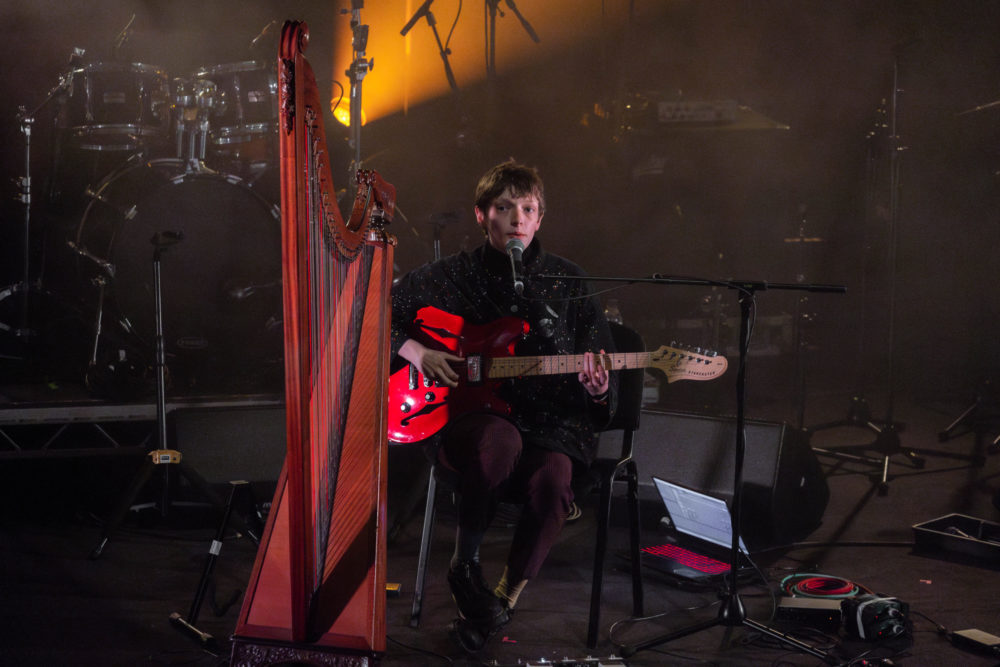
I was playing in the Albert Hall, which looked a bit like a Welsh chapel on steroids, right in the middle of Manchester.
I actually lived in Manchester until I was 5, so it felt like quite a full circle moment in many ways.
I read a quote recently about how it’s the English language world that’s (at least in the past) been closed off to Welsh music, and our artists have often found homes outside of the UK and US. Your music to me, like Talulah’s perhaps too, reflects a modern, multi-lingual, indeed global, Wales, are you enjoying seeing your music travel the world?
Generally I’ve found the response has been very positive and open wherever I’ve played (even in England…!).
I think I’m lucky to be coming from a folk / “world” music context, because perhaps people who choose to go to slightly unusual folk gigs are expecting to hear languages other than English.
I can see how people in the pop / rock music world (especially industry people) might be less receptive to that.
People do occasionally feel the need to question my decision to sing in Welsh; I was playing in the Netherlands a few weeks ago and though most people were very open to it (and some were even learning Welsh!), I did get told by someone that it was “challenging” that I wasn’t singing in English, which was interesting to me because I’m not sure anyone in the room spoke English as a first language (apart from me!).
Sometimes it really makes you realise how dominant English is as a musical language, and how boring that is.
I do get a weird thing sometimes where people tell me that it doesn’t sound like I’m singing in Welsh, or that they assumed I was singing in a Scandinavian language (which I think is just because of how I look).
I do quite enjoy getting these responses and confusing people, but also sense that they sometimes come with the implication that those things are preferable to actually singing in Welsh.
You’ve just released a new EP, Crwydro, which is a different beast to everything you’ve done so far. Can you tell us more about it, and the inspirations behind it? How did the project come about?
I think I started writing music for the piano before I started writing for the harp.
I’ve been playing the piano since before I can remember, did all the grades, and studied it at uni for two years in London.
Despite all this I don’t ever feel particularly comfortable playing the piano live, and obviously it’s nowhere near as niche as the triple harp is.
I booked a few days at a studio near to where I live last year (Stiwdio Bing), which has a nice piano in it, and unexpectedly spent those few days finishing off all these piano compositions I’d had floating around for years but which I’d never found the time (or the reason) to complete.
I then decided it would be nice to get them recorded properly, so went to StudiOwz in Pembrokeshire in January to record them on their Bechstein grand.
Alongside the original compositions I’d also been tinkering with piano arrangements of some of the harp pieces on Edyf, my second album.
Lots of those pieces were actually originally written on piano, or written moving back and forth between the harp and piano, so they slotted back onto that instrument quiet naturally.
I thought it would be a nice bridge between the piano stuff and folky harp stuff to release some of these arrangements, so I went back to StudiOwz in April to record them and released the Crwydro EP in mid-September, on the two year anniversary of releasing Edyf.
Did any artists, literature or movies (or anything else) influence this collection? And who have you been listening to this year?
The second track on the EP, A Feeling for Snow, is actually named after the novel Miss Smilla’s Feeling for Snow, which is set in a bleak, Danish harbour town in the depths of winter.
I was reading it when I started writing that piece (probably about 7 or 8 years ago!) and though normally the titles of my pieces are fairly arbitrary this piece seemed to match the atmosphere of the novel too much not to reference it.
I’ve listening to Sam Amidon, Rachel Lavelle, Fleuves, Peiriant, Joel Styzens, Tristwch y Fenywod, Brighde Chaimbeaul and Caroline Shaw, amongst others, a lot this year.
Was there a conscious decision to let the harp and piano take centre stage?
I’ve dabbled in various instruments over the years but have been playing harp and piano the longest and they’re the two I actually feel that I can play.
They’re very similar in lots of ways (the piano is just a sideways harp with hammers) and usually when I’m writing I move between the two and play the same things on both until it becomes clear which one a particular piece belongs on.
I do go through phases of preferring one over the other – in lots of ways I find the harp less stressful, I think because I haven’t been classically trained on it (which usually seems to succeed in introducing a certain amount of stress into one’s feelings about an instrument), but sometimes I prefer the dynamic range of the piano, and the fact that it’s easier to wallow in.
There’s something transcendental and moving about so much of your work. It opens up after repeated listens like all the best music does, and for me it’s best enjoyed outdoors in the wilds with headphones and fits so well with the Welsh elements.. Like Wales itself, there is an undeniable melancholy, too.
Somone once said that they thought my music was perfect for listening to whilst doing the washing up, crying, and looking out of the kitchen window at some rainy Welsh hills, which I think is maybe one of the best things anyone has ever said to me (I just haven’t managed to condense it into a catchy soundbite yet).
I have occasionally been accused of making music that doesn’t “sound Welsh”, but Welsh music, especially Welsh harp music, spreads over millennia and so I don’t think it makes logical sense to suggest that there is one particular way of “sounding Welsh”.
I don’t approach making music in a particularly academic way, and enjoy seeing what presents itself just from working from instinct and inspiration, and I do think a certain Welshness presents itself in the end product.
I think there is a particularly Welsh type of melancholy that comes through in lots of what I do – it’s not heart-on-sleeve sadness, or anything particularly over-the-top, but a slight wistfulness perfect for feeling as you do the dishes.
Do you have any plans to take Crwydro out on tour?
If I’m playing in a venue with a nice piano I usually try and play a few pieces on it, but nice pianos can be few and far between, especially in cold, damp Welsh chapels.
And again, I feel much more confident as a public performer on the harp.
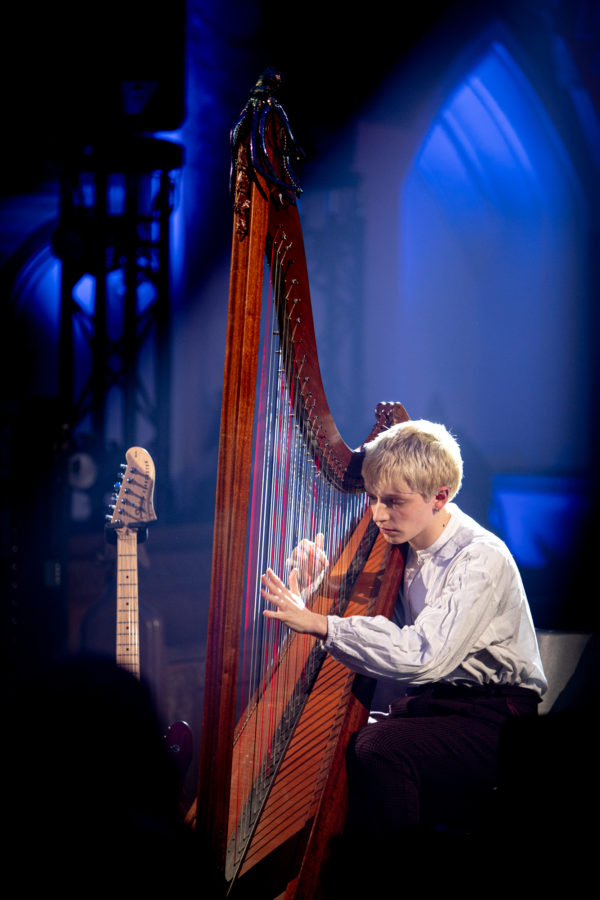
But I’m taking a few months away from touring to work on a new album, and I think it will include some piano alongside the harp, so perhaps once I come to touring that properly next year I’ll be able to bring everything together in a way that feels cohesive.
Crwydro is available to stream but not currently on CD, was that a conscious decision?
Boring answer, but making CDs is only really financially viable if I can sell them at gigs, and because I didn’t plan on touring this release much it didn’t make sense to get CDs made.
But I do have many more piano pieces waiting to be released, and I like the idea of having some sort of physical record of them, so maybe at some point I’ll make a mega Cerys-Hafana-piano-CD (for the five people who desire such a thing…).
And what’s next?
I have some solo live dates in the UK in March and May, and some other exciting things that I’m not allowed to talk about yet.
I’m going to be working on a new album over the next few months, and also have a few film music and composition commissions which is exciting.
People can sign up to my as-yet-unused mailing list or just keep an eye on my website and Instagram to get updates about touring and other things.
In translated lyrics from Comed 1858, Cerys sings, ‘There is no planet as magnificent as this to be found’ - and the fruits of a very personal awe, curiosity and restlessness (and, indeed, a very Welsh wistfulness) leave anyone prepared to take note with no option but to agree.
Tragwyddol.
Purchase Crwydro and other releases from Cerys at Bandcamp.
"Thanking listeners for their support, Cerys wrote on Bandcamp: "Diolch am eich holl gefnogaeth dros y flwyddyn diwethaf! Thank you for all your support over the last year!"
Early 2025 live dates:
28/01/25 - Elgar Room, Royal Albert Hall, LONDON
30/01/25 - Y Tabernacl, MACHYNLLETH
20/03/25 - Acapela Studio, CARDIFF
21/03/25 - Cwrw, CAMARTHEN
23/03/25 - Strange Brew, BRISTOL
Tickets are available from Cerys' website: ceryshafana.com/live-dates/.
Support our Nation today
For the price of a cup of coffee a month you can help us create an independent, not-for-profit, national news service for the people of Wales, by the people of Wales.
Get more trusted Welsh news
Choose Nation.Cymru as a preferred source in Google News to see more of our journalism.
