Culture
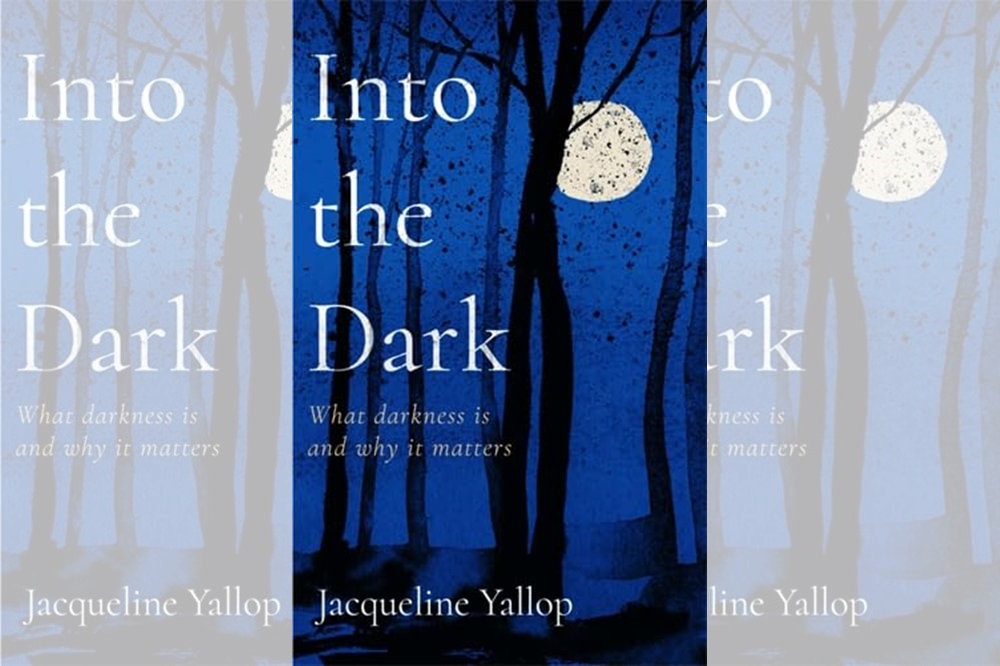
Book review: Into the Dark by Jacqueline Yallop
Jon Gower
Darkness, for some, holds terror, while for others it offers comfort and the promise of sleep. It’s a subject which has long fascinated the novelist and Aberystwyth academic Jacqueline Yallop.
She started to pay attention to it when she was a little girl, since when she has grown to ‘know a delicate dusk in my fingers like cool cloth, and the full darkness of night, sticky, burring to my skin and my hair and my clothes like goosegrass.’
Twilights
As Yallop leads readers Into the Dark she proves to be a most informative guide, telling us, for instance, about the three kinds of twilight – civil, nautical and the darkest of the trio, astronomical twilight which is absent at this time of the year but in winter it’s what most of us consider to be proper night.
Some winters are so long and dark that some humans have been known to hibernate, as documented in the account of a Russian peasant family who stoked the fire, wrapped up warm and slept solidly for six months when the cold was biting outside.
[mid-content-banner]
Serious science
The book is a very expansive survey and cultural history of darkness, shored up by oodles of serious science.
The author explains how we see and underlines how super sensitive we are to light, the sensitive photoreceptors in the eyes able to discern a single photon, which is the smallest unit of light so far discovered.
As she charts the reaches of darkness we find out about the relationship between darkness and sleep, not least the way our Circadian rhythms are altered by artificial light, making it difficult to adjust our body clocks, and thus ensure a good night’s sleep.
She also explores shadows and silhouettes, addresses matters of race and religion and examines the role of light and shadow in both art and architecture, with examples drawn from a wide span of Japanese novels, works of philosophy, architectural design and painting.
Yallop travels widely too, from the top of the Empire State Building in New York, where the city lights of Manhattan’s array of ‘scrapers attract and then stun migrating birds to their deaths through dark woodlands and even darker caves in France to lighter moments as the sun sets over Cardigan Bay.
Here she watches as ‘the sky burns huge, the colours spreading and deepening. Everything bristles with glow: tufts of coarse grass are tipped with orange and washed with gold; fenceposts shimmer; the greenish tones of still-bare trees burnish to brass.’
As this lovely quotation amply demonstrates you can’t talk about darkness without also talking about light, so the volume is shot through with various kinds, from the divine light of religion to the permanent light of cities that cannot sleep the world over.
But that constant light shining 24/7 means we are losing our grip on the dark, as Yallop suggests.
In presenting a rather sobering statistic, it transpires that the magnificent sweep of the Milky Way is invisible to eighty per cent of the world’s population (and, moreover to a staggering ninety-nine per cent of the population of the USA).
Confused crustaceans
One small creature affected by the prevalence of such insistent urban lighting is the humble sand hopper, which has to wait for night to fall before moving out from hiding places on the beach to feed on seaweed.
But constant lighting confuses the small crustaceans and they often have to forego feeding.
With seventy-five per cent of the planet’s megacities situated on the coast, and coastal populations predicted to double by 2060, it’s easy to see how light, leaking from the land, can affect a wide range of plants, mammals and insects.
[lower-mid-content-banner]
Personal darkness
There is another, personal story threaded throughout the book, namely Yallop’s father’s dementia, the final stages being, as Nicci Gerard puts it taking one from ‘twilight to pitch dark at the vanishing line between life and death.’
Dementia makes darkness personal, ‘as the dark sits inside him like a small black bud’ and it makes Yallop realise, a bit like Plato, that ‘we are each a moment of light, a match struck in a cavern, throwing shadows.’
This is cultural history at its most accessible, with plenty of illustration, analysis and cogent examples of a subject which affects us all in one way or another.
The very last thing you can say about this illuminating volume is that it leaves you in the dark.
Into the Dark: What darkness is and why it matters by Jacqueline Yallop is published by Icon Books and is available from all good bookshops.
Jacqueline Yallop will be discussing her book at the Monty Lit Festival at 14.30 on the 8th June.
Support our Nation today
For the price of a cup of coffee a month you can help us create an independent, not-for-profit, national news service for the people of Wales, by the people of Wales.
Get more trusted Welsh news
Choose Nation.Cymru as a preferred source in Google News to see more of our journalism.