


Culture
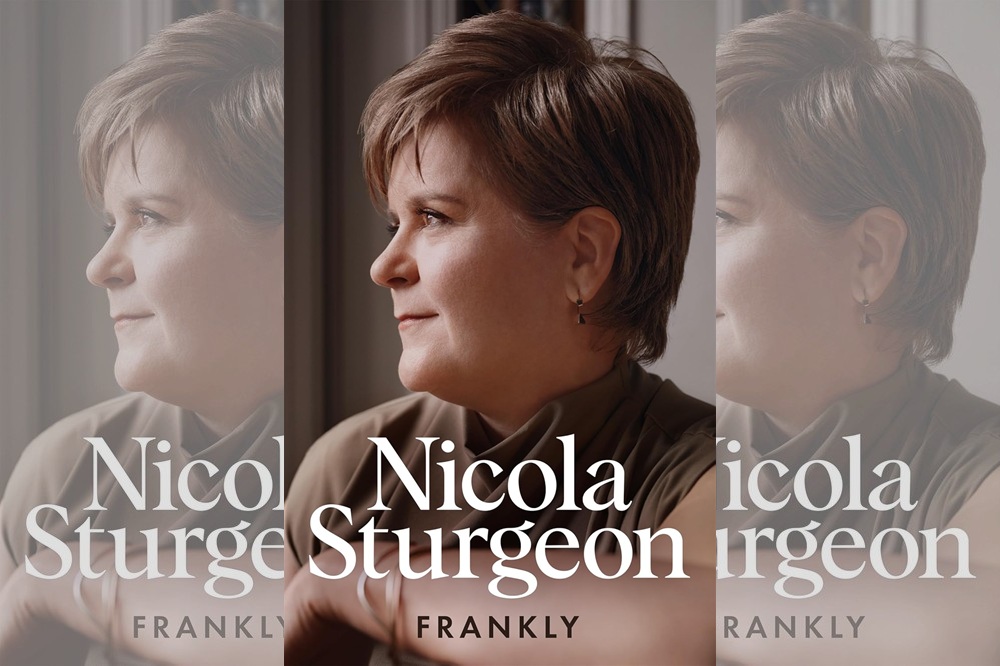
Book review: Frankly by Nicola Sturgeon
Desmond Clifford
Nicola Sturgeon, along with Alex Salmond, is the outstanding figure in Scottish politics of the devolution era. She was protégé, then partner and finally sworn enemy of the brutal, brilliant Salmond.
They brought Scotland close to independence and left a legacy which makes that, most likely, a question of “when” rather than “if”.
She took over the SNP and First Ministership from Salmond at a high point following the independence referendum of 2014. Support for independence virtually doubled during the campaign and London’s political establishment quivered a few days before the vote when the end of the union after 300 years looked a real possibility.
Sturgeon was feted as the “rock star” politician, commanding easy access to British and international as well as Scottish media. New members poured into the SNP (from 25,000 on referendum day to 100,00 on the day she became leader) and Sturgeon presented a sharp, modern image.
For a time, she could do no wrong.
The transition from Salmond to Sturgeon must have been a shock to the Scottish Government. Salmond was a talented and swaggering bully.
[mid-content-banner]
Instinctive
His grasp of the big picture was instinctive, and on form, he was among the best political communicators of his time. I happened to be standing next to him at a First World War commemorative event in Ypres, Belgium in 2007 (I was there with Ieuan Wyn Jones, on his first full day as Deputy First Minister) when he was approached for comment by The Times.
Without pausing for breath, he spoke with perfect fluency in full sentences and paragraphs.
If Salmond was ever troubled by self-doubt, he gave no public sign of it.
Sturgeon could scarcely have been a greater contrast. She speaks sensibly but is hardly stirring. She describes her younger self as “shy and surly”.
She was driven, super diligent and worked relentlessly to prove herself. Late night roistering was replaced by an introspective glass of wine as she berated herself for that day’s failings. She was coolly polite and professional, but no backs were slapped, no egos flattered by false bonhomie.
She relied on reason more than rhetoric, persuasion and firmness rather than bullying.
Salmond was the central relationship of Sturgeon’s political life and his ghost hovers over this book and her life.
For a long time, they were the closest of allies in a striking partnership. They fell out for good when allegations of misconduct were brought against him by the Scottish Government on behalf of two female staff who lodged complaints. Separately, he was found not guilty of criminal charges. Sturgeon says she knew nothing of bad behaviour beyond rumours of consensual relationships which she judged was his business, not hers.
[lower-mid-content-banner]
Enquiry
The Scottish Government’s enquiry collapsed after it made errors which voided the investigation. Salmond was awarded substantial costs as a result. The question arose as to whether the Permanent Secretary should have resigned to take responsibility.
Sturgeon thought not based on her view that this would merely give Salmond satisfaction and fuel his sense of victimhood. Wasn’t this the wrong lens? Shouldn’t Sturgeon have looked through the eyes of the two women who brought the original complaint?
It was they who were let down by their employer, and for their sakes that redress might have been considered.
When she became First Minister, Salmond advised her to remove her husband, Peter Murrell, as Chief Executive of the SNP. Sturgeon thought Salmond was being vindictive. Maybe he was, but he was still right, and Sturgeon’s judgement was again awry.
The true measure for any leader is how their party performs at elections. Sturgeon was off the chart. She led the SNP in eight elections during her time as leader and won all of them. At the 2015 general election the SNP won 56 out of 59 seats in Scotland, an unprecedented sweep. When, at the 2017 general election, they dropped to 35 seats – their second-best result and three times more than the next party – it was seen as a major disappointment.
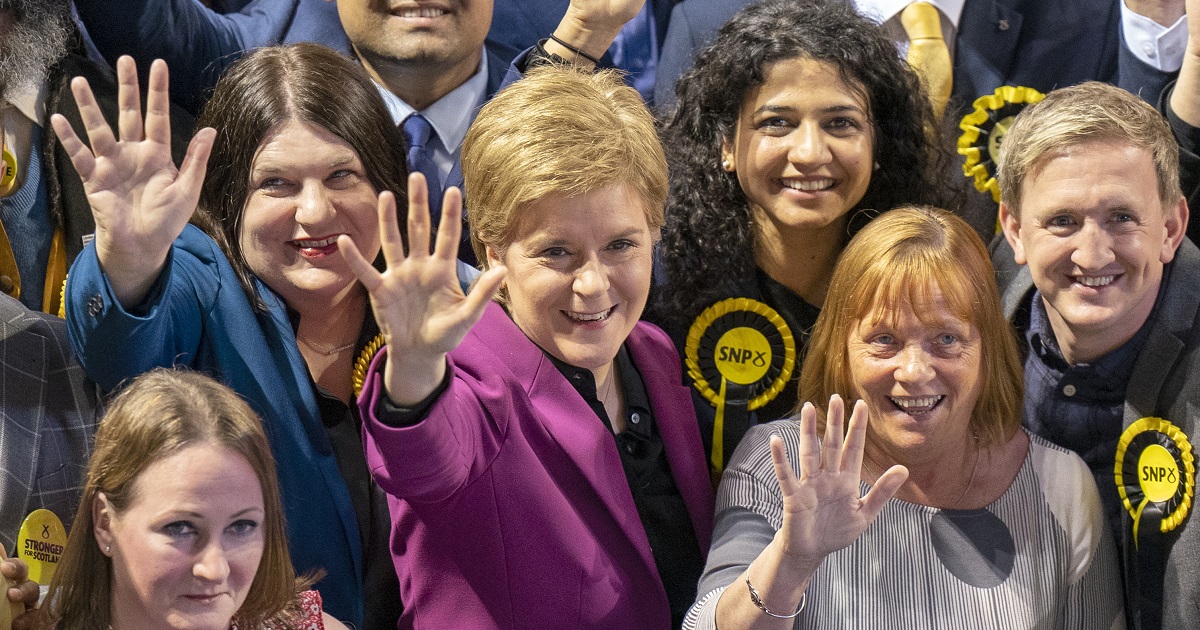
She came close, but never quite managed, Salmond’s 2011 feat of winning an absolute majority at a Scottish Parliament election, on which basis he forced the referendum of 2014.
At the EU referendum of 2016 Scotland voted clearly for Remain but was tied to the UK outcome. It was a crucial moment. The Scottish independence referendum had dealt with the question for a generation – unless, as Sturgeon said, there was “a significant and material change of circumstances.”
Brexit was such a change.
Had the SNP and Scottish Government acted immediately after the EU vote and brought supporters onto the streets they could have created momentum and maximised their chances of a fresh independence referendum.
Sturgeon prevaricated and by the time she made her mind up – without full conviction and under pressure from Salmond and others – the moment had passed, and she couldn’t find a way through.
In desperation she proposed using the next UK general election (2024) as a plebiscite on Scottish independence, a plainly lame and unworkable idea.
Sturgeon records good relations with both Carwyn Jones and Mark Drakeford, to which I can testify since I worked for them both.
She records, correctly, that Salmond fell out with Carwyn because he interfered - so far as Salmond was concerned - in the Scottish referendum.
Before the referendum Carwyn and Salmond had got on very well. Their row illustrated what was at stake: Salmond thought Scotland was his country and that Carwyn had no business campaigning there; as a unionist, Carwyn thought that Scotland was his country too, and that he had every right to campaign.
Sturgeon and Mark were especially close, they agreed on most things. It didn’t arise during Mark’s time, but I suspect he wouldn’t have gone to Scotland to campaign against independence.
Self-recognition
The Scottish Parliament, with broad support, legislated in favour of self-recognition for gender identification.
Sturgeon displayed public certainty on what became one of the most divisive issues of our current culture wars. She made two errors. One was constitutional; the measure was struck down by the UK Government and the courts.
The second was that she got too far ahead of public consensus. She recognises she should have prepared the ground better. The case of a rapist who demanded to be sent to a female prison exposed further flaws. Sturgeon acknowledges she was mistaken to dig in and should have pressed “pause” on the measure to at least allow some heat to evaporate from the debate (the legislation has since been dropped entirely).
Sturgeon is psychologically compelling. From an early age she was gripped by politics and devoted her life to it.
Her commitment - obsession even – created a wasteland of broken friendships, hubris, self-doubt, illness, emotional exhaustion, loss of self.
On page after page, even as she is recognised as the rising star of the SNP – hitched to Salmond’s runaway wagon – she records her insecurity, lack of confidence, imposter syndrome, the deflating balloon, the fear of failure.
She records collapsing full of self-doubt on the sofa at home and not recognising the sharp, confident, red-suited woman she sees on television.
She describes herself as “shy and surly” and is critical to the point of self-lacerating.
Is this sound self-knowledge or a high-achieving woman being too hard on herself?
Introvert
Sturgeon is an introvert, comfortable with crowds but less so with individuals. Even so, she’s a little hard on herself. I came across her a few times and while she was scarcely effusive, she wasn’t unpleasant either.
Elsewhere she shows a clear-sighted sense of her own considerable achievements, and no one can carry for long the burden of First Ministership without fundamental self-belief. She is a complex compound of insecurity and assertion.
Surprisingly, she was utterly bedazzled by the Queen, in spite of being a republican. She talks about intense nerves before meeting her - why on earth? There’s no mention of resentment at the Queen reportedly purring with delight down the phone to David Cameron when Scotland voted No to independence.
Actually, Sturgeon has a bit of a soft spot for the silky Cameron too.
Her prose is clear, if a little functional. She’s apparently honest about her professional and political life, but she keeps us, her readers, at a distance for the most part. One of few passages of intensely personal narrative is her miscarriage which is both harrowing and profoundly moving.
Self-criticism
Her deepest self-criticism emerges during her account of the Covid period. Sturgeon performed well in providing consistent clear communication with the Scottish people throughout (as did Drakeford in Wales).
She is scathing in her criticism of Boris Johnson. Even so, the outcomes seem to have been broadly similar everywhere. The strain of responsibility was intense and, humanly, it could not be otherwise. She emerged from the Covid period a haunted woman and the experience hastened her decision to stand down.
She describes throughout how much harder she, as a woman, had to work to be taken seriously and is critical of misogyny in Scottish politics. She writes positively of Jack McConnell, the Labour First Minister, who, when she filled in for Salmond at First Minister’s Questions, treated her with respect and declined the temptation to condescend and label her as Salmond’s puppet.
She writes, “It reflected well on him as a person, but it was naïve politics.”
I feel confused and a smidgeon of disappointment at this. Wasn’t McConnell doing the right thing and trying to change political behaviour for the better? Must realpolitik and tactics always triumph? If it does, behaviours will be slow to evolve.
She wrote this book while she, and her husband Peter Murrell (they are separated and divorcing), were under investigation by the police for financial issues relating to the SNP.
Sturgeon’s arrest was, “the worst day of my life”. She was eventually cleared of any wrongdoing while Murrell faces a trial.
There is an argument to say she might have been better waiting until then to publish her book so she could review her political life in its entirety and without restriction.
Sturgeon will leave the Scottish Parliament at next year’s election and concludes her story saying she’s never been happier. She has good friends, family and looks forward to other horizons, perhaps a period living outside Scotland.
She leaves herself a lot to reflect on. Of the timing of the Covid lockdown she says, “the doubt will live with me forever.” The Sturgeon-Salmond drama is Shakespearian in its dimensions, and I’ll be surprised if a growing literature isn’t supplemented by drama and film in due course (the Blair-Brown angst looks like a drawing-room vignette by comparison).
Sturgeon says, “I will never quite escape the shadow he casts, even in death.” That’s a lot of ghosts to live with and you’d hope her post-political life is more tranquil and peaceful than that.
Support our Nation today
For the price of a cup of coffee a month you can help us create an independent, not-for-profit, national news service for the people of Wales, by the people of Wales.
Get more trusted Welsh news
Choose Nation.Cymru as a preferred source in Google News to see more of our journalism.
