


Culture
Book review: Clear by Carys Davies
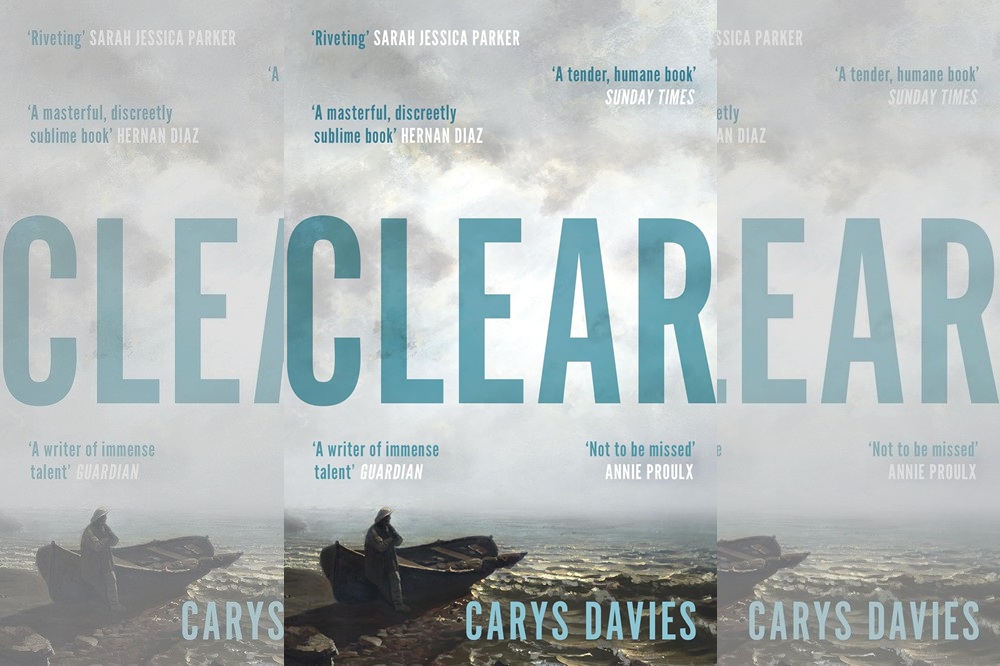
We continue our reviews of books shortlisted for the Wales Book of the Year award for 2025. This time we consider one of the titles in the Fiction catagory.
You can vote for this year’s People’s Choice Award here.
Rajvi Glasbrook
‘Clear’ is set in the period of the Scottish Highland Clearances and the Disruption of 1843, a time in which almost a third of all ministers broke away from the Church of Scotland to form a Free Church in revolt against the rights of landowners to confer clerical privileges.
John Ferguson is one such Minister. We meet him clinging to the gunwale of a little boat, approaching the shore of a remote island between Shetland and Norway. He has been sent with a purpose – to clear the island of its sole inhabitant and make way for sheep farming.
On his person, he carries a leather framed calotype of his wife, Mary.
[mid-content-banner]
Fiercely independent
That sole human inhabitant is Ivar, living a life governed by the shepherding calendar, self-sufficient, and fiercely independent. Ivar and his place in the novel prompt thoughts of Halldor Laxness’s ‘Independent People’. The similarities are in the isolation, survival, independence, and stubborn resistance in the face of displacement. And in the loneliness too, to which the arrival of John Ferguson starkly holds up a mirror – ‘It was as if he’d never fully understood his solitude until now.’
The ’sweeping clean’ and ‘vast emptying’ of people and of land, comes loaded with profoundly discomfiting past and present resonance. Davies’ depictions of Ivar, John and Mary provide a vivid, human counterpoint, and the natural world and language stand as our inconstant constants.
Davies’ writing is spring-water clear and precise. The cooking of sea-wrack into soap, limpets knocked off the rocks dropped into buckets and stones gathered to mend walls are evocative of island life. The worrying winds, restless and spindrift sea and the unruliness of natural time marks the landscape.
These details sitting side-by-side with the cruelty and disruptive human damage of colonisers and harsh brutality of nature are made all the more poignant by the unsentimental cleanness of Davies’ prose.
[lower-mid-content-banner]
Companionship
Language moves from barrier to bond as Ivar and John’s companionship grows. From miscommunicated gestures to the glossary John compiles charting words for feelings, weather, change and sounds – ‘the hoss and horl of sea, the yal of the gulls, the tusk of the wind, the snirk of a door’ – a mutual albeit fragile understanding develops between the two men. It builds on gathering words whilst also in transcendence of them, but at the same time, Ivar’s imparting of his language is an act of preservation in the face of transplantation and loss.
Davies’ research into the now extinct Norn language is important, as although the island and its people are fictional, the language once existed, and here it is revived. The relationship that language shapes is one of care, tending and tenderness.
Between the two men there is Mary. The very first words she utters are reasoned, pragmatic and compassionate, and this frames her aptly. Davies presents her as the character to cut through moral conflict with kindness and rational practicality. There are missed opportunities perhaps in providing a deeper exploration of Mary’s inner life within the novel.
Humour
There is humour, not least in the way Davies pokes fun at ‘the fashion beloved of the worst kind of contemporary novelists for inflicting catastrophic and prolonged memory loss of their characters’ – just as John Ferguson’s amnesia groans.
The nuance and depth of things said as well as unsaid are remarkable for a novel of such brevity. Much of the meaning is in the spaces between things: between nouns and verbs, language and meaning, hope and happiness, loss and love, bleakness and optimism, clearing and clarity.
The polished compactness of ‘Clear’ is a real strength and its calm composure its invigorating charm.
Clear is published by Granta and can be purchased here and at all good bookshops.
The English language titles shortlisted for this year’s award are:
Poetry Award
Girls etc, Rhian Elizabeth (Broken Sleep Books)
Little Universe, Natalie Ann Holborow (Parthian Books)
Portrait of a Young Girl Falling, Katrina Moinet (Hedgehog Poetry Press)
Fiction Award – Supported by the Rhys Davies Trust
Earthly Creatures, Stevie Davies (Honno)
Clear, Carys Davies (Granta)
Glass Houses, Francesca Reece (Headline Publishing Group, Tinder Press)
Creative Non-Fiction Award – Sponsored by Hadio
Tir: The Story of the Welsh Landscape, Carwyn Graves (Calon Books)
Nightshade Mother: A Disentangling, Gwyneth Lewis (Calon Books)
Nature’s Ghosts: The world we lost and how to bring it back, Sophie Yeo (HarperNorth)
Children & Young People Award
A History of My Weird, Chloe Heuch (Firefly Press)
Fallout, Lesley Parr (Bloomsbury)
Why Did My Brain Make Me Say It?, Sarah Ziman (Troika)
Support our Nation today
For the price of a cup of coffee a month you can help us create an independent, not-for-profit, national news service for the people of Wales, by the people of Wales.
Get more trusted Welsh news
Choose Nation.Cymru as a preferred source in Google News to see more of our journalism.
