


Culture
Abolishing license fee 'existential threat' to the future of the Welsh language says top academic
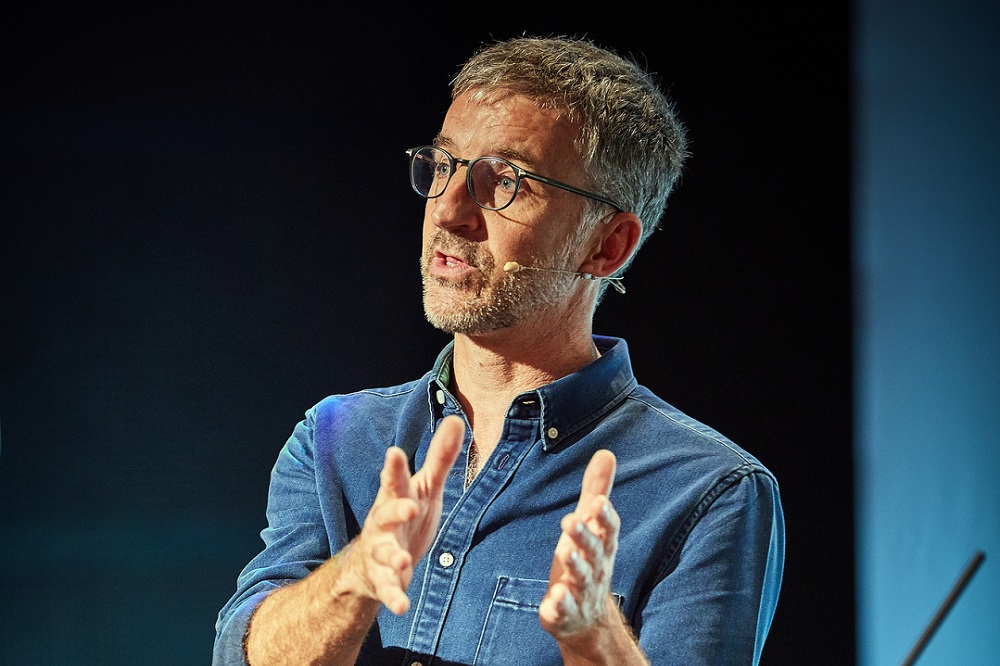
The announcement by the UK Government's Culture Secretary that the license fee will be frozen for the next few years and scrapped in 2027 is an "existential threat" to the Welsh language, a prominent academic has said.
Prof. Richard Wyn Jones, Director of Cardiff University's Wales Governance, warned that the announcement was a threat to the futures of both S4C and Radio Cymru, which depended on the survival of public service broadcasting.
His assessment comes after UK Culture Secretary Nadine Dorries said that the next announcement about the BBC licence fee "will be the last".
"The days of the elderly being threatened with prison sentences and bailiffs knocking on doors, are over," the Culture Secretary said. "Time now to discuss and debate new ways of funding, supporting and selling great British content."
Broadcasting is currently a reserved matter for the UK Government and not devolved to Wales.
But Richard Wyn Jones said that her words were an "attack on the very principle of public broadcasting is an existential threat to all Welsh language broadcasting and therefore to the future language itself".
"More people in Wales consume public broadcasting than in any other part of the UK," he wrote. "In terms of Welsh language broadcasting, BBC Radio Cymru and S4C are basically ‘it’ They are fundamental to the use and transmission of the language.
"Importantly, while S4C tends to get all the attention about 70% of all Welsh language media consumed are broadcast by BBC Radio Cymru. It’s really hard to overstate the importance of Radio Cymru for the language and its speakers.
"Even in the short term, it’s impossible to imagine Radio Cymru’s current service being maintained. Inflation in the broadcasting sector is currently running at circa 10% p.a. so freezing the BBC’s budget for two years will inevitably lead to swinging cuts across the board.
"Not only that, but S4C is itself very much dependent on the BBC. The BBC provides S4C with around £20M of programming annually. So even if we see a short term increase in the budget of S4C, swingeing cuts to the BBC will inevitably have a negative impact on the channel.
"Why do I say increase? Because S4C acts as the institutional equivalent of a human shield for the UK Government. ‘Of course, we care about the future of the language. Look…S4C!’ The BBC not S4C is the object of the culture war. I expect an increase to be announced very soon.
"But even if that was to occur we need to be hard-headed about this. The Johnson government’s attack on the very principle of broadcasting – if nothing changes, the BBC as we have known it will cease to exist after 2027 – means that there’s no long term future for S4C.
"After all, can you really imagine a situation in which S4C is the only surviving public broadcaster in the UK that is directly funded by the Treasury in London? If so then, dear God, I’ve got a bridge to sell you…
"To conclude, the future of Radio Cymru is as important S4C’s. S4C is dependent on the health of the BBC but – more fundamentally – on the survival of the principle of public broadcasting.
"Dorries’ announcement is an existential threat to the future of the Welsh language."
[mid-content-banner]
'Over'
The license fee freeze is yet to be announced in parliament but briefed to the Mail on Sunday who suggested the government would soon announce it will freeze the £159 annual charge until April 2024.
Later on Sunday morning, Nadine Dorries tweeted: "This licence fee announcement will be the last."
S4C’s public funding will be provided entirely through the licence fee from the 2022-23 financial year onwards, with all future funding decisions made as part of the BBC licence fee funding settlement.
If there is no increase in the license fee, S4C’s share of that money is unlikely to rise also, leaving it facing possible cutbacks if inflation rises 5% as the Bank of England expects. If the license fee did rise in line with inflation it would be £175 in two years’ time.
The license fee agreement was due to be announced in the summer before Nadine Dorris took the culture brief in a reshuffle, and decided to revisit it. The decision due to be announced by the end of the month will come into effect from 1 April.
Nadine Dorris’ allies briefed the Daily Mail that “the days of state-run television are over” due to the corporations’ “left-leaning mindset,” suggesting that the license fee freeze may only be the start of cutbacks.
A source within the BBC told the Sunday Times that “anything less than inflation would put unacceptable pressure on the BBC finances after years of cuts.”
‘Intervention’
Campaign groups such as Cymdeithas yr Iaith have previously called for broadcasting to be devolved from Westminster to the Wales so that S4C can be funded from within the Welsh Government’s budget.
Last month, a Senedd report called for the Welsh Government to have a bigger say when the futures of the BBC and S4C in Wales are discussed by the UK Government.
The Senedd’s Culture, Communications, Welsh Language, Sport and International Relations Committee said that the Department of Digital, Culture, Media and Sport within the UK Government should include a representative from the Welsh Government when discussing the future of public service broadcasting in Wales.
The report says that the rules that govern the media need to change to ensure audiences in Wales “can watch content that reflects and informs their lives”.
Particular regard should be given to the need for intervention to ensure programming in the Welsh language, and content reflecting Wales in both languages, is safeguarded, they said.
“The negotiations on the funding settlement for Wales are an essential step to guarantee PSBs can continue to serve Welsh audiences by covering our shared cultural events and providing trusted news,” the report says.
“The Committee is calling for a seat at the table for a Welsh representative in the negotiations on the next licence fee settlement from 2022-2027. The role of this representative should also be included as standard for the next round of negotiations.”
The report also adds: “The Department of Digital, Culture, Media and Sport and the Public Service Broadcasting Advisory Panel should include representatives from the devolved administrations in their discussions on policy and legislative solutions to the challenges facing PSBs in the digital age.
“Particular regard should be given to the need for intervention to ensure programming in the Welsh language, and content reflecting Wales in both languages, is safeguarded.”
Responding in 2018 to the news that S4C would be funded entirely from the license fee, the BBC said that it was opposed to the move.
A spokesperson said that “the channel and its audiences are best served by a funding model based on a plurality of funding sources”.
In its last financial year, 2020-21, S4C received £74.5m from the BBC licence fee and £21.85m from the UK Government.

Support our Nation today
For the price of a cup of coffee a month you can help us create an independent, not-for-profit, national news service for the people of Wales, by the people of Wales.
Get more trusted Welsh news
Choose Nation.Cymru as a preferred source in Google News to see more of our journalism.
